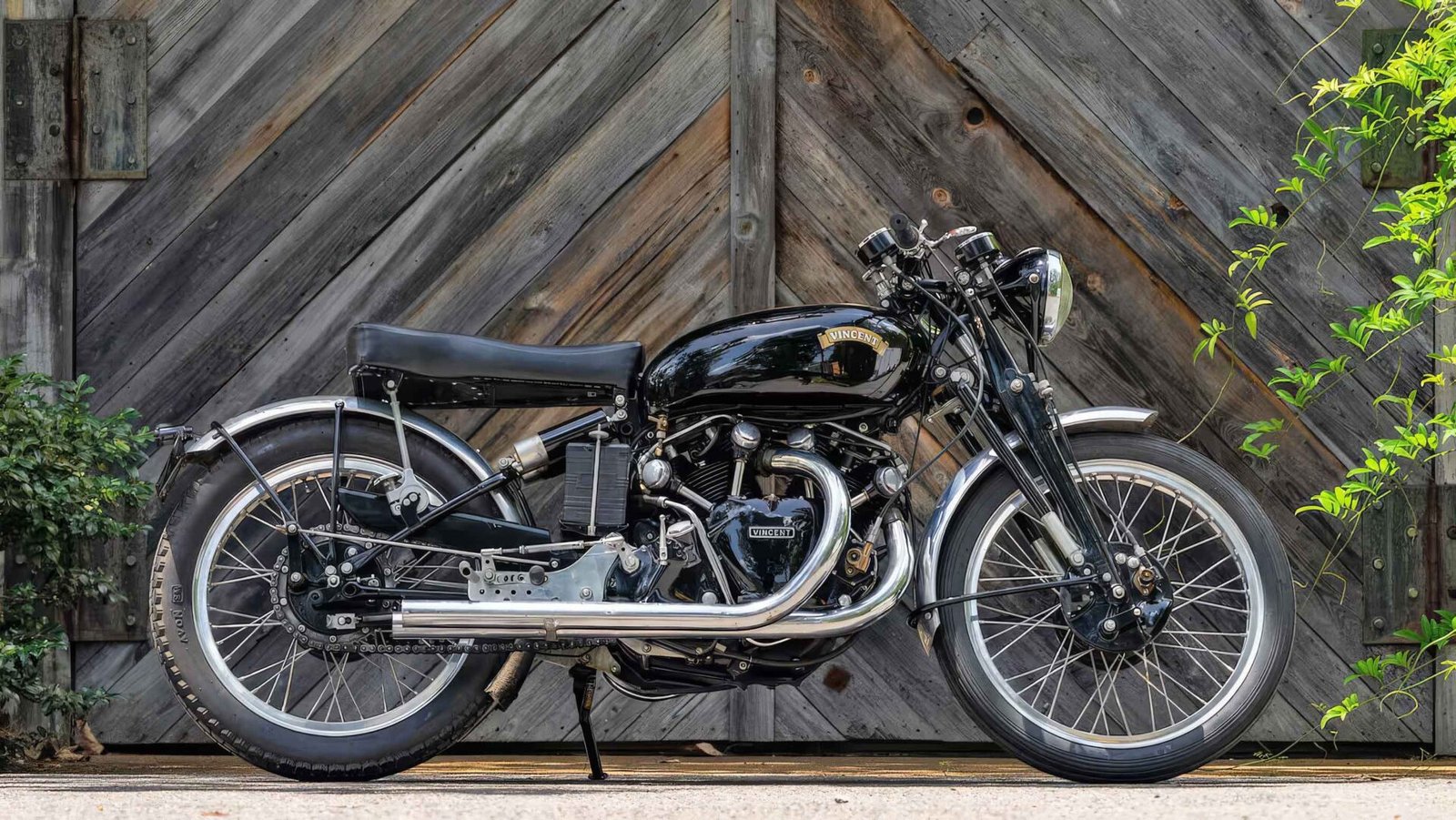
In 1950, the average British motorcyclist was rattling around on something with perhaps 15 or 20 horsepower, a top speed somewhere in the region of 70mph, and brakes that required forward planning.
Vincent, meanwhile, was offering a motorcycle capable of 150mph.
That’s not a misprint. One hundred and fifty miles per hour. On two wheels. With drum brakes. In 1950.
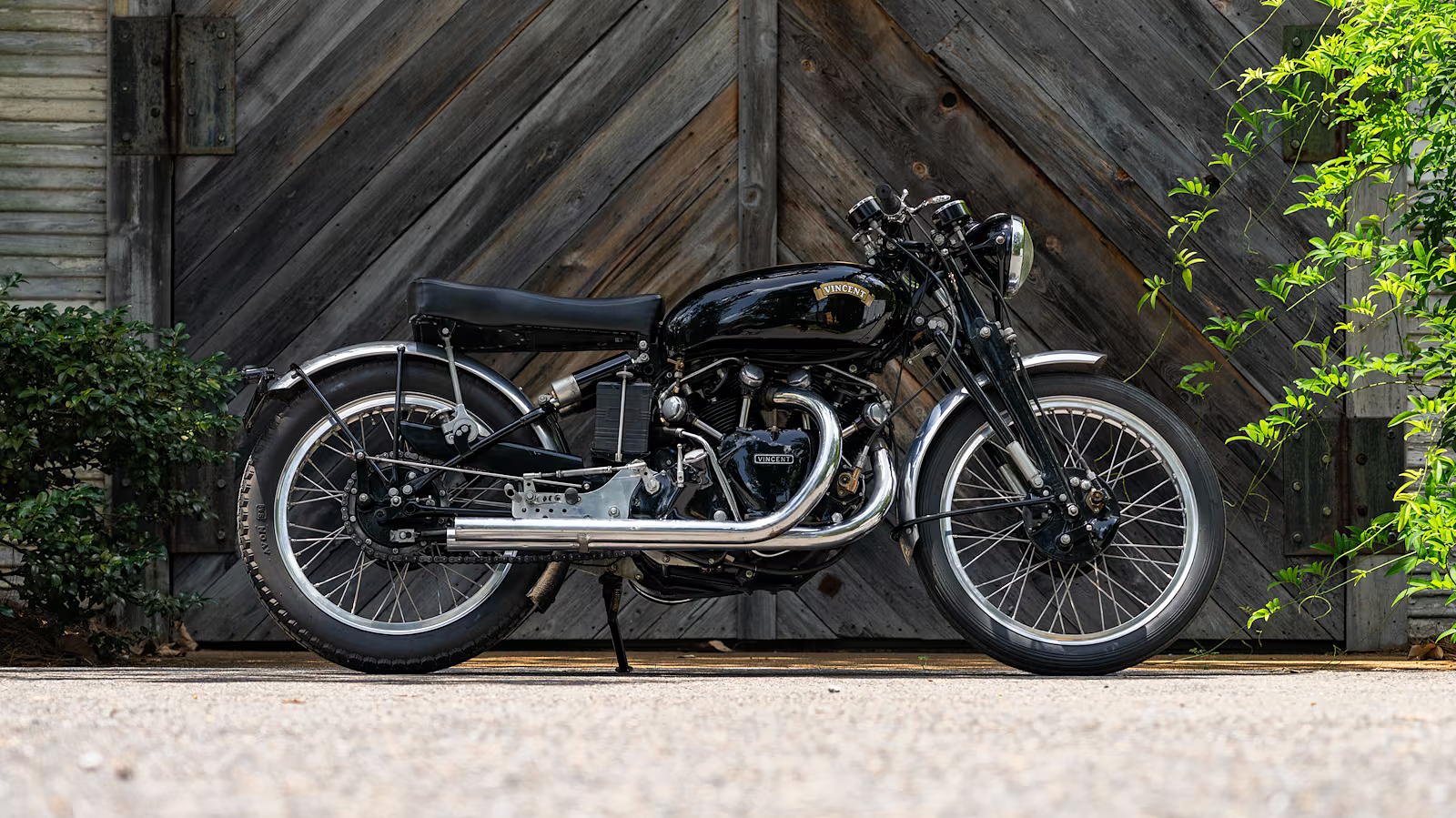
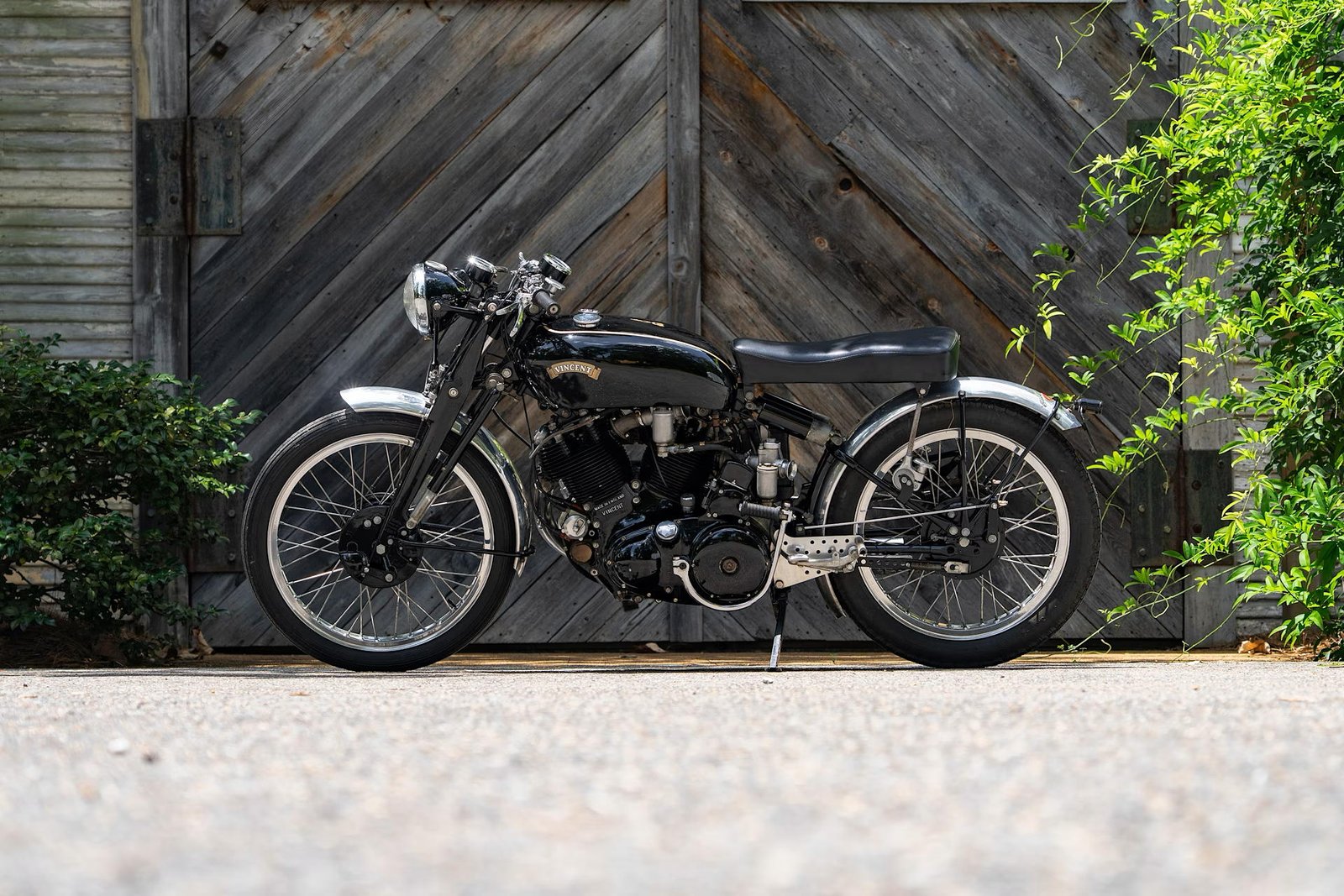
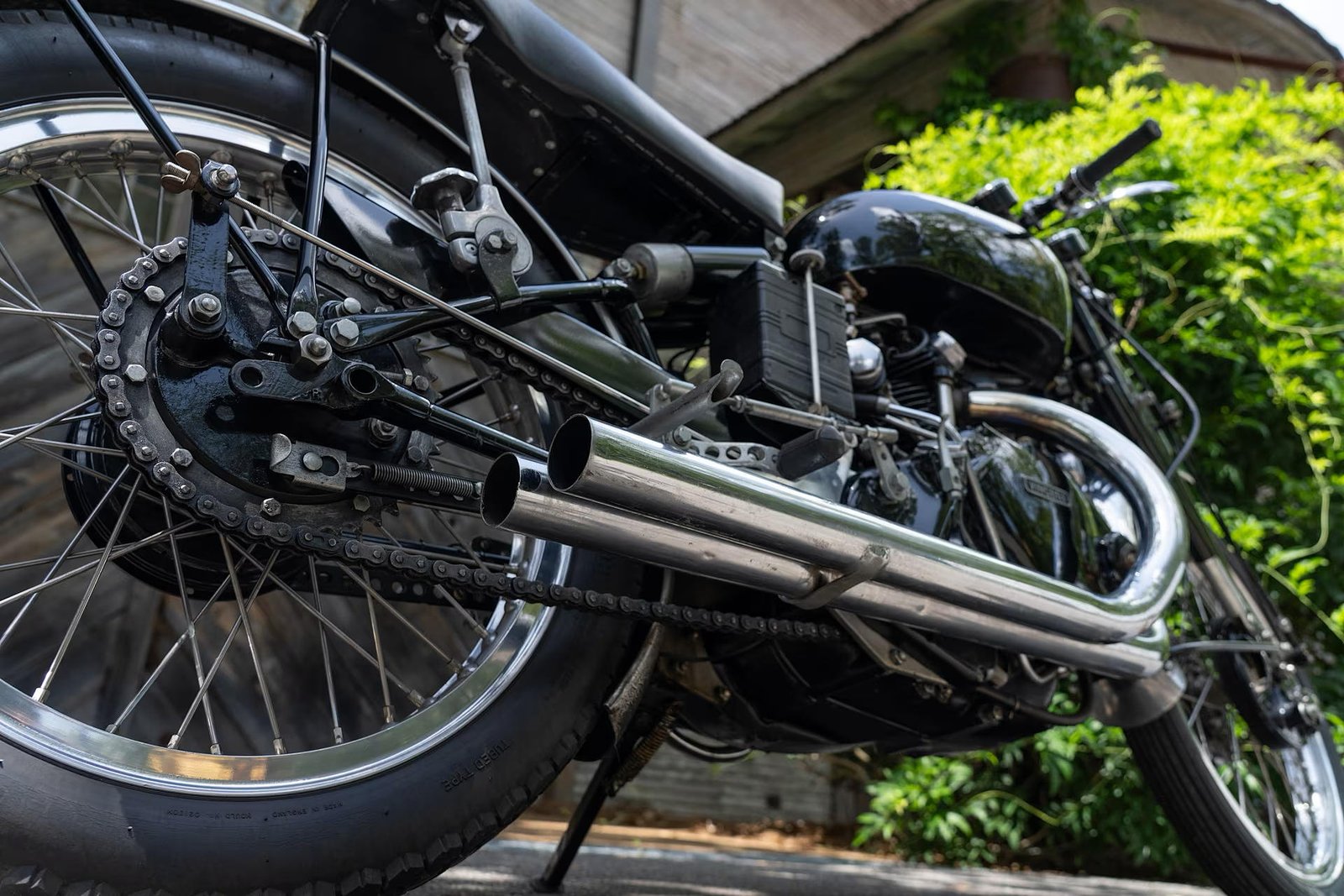
And now one of these extraordinary machines is coming up for auction at Mecum’s Las Vegas motorcycle sale on 6 February 2027. Not just any Black Lightning, either, but one of an estimated three built with lights.
Which suggests that somebody, somewhere, seriously contemplated using it on the road.
A Black Shadow with its trousers on fire
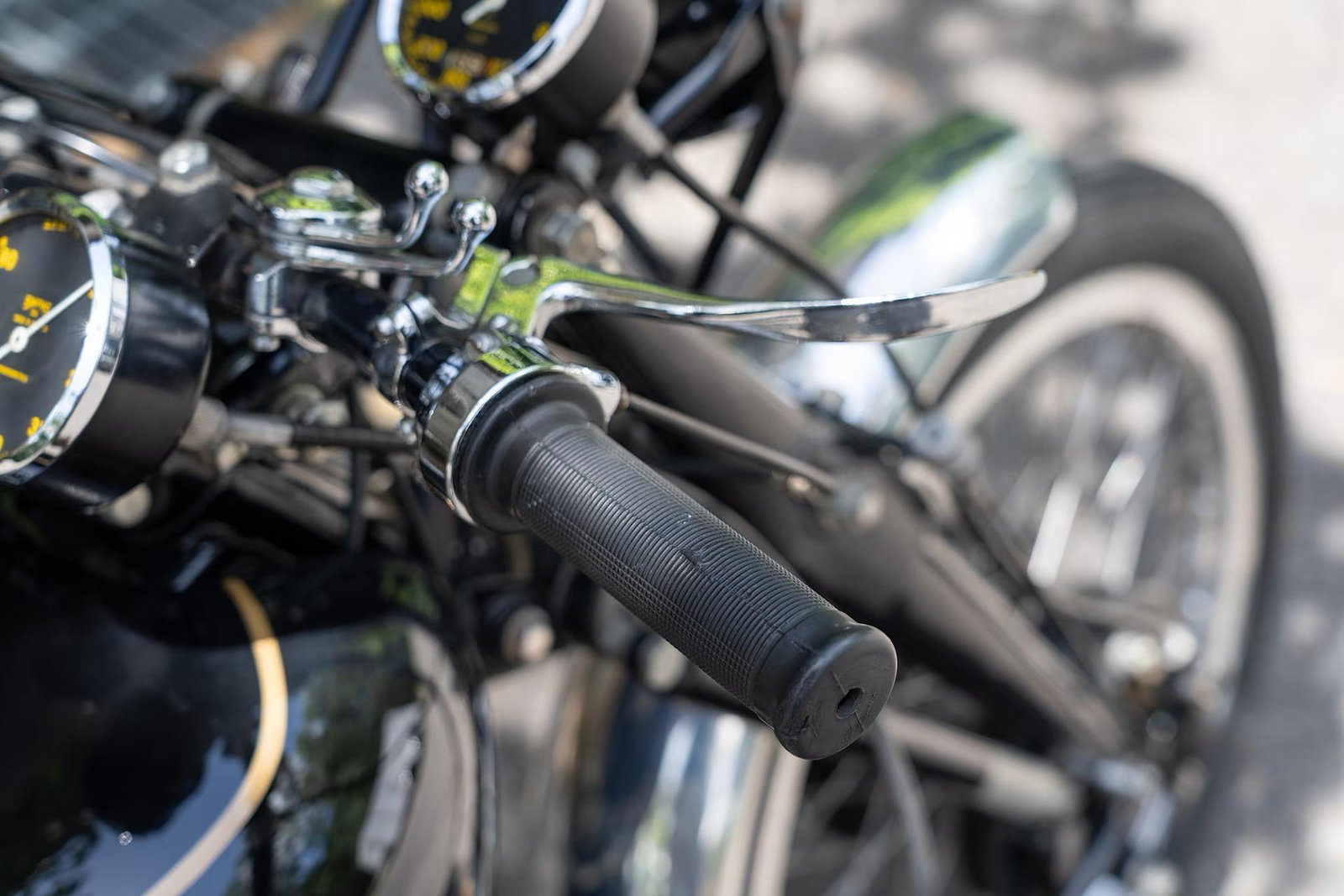
The Black Lightning was developed from Vincent’s already formidable Black Shadow, itself one of the fastest road motorcycles money could buy.
However, the Lightning was something altogether more serious. Introduced in 1948, it was effectively a factory-built racing motorcycle, available to customers with sufficient money, determination and an apparent disregard for their own continued existence.
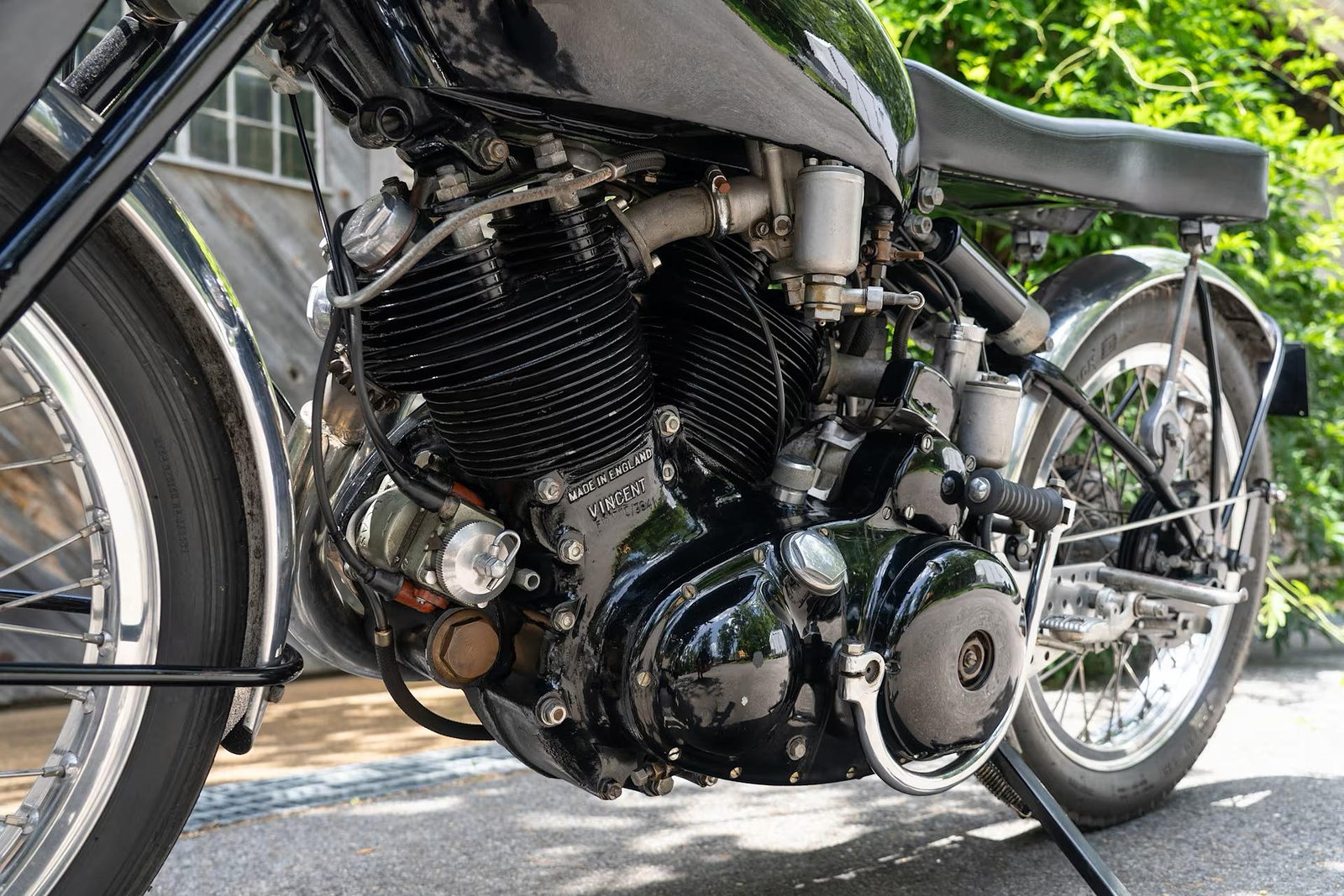
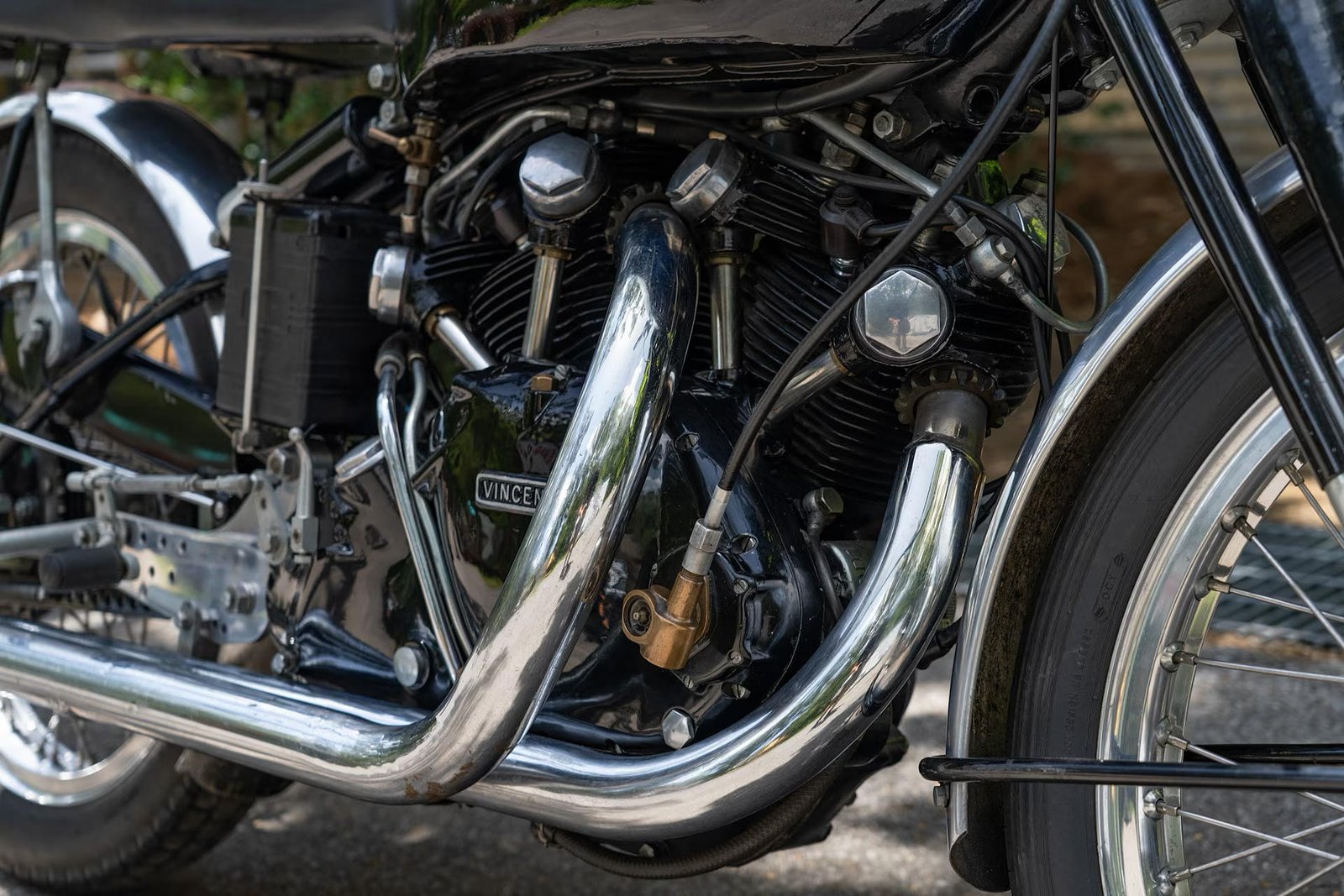
The engine was Vincent’s magnificent 998cc air-cooled, pushrod V-twin, but considerably breathed upon.
There were stronger connecting rods, enlarged inlet ports, polished rocker gear, racing carburettors and special camshafts. Compression ratios varied according to the intended use, and the result was around 70bhp.
That might not sound terribly exciting today, when a perfectly ordinary sports motorcycle can produce three times as much power.
But in 1950 Britain was still recovering from the Second World War. Petrol rationing had only recently ended. Many people were riding motorcycles because they couldn’t afford a car.
And Vincent was building something capable of travelling faster than almost anything else on the road.
The company also went to considerable trouble to remove weight. Magnesium components, aluminium mudguards, alloy wheel rims, rear-set footrests and a single racing saddle helped bring the machine down to approximately 380lb, or 172kg.
There was no conventional frame in the usual sense. Vincent used the engine as a stressed structural member, with the steering head attached to an upper frame member and its distinctive cantilever rear suspension completing the arrangement.
It was clever, compact and beautiful. It was also expensive, complicated and made in tiny numbers.
The man who forgot his trousers
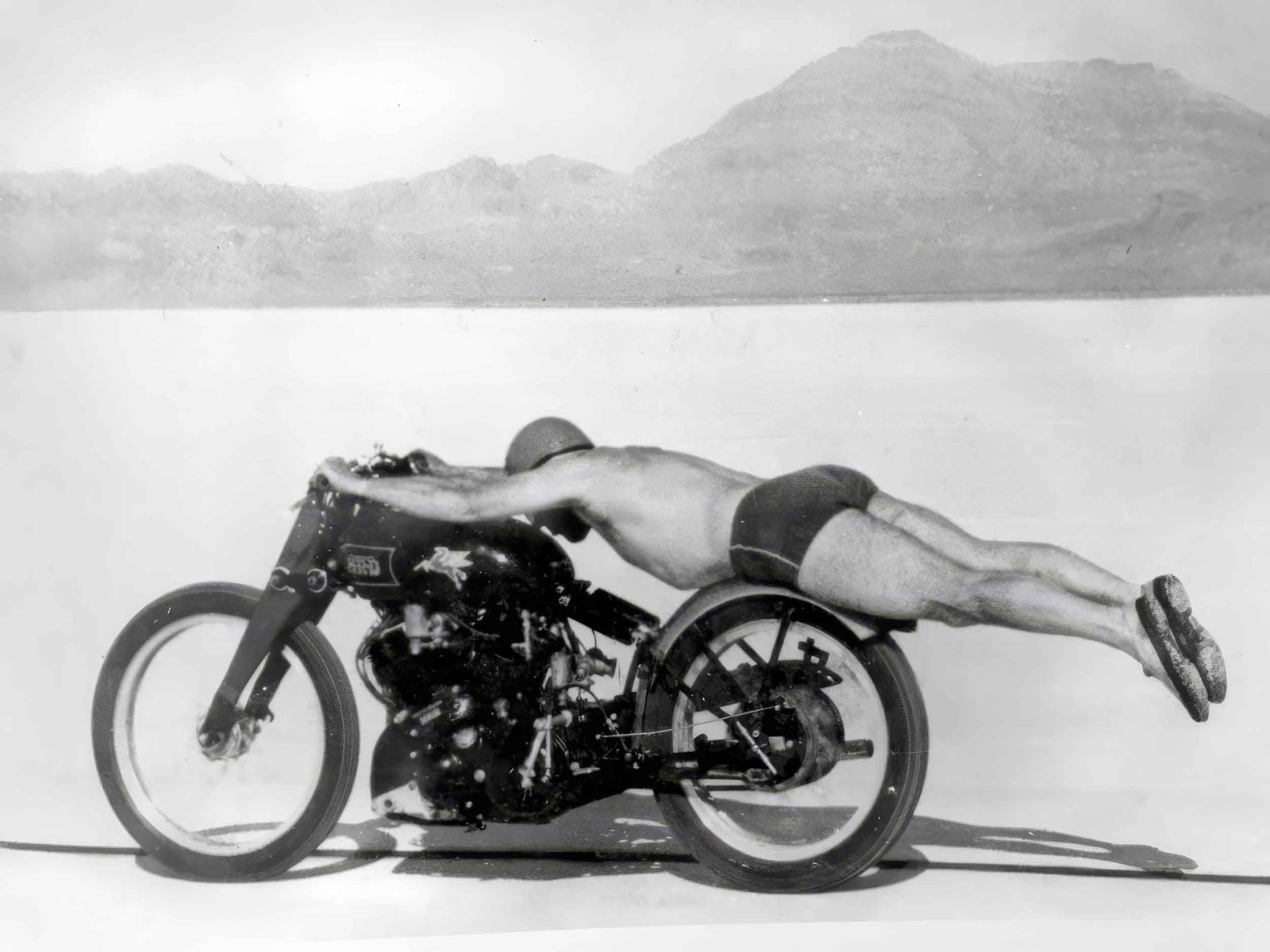
No account of the Black Lightning is complete without Rollie Free, the American racer responsible for one of the most extraordinary photographs in motorcycling history.
In September 1948, Free took a Vincent Black Lightning to the Bonneville Salt Flats in Utah to establish a new American motorcycle speed record.
During preliminary runs, he reached 148.6mph. Clearly, this wasn’t quite fast enough.
Free decided the problem was aerodynamic drag. His solution was to remove most of his clothing.
He stripped down to swimming shorts, lay flat along the motorcycle with his legs stretched out behind him, and hurtled across the salt at more than 150mph.
There was no fairing, no protective clothing worth mentioning and precious little between his skin and a surface resembling industrial-grade sandpaper.
The result was an officially recognised record of 150.313mph.
It also produced the famous photograph of Free stretched out horizontally over the Vincent, looking rather like Superman had suffered a wardrobe malfunction.
It’s difficult to imagine a modern race organiser approving the procedure.
Free returned to Bonneville in 1950 and raised his record to 156.58mph, despite suffering a high-speed crash during the trials.
The Black Lightning’s reputation was assured.
The Danish connection
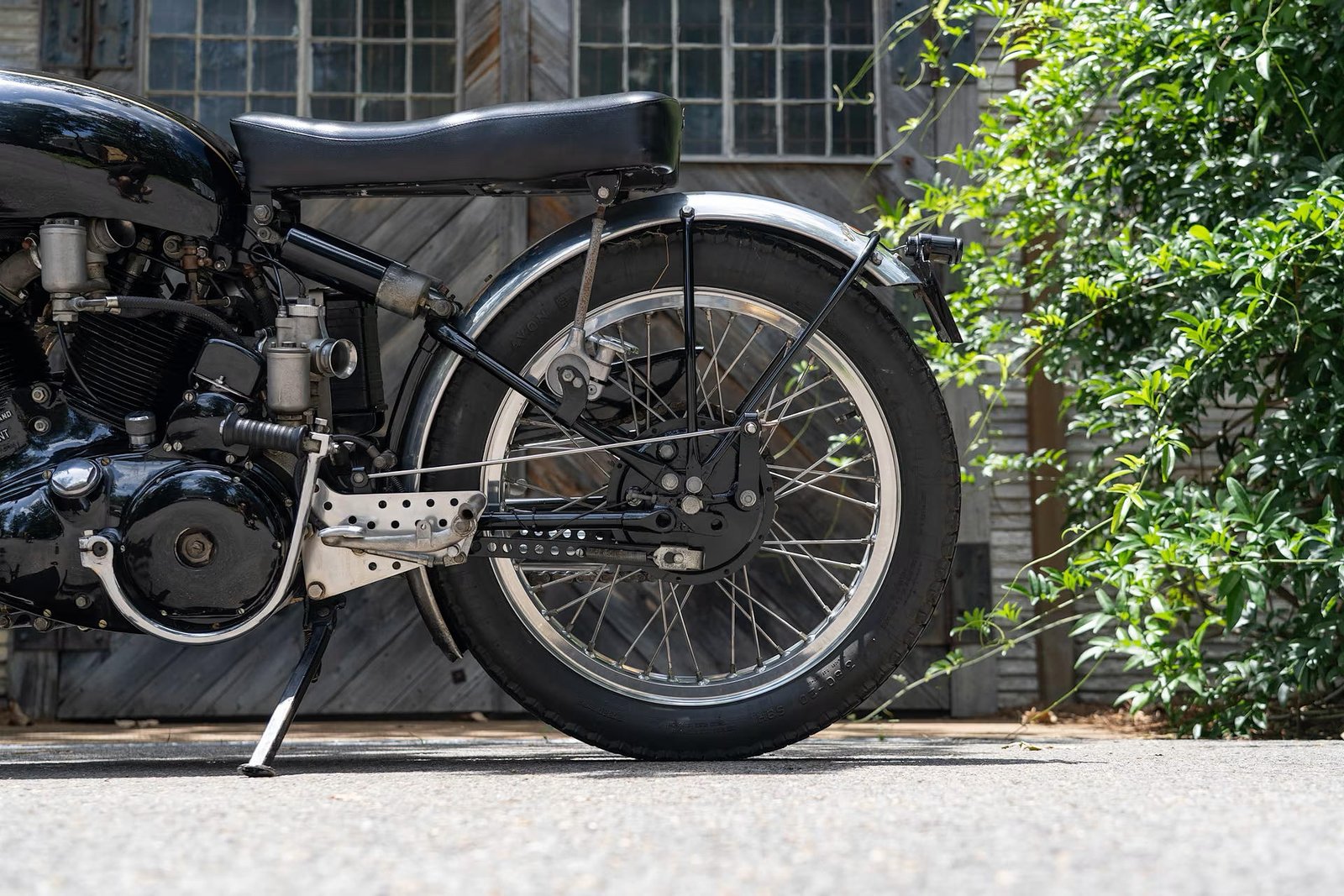
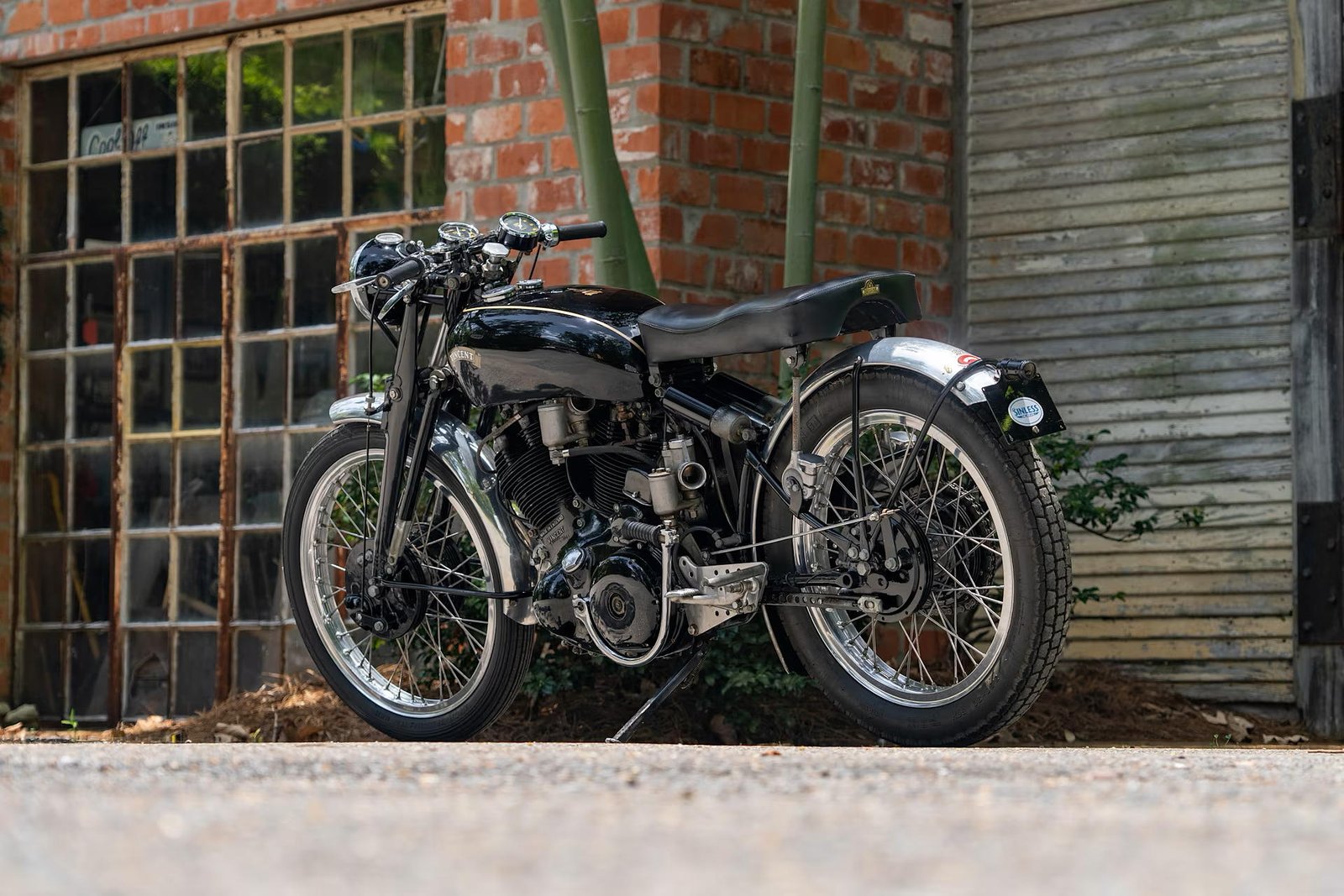
The particular motorcycle heading to Las Vegas has an interesting history of its own. According to the Mecum auction listing, it left the Vincent factory in Stevenage on 20 March 1950, destined for the company’s Danish agent, Villy Egen.
Mecum describes it as one of approximately 34 Black Lightnings produced between 1948 and 1952, and one of an estimated three supplied with lights.
The production total is worth treating with a little caution, since published accounts differ, with some quoting just 31 machines. Either way, the Black Lightning is exceptionally rare.
The presence of lighting equipment makes this example particularly intriguing.
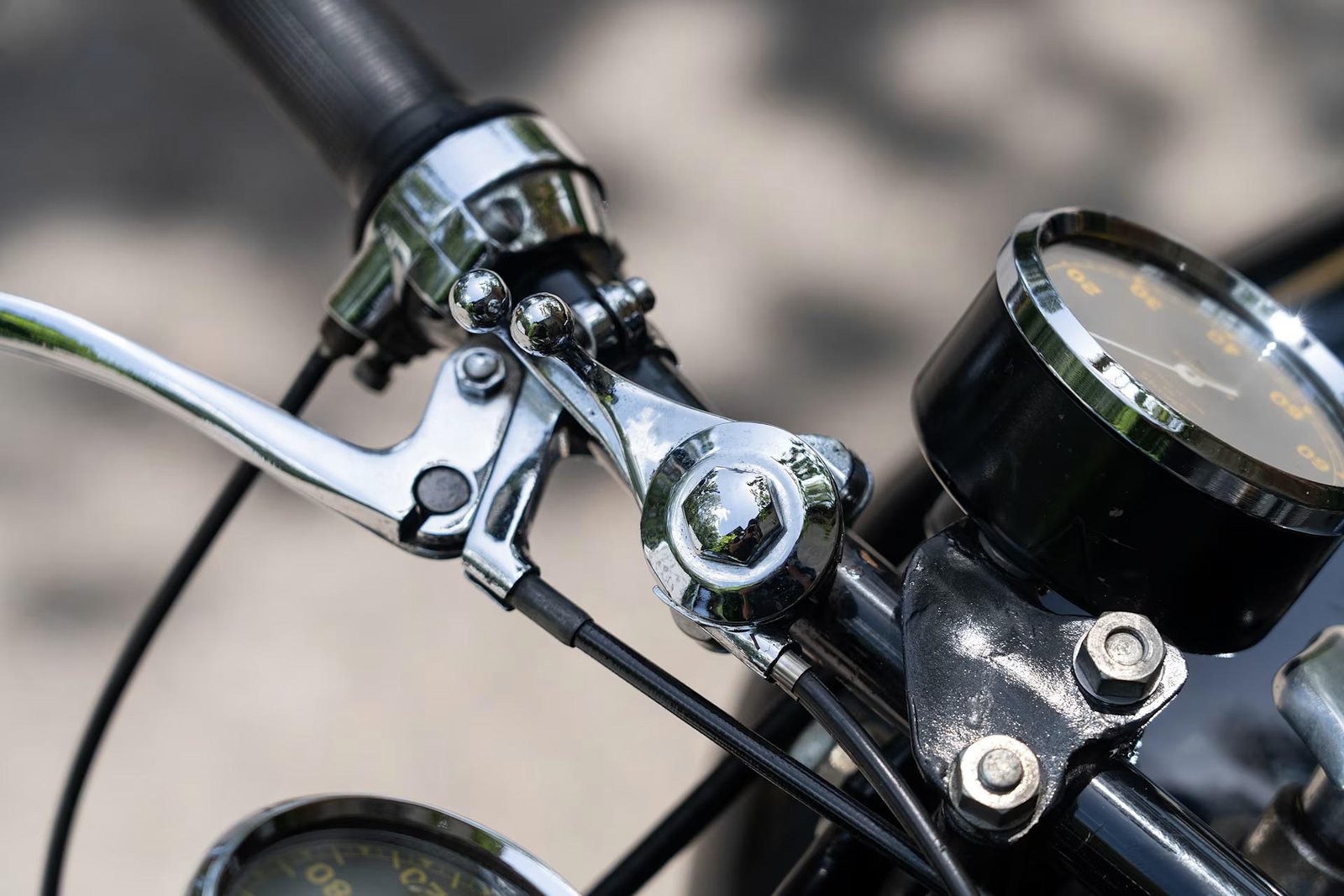
A normal Black Lightning was intended for competition but this one had the necessary equipment to illuminate the road ahead.
Quite what you would see in the headlight beam at 150mph is another matter. Probably your immediate future, arriving rather more quickly than anticipated.
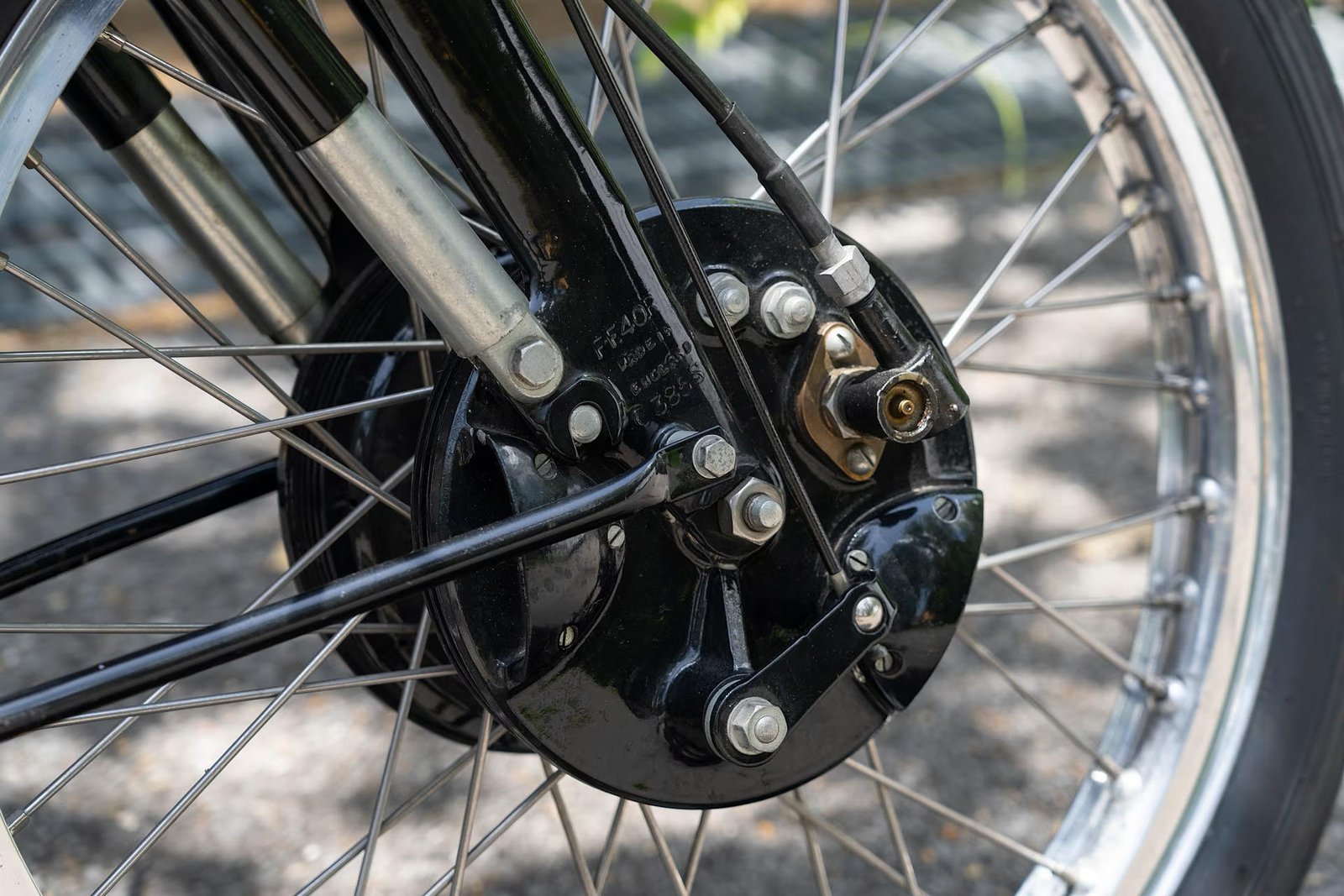
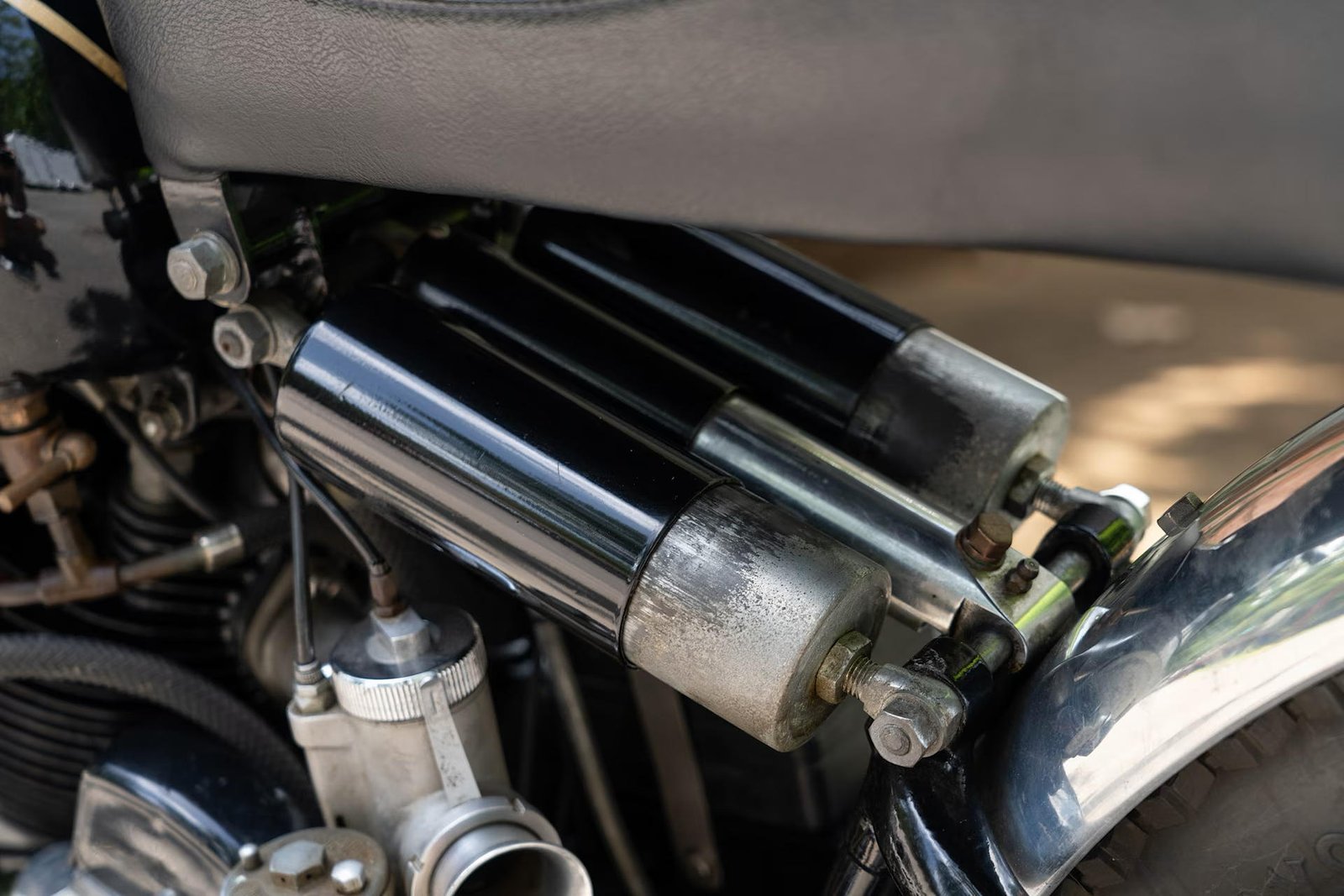
The bike retains its Brampton girder front forks and Vincent’s cantilever rear suspension with hydraulic damping.
Its documented history includes a copy of the original factory works form and a Vincent-HRD Owners Club dating certificate.
It has also been displayed at the National Motorcycle Museum in Anamosa, Iowa, and appeared at the prestigious Quail Motorcycle Gathering in California in 2019.
The machine is being offered as part of the Sinless Cycles Collection.
When motorcycles become serious money
Black Lightnings have long occupied the upper reaches of the classic motorcycle market, where prices begin to resemble the cost of substantial houses.
In February 2018, a 1951 Black Lightning with Australian speed-record history sold at Bonhams in Las Vegas for $929,000.
That particular machine had been used to establish a national speed record in Australia in 1953, giving it the sort of provenance that causes collectors to loosen their grip on very large sums of money.
Whether the 1950 machine at Mecum will approach that figure remains to be seen. Its rarity, unusual lighting specification and documented history should certainly attract attention.
But there’s something faintly absurd about the idea of a Black Lightning spending the rest of its life as an investment.
This was, after all, a motorcycle built to go extremely fast. Its whole purpose was to turn petrol into noise, speed and a rather alarming sensation in the rider’s stomach.
Auction details: 1950 Vincent Black Lightning, Lot R306, Mecum Las Vegas Motorcycles, Saturday 6 February 2027.
View the Mecum auction listing