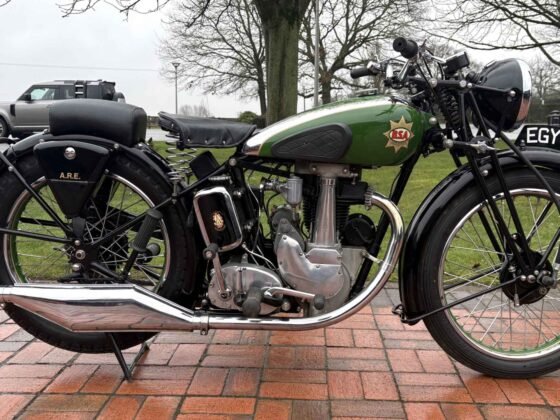
The BSA DBD34 Gold Star and Matchless G80CS earned their reputations through competition. But these two examples show that a high-performance British 500 single could also make a surprisingly convincing touring motorcycle.
There is something slightly odd about putting panniers on a BSA Gold Star.
The DBD34 Goldie is, after all, one of the great sporting motorcycles of the 1950s. Mention one and the mental picture is usually clip-ons, rearsets, a big tank and a rider tucked down behind the headlamp attempting to discover whether the ton really is achievable.
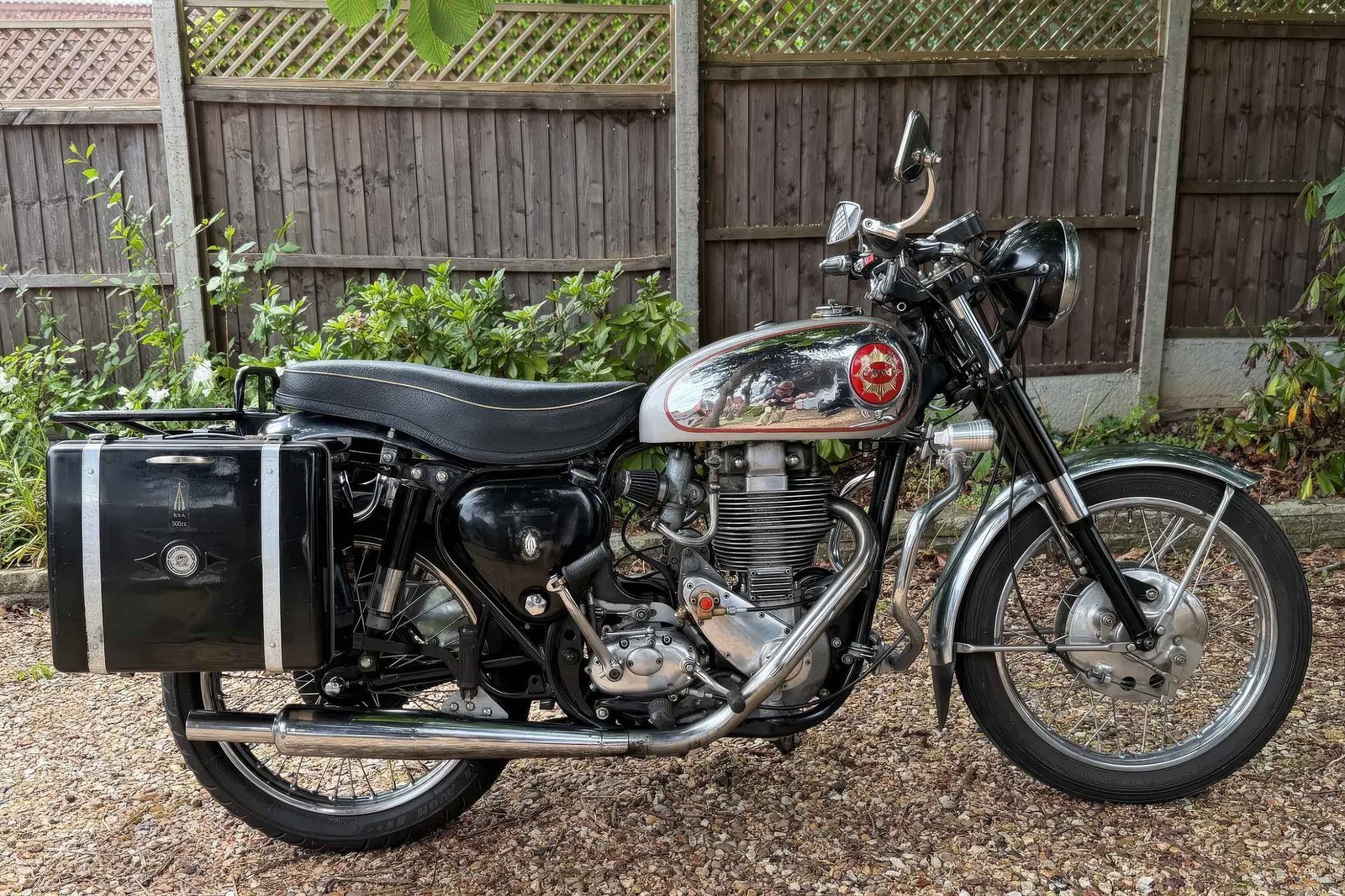
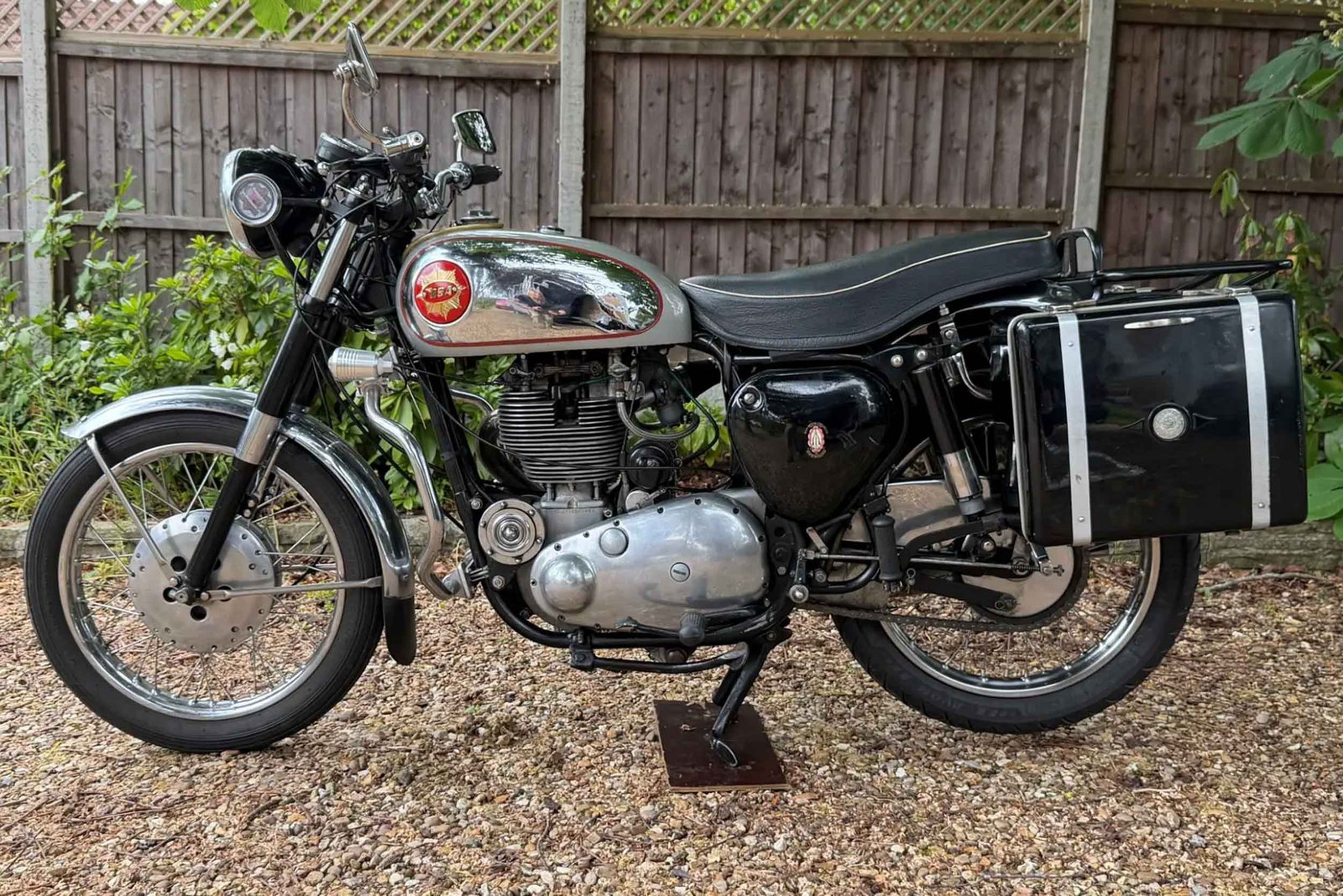
Yet the 1958 Gold Star pictured here has a pair of substantial Craven panniers hanging off the back. And rather than looking ridiculous, they somehow make perfect sense.
Park it alongside the 1968 Matchless G80CS and you have two motorcycles normally associated with competition, but which also demonstrate something we sometimes forget about sporting motorcycles of this period: people actually went places on them.
The two machines are coming up for sale with Iconic Auctioneers. They are both big British 500cc singles, both have serious competition ancestry and both remain road legal. But they approach the business of combining performance with everyday riding from opposite directions.
The Goldie goes touring
The BSA is perhaps the more surprising of the pair.
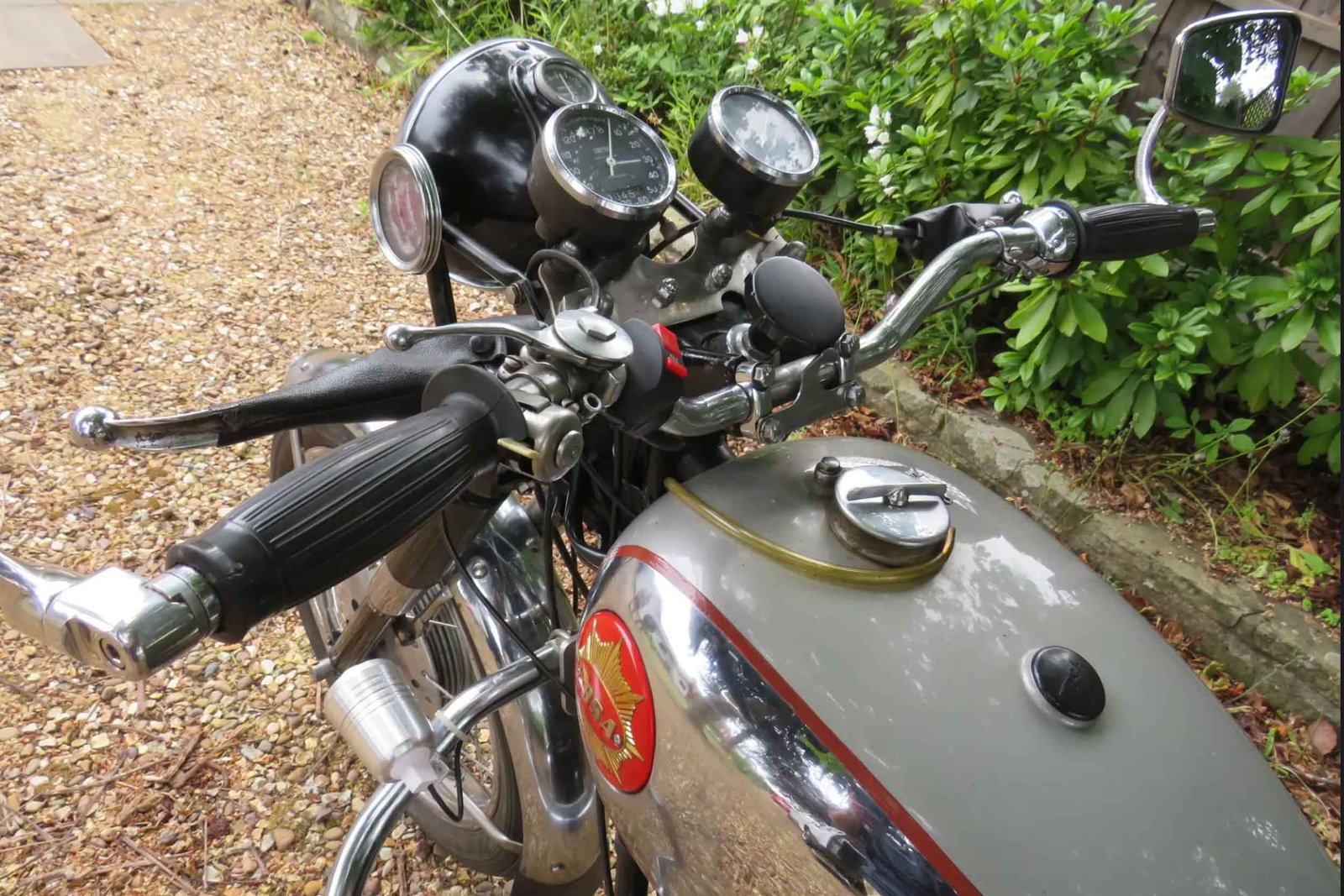
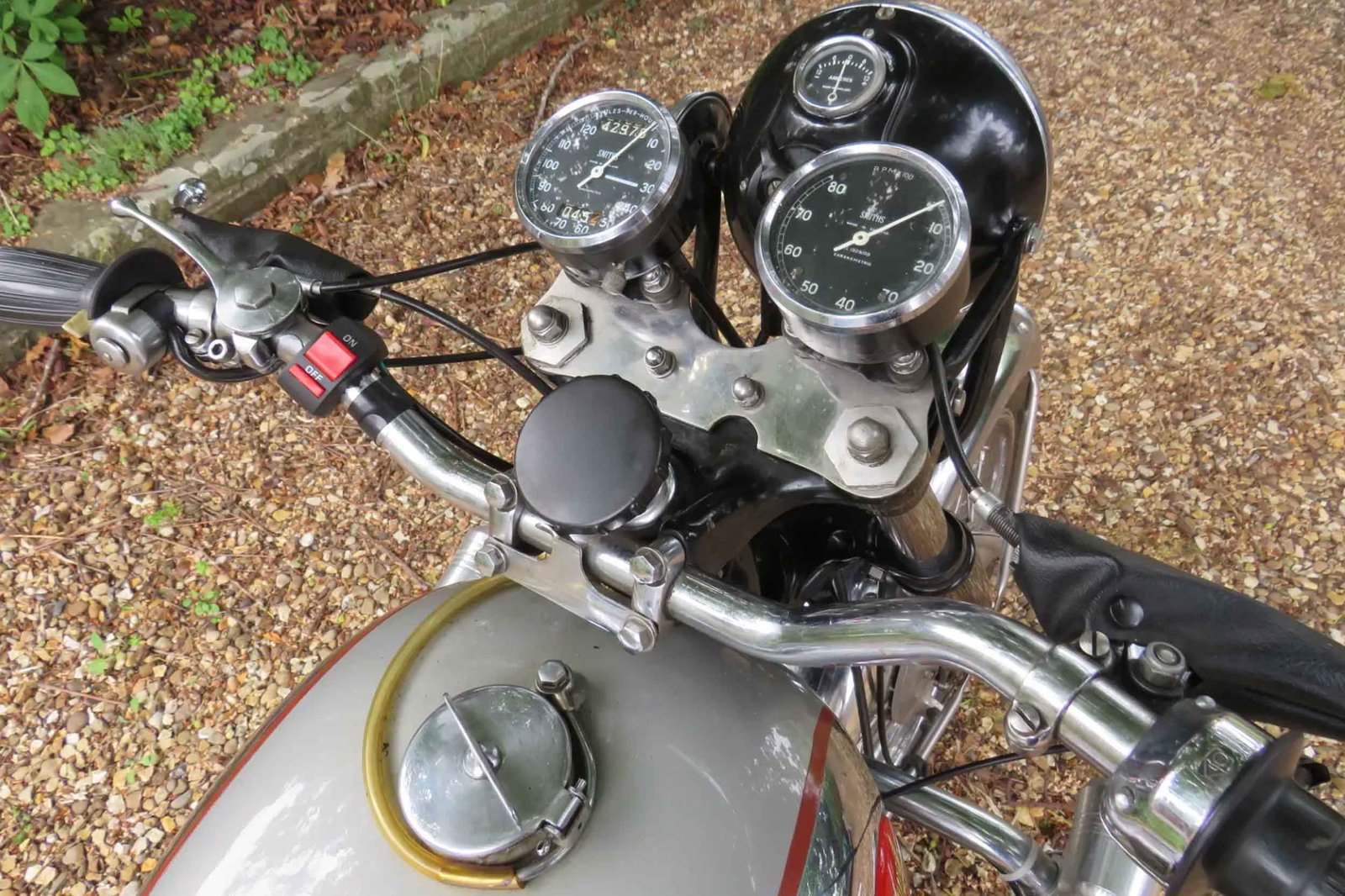
This is a 1958 DBD34 Gold Star, registration VYN 627, but importantly it’s in touring specification rather than the more familiar Clubman trim. It has been with the same owner since 1990 and, according to the auction information, has travelled extensively around Britain and Europe.
That is exactly what its specification encouraged.
A Clubman Gold Star could be a fairly uncompromising thing. Low clip-ons and rearset footrests made sense if you were chasing somebody around a circuit, but rather less so when you were trying to find a hotel in Belgium.
The touring Goldie put the rider upright with higher handlebars and conventional footrests. More significantly, touring versions could avoid the famous RRT2 close-ratio gearbox in favour of wider ratios, making the bike considerably more civilised in traffic and on hills.
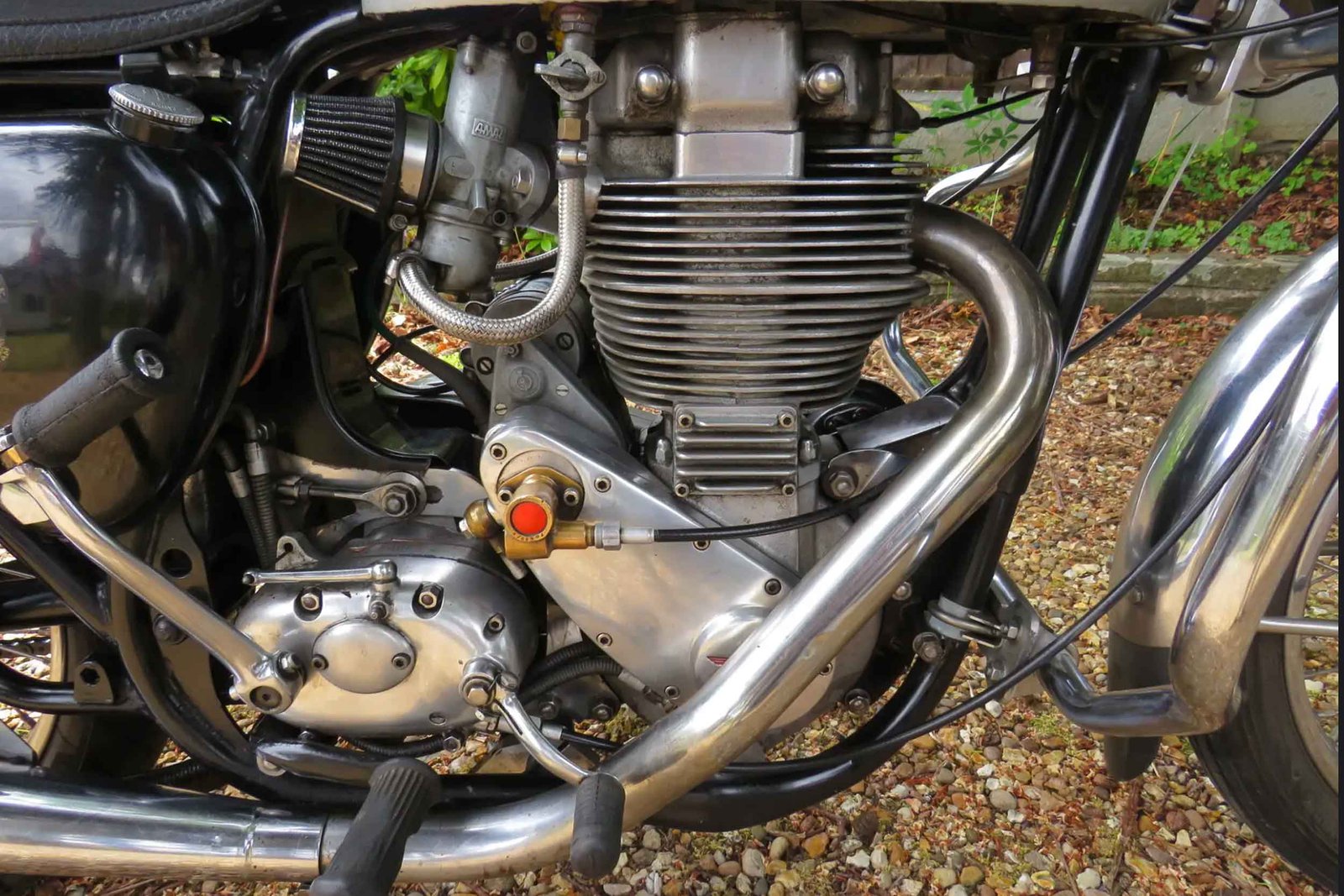
It was still a DBD34, though, with that wonderful 499cc overhead-valve single and one of the most desirable badges in British motorcycling.
The Gold Star name itself dates back to Wal Handley’s famous 100mph-plus lap of Brooklands on a BSA Empire Star in 1937. After the war, Gold Stars became formidable competition motorcycles, culminating in the DBD34 introduced in 1956.
So buying the touring version wasn’t quite the equivalent of choosing the diesel estate. You still had the proper engine, handling and pedigree. You just didn’t have to suffer quite so much for it.
And somebody certainly made use of that capability.
VYN 627 comes with a substantial history file including old MoTs, receipts, DVLA correspondence and the owner’s mileage records. There’s also a BSA dating letter and a copy of its engine brake test. Most tellingly, its owner has taken it on trips throughout the UK and Europe.
Those Craven panniers therefore aren’t decorative accessories added during restoration. They are evidence.
Matchless takes the opposite route
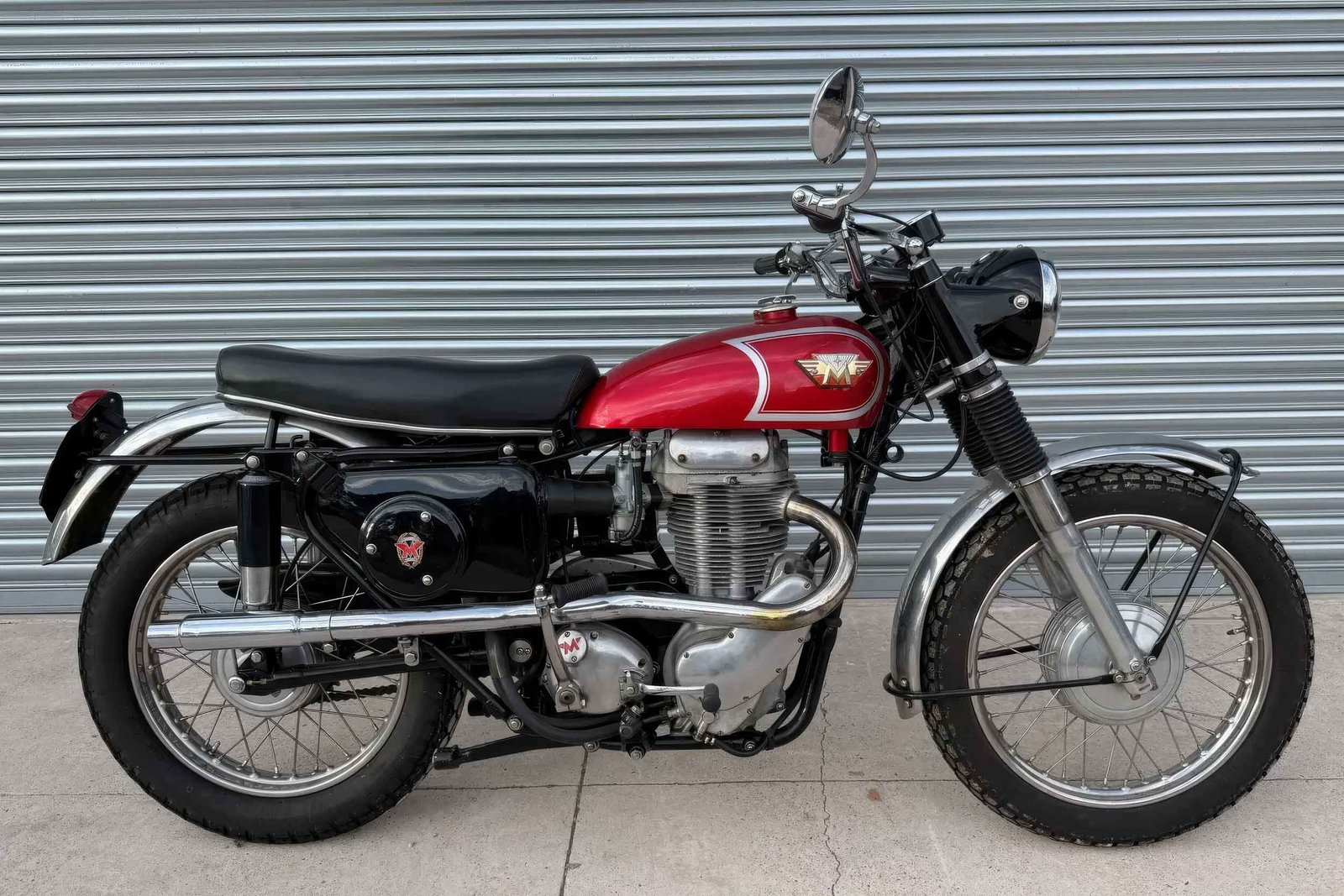
The Matchless is an interesting counterpoint because the G80CS started from the other direction.
Rather than making a road racer more comfortable, Matchless took a competition-oriented motorcycle and produced something that could tackle both road and rough going.
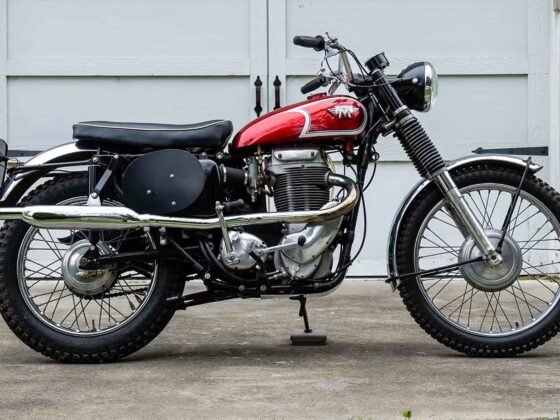
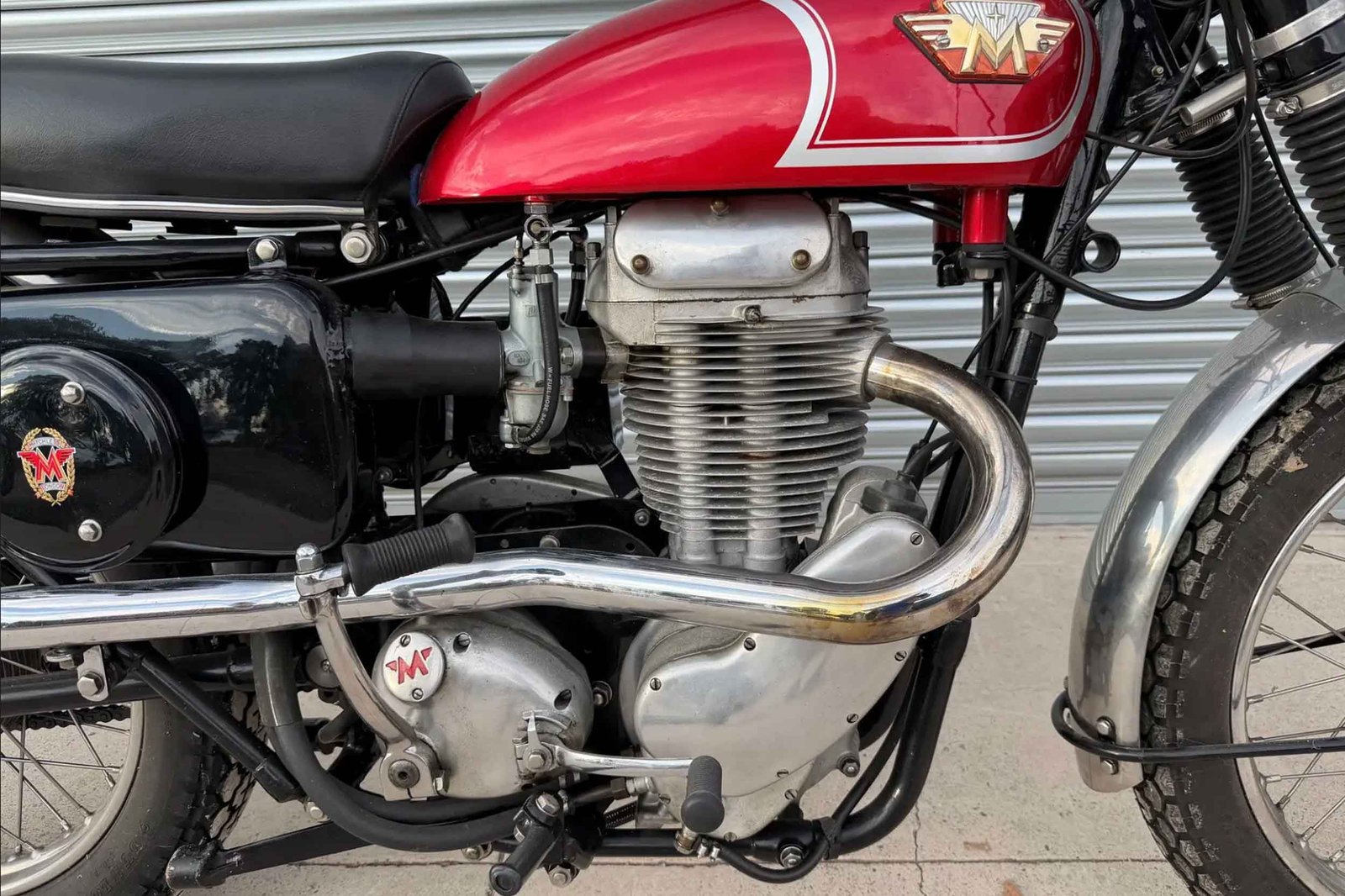
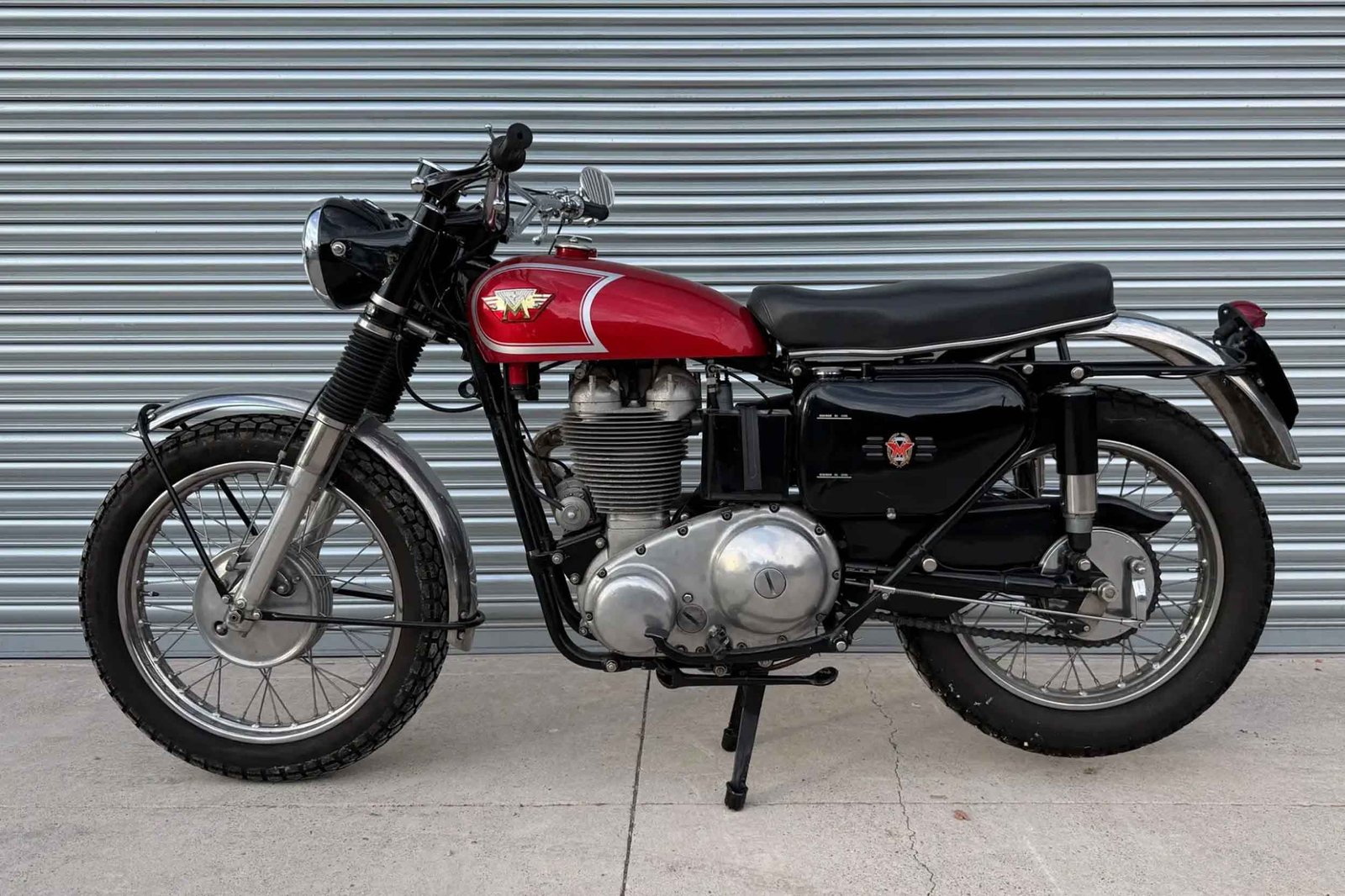
This particular bike is a 1968 G80CS, built late that year as a 1969 model. The initials are significant: C for Competition and S for Suspension, distinguishing it from the rigid-frame competition machines that had gone before.
It uses a 498cc pushrod single producing a quoted 28bhp and retains its Lucas competition magneto. The G80CS was aimed particularly at the American market, where riders wanted motorcycles capable of being ridden to the dirt, thrashed around in it and, ideally, ridden home afterwards.
In other words, it was doing the adventure-bike thing decades before anybody invented aluminium panniers, sat-nav mounts and £900 textile suits.
This matching-numbers example, MFX 383G, is an older restoration and has been stored for the past few years, so Iconic says it will require recommissioning before use. Its estimate is £3,000–£5,000.
Look at the photographs and the difference in philosophy between the two machines is obvious.
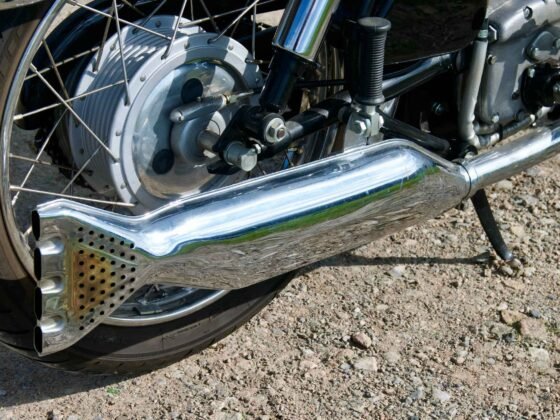
The BSA has been deliberately equipped for long-distance road riding: comfortable riding position, crash bars, luggage and a specification intended to make a highly tuned sporting single manageable in the real world.
The Matchless is more minimalist. Its long seat, upright riding position, generous ground clearance and competition-derived chassis suggest a motorcycle on which the road is merely the bit connecting one interesting place with another.
Sports-tourers, 1960s style
Neither is a tourer in the modern Gold Wing sense. There are no heated grips, cruise control or adjustable screens. Sustained motorway speeds wouldn’t be their natural habitat and both would require considerably more rider involvement than today’s big-distance machinery.
But that’s missing the point.
Sixty years ago, a touring motorcycle didn’t necessarily have to be a dedicated touring motorcycle. It could simply be the bike you owned, fitted with whatever made the journey easier.
And these two machines represent rather appealing versions of that idea.
The Matchless is effectively an early dual-purpose motorcycle: competition-bred, tough, simple and capable of carrying its rider beyond the tarmac. The Gold Star is arguably even more intriguing because underneath the panniers and sensible handlebars remains one of the quickest and most celebrated British sporting singles of its generation.
Today we’d probably call that a sports-tourer.