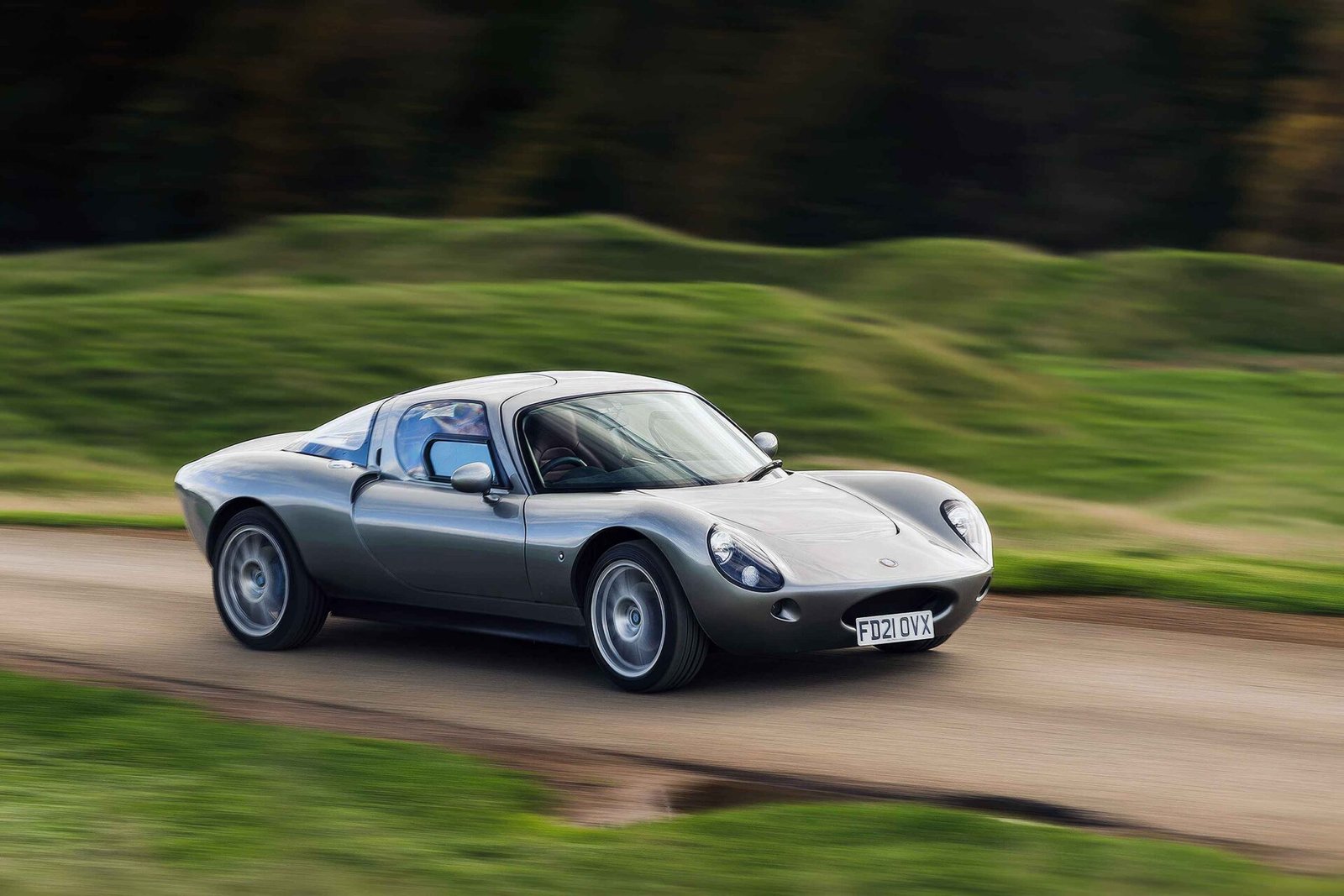
There is something reassuring about the British motor industry. Just when you think we’ve finally surrendered to the inevitable march of enormous electric SUVs, touchscreen dashboards and cars that weigh approximately the same as a Victorian railway locomotive, somebody in a shed in the Midlands decides to build a proper sports car.
Except that in this case it’s not a shed. It’s a factory in Warwickshire. And the car, called the Wells Vertige, is rather more sophisticated than the traditional British cottage-industry special assembled from bits of Ford Cortina and whatever happened to be lying around.
The Vertige is a compact, mid-engined, two-seat sports car with 225bhp, a six-speed manual gearbox and a dry weight of less than 850kg. It has double wishbone suspension, unassisted steering and, rather delightfully, a wooden gearknob.
In other words, somebody has remembered what a sports car is supposed to be.
Small is not merely beautiful
The first thing to appreciate about the Vertige is its size.
At less than four metres long and just 1.75 metres wide, it is positively diminutive by modern standards. Many contemporary sports cars have become so enormous that driving one down a typical British country lane involves a degree of forward planning normally associated with moving a grand piano.
The Vertige, by contrast, has been designed specifically for British roads.
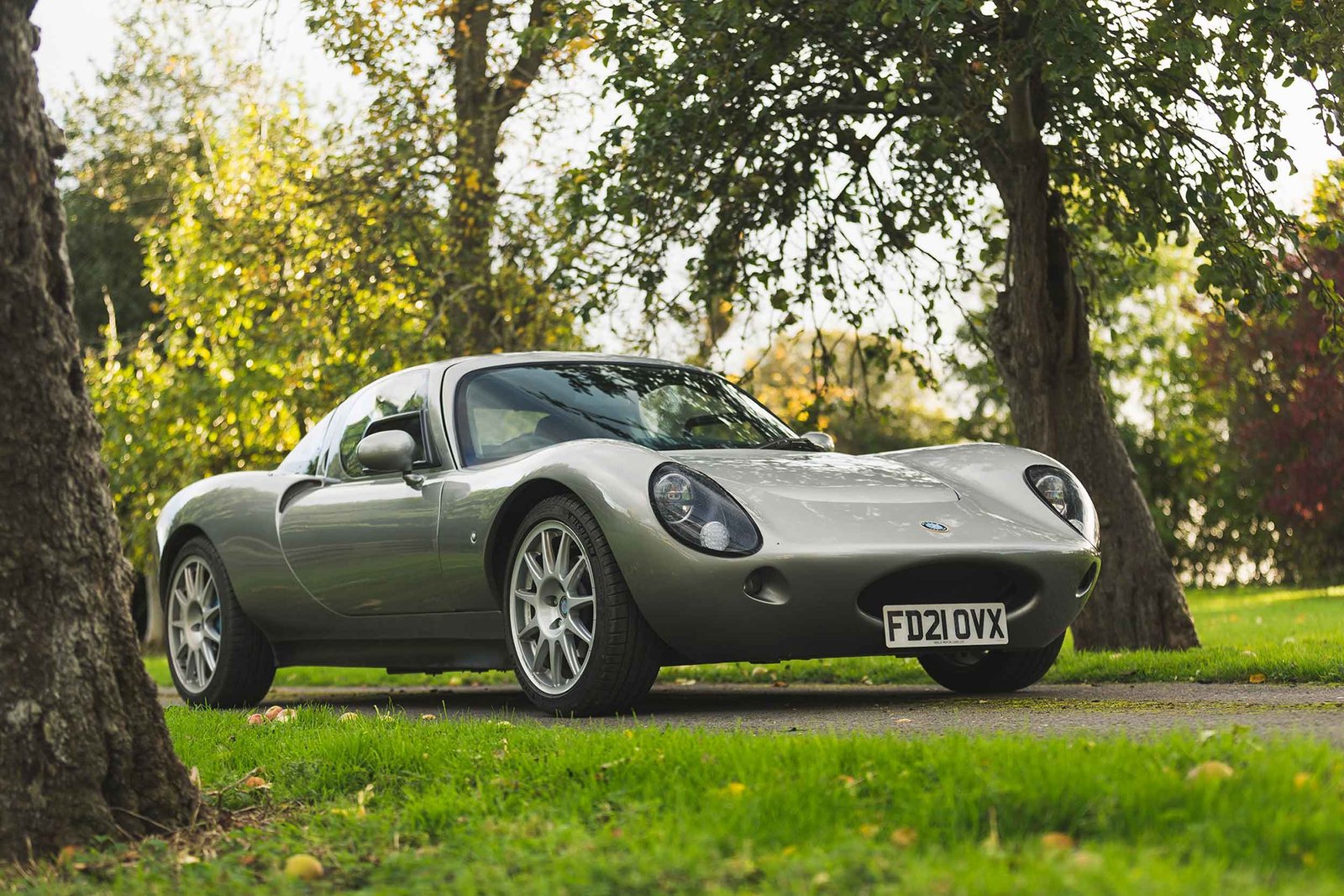
Its proportions are pleasingly traditional, with a low nose, curvaceous wings and a compact cabin sitting ahead of the mid-mounted engine. There are echoes of several classic British sports cars in its appearance, but it manages to look like its own creation rather than a pastiche.
And then there are the doors.
These open upwards in the manner of something costing half a million pounds and requiring a personal assistant to operate. They’re called dihedral doors, which sounds like a medical condition but is actually a clever piece of packaging.
When fully open, each door extends just 40mm beyond the car’s existing width. This means you can park the Vertige in a normal parking space and still get out without performing contortions..
It’s an excellent example of engineering a dramatic feature for an entirely practical reason. Although, admittedly, looking spectacular outside the village pub is probably a consideration too.
Engine, gearbox: no nonsense
Behind the occupants sits a naturally aspirated 2.5-litre Ford Duratec engine.
This is an excellent choice. Rather than developing some fantastically complicated bespoke power unit that will require a specialist with a laptop and a second mortgage to repair, Wells has selected an established all-aluminium engine and given it some attention.
Individual throttle bodies, polished intake trumpets and a bespoke engine management system produce 225bhp at 7,000rpm.
That might not sound particularly impressive when some modern hot hatchbacks are producing more than 400bhp, but remember the weight.
At less than 850kg dry, the Vertige has a power-to-weight ratio of more than 265bhp per tonne. That is quite sufficient to rearrange your facial expression.
Wells estimates that 0–60mph takes 4.8 seconds, with a top speed of 140mph.
More importantly, the power is delivered through a six-speed manual gearbox.
A proper gearbox. With a lever. And a clutch pedal.
This means the driver is actually required to participate in the business of driving, rather than merely selecting a mode and waiting for several million lines of computer code to decide what happens next.
There are no turbochargers to wait for, no complicated hybrid system and no enormous battery lurking beneath the floor.
Just an engine that revs, a gearbox that changes gear and a driver who is expected to know what to do with both.
The clever stuff underneath
The Vertige is not simply an exercise in nostalgia.
Its chassis uses a central structural tub with detachable front and rear subframes, giving a claimed torsional stiffness of 47,000Nm per degree.
For those unfamiliar with the measurement, that’s a very stiff structure indeed.
A rigid chassis allows the suspension to do its job without the rest of the car joining in, which is generally considered desirable unless you’re driving a vintage Austin Seven, where a certain amount of structural flexibility is simply part of the experience.
Suspension is by independent double wishbones at all four corners, with adjustable toe and camber settings.
Steering is by an unassisted rack and pinion system. No electric assistance, no artificial weighting and no computer attempting to simulate what the front tyres might be doing.
The brakes feature four-piston aluminium calipers and 280mm ventilated discs all round, while the 17-inch alloy wheels weigh just 8.7kg each.
Everything suggests a car designed by people who understand that removing weight is often more effective than adding horsepower.
Colin Chapman would probably approve, although he might have suggested dispensing with the touchscreen.
And yet, you could actually go somewhere
This is where the Vertige becomes particularly interesting.
Many lightweight sports cars are tremendous fun for about 45 minutes, after which you begin wondering whether your spine is still correctly assembled and why you didn’t bring a raincoat.
Wells has approached things differently.
The driving position was apparently one of the first elements considered during development. The steering wheel and pedals are directly in front of the driver, rather than being arranged at peculiar angles to accommodate the mechanical bits.
There is generous seat adjustment, good visibility and instruments that move with the adjustable steering column.
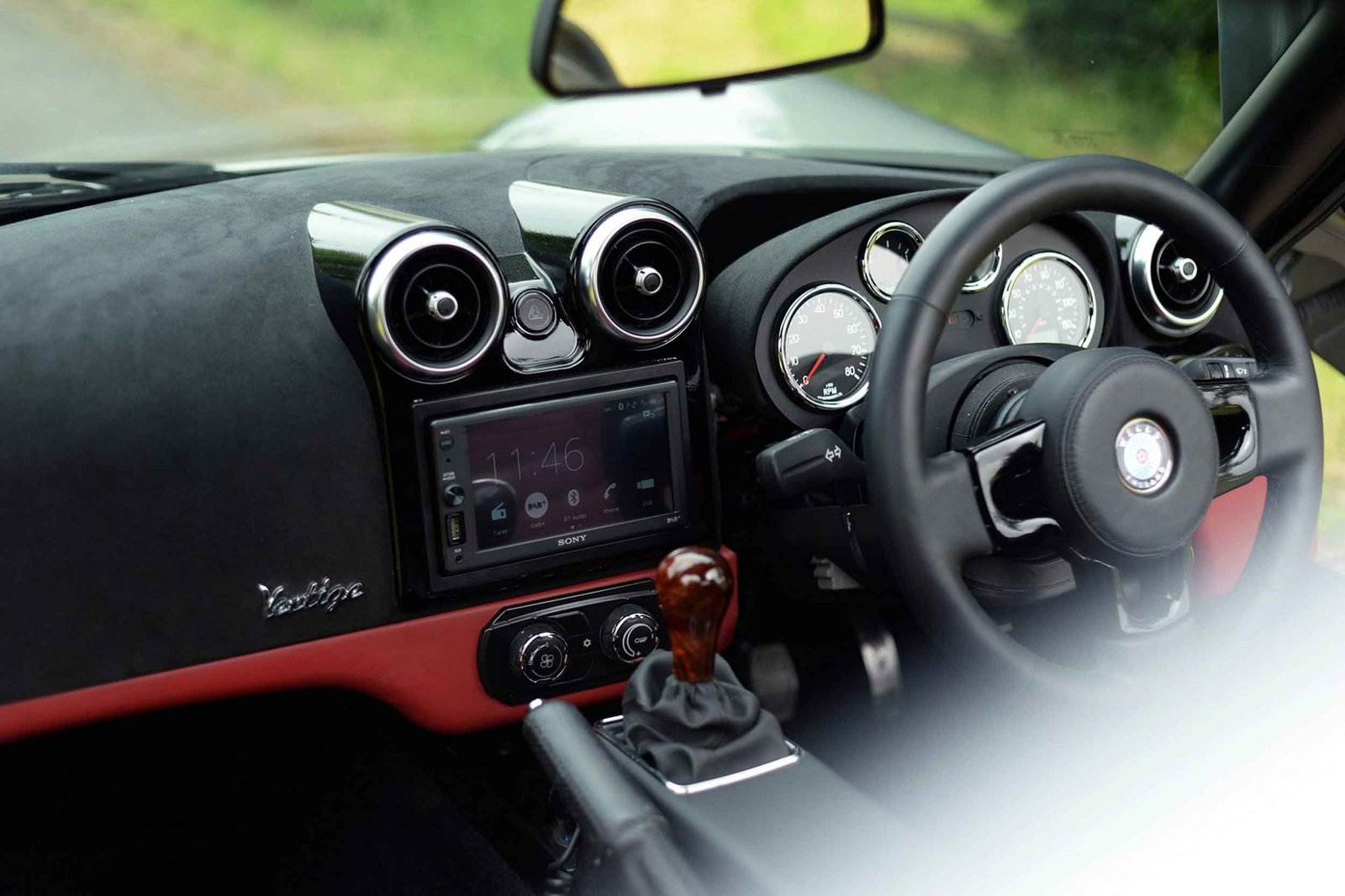
The cabin features hand-stitched Scottish leather, Alcantara trim and a wooden gearknob carved from a single piece of sustainably sourced timber.
Wells says its shape is inspired by a conductor’s baton.
Quite why a conductor’s baton should make an excellent gearknob is not immediately obvious, but it’s the sort of eccentric detail that makes small British sports car manufacturers so appealing.
There is also a seven-inch touchscreen with satellite navigation, digital radio, Apple CarPlay and Android Auto.
And, rather astonishingly, the car has a 200-litre luggage compartment.
That’s enough for a proper weekend away, rather than the traditional sports car arrangement of one toothbrush, two pairs of socks and a credit card.
An optional 65-litre front luggage compartment provides even more space, although choosing it means sacrificing the full-sized spare wheel.
Yes, a full-sized spare wheel. In a modern sports car.
Somebody at Wells has clearly experienced a puncture in rural France on a Sunday afternoon.
The fuel tank holds 50 litres, with filler caps on both sides of the car. Another small but thoughtful touch.
Built in Britain, properly
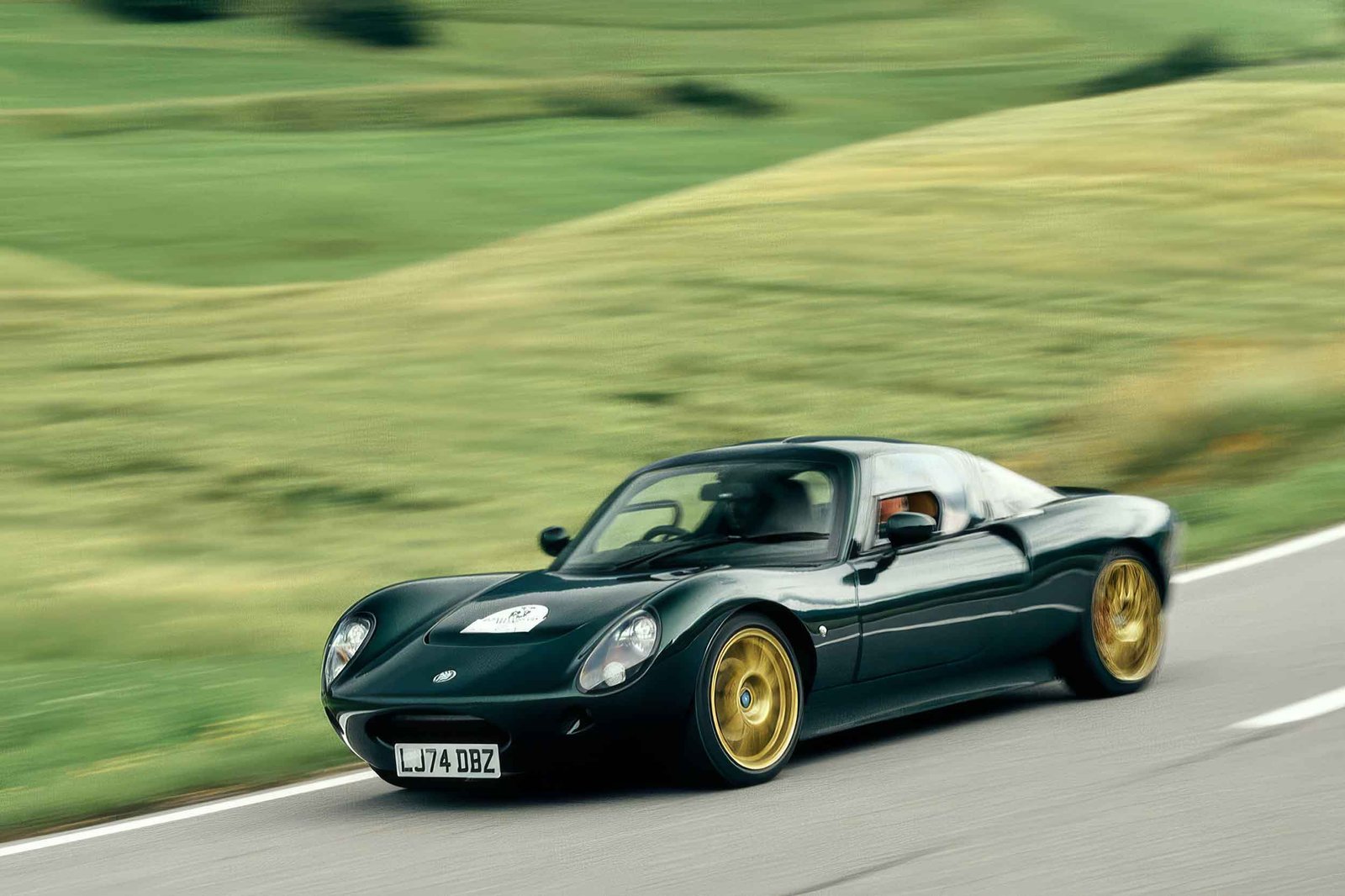
The Vertige is hand-built to order in Warwickshire, with Wells claiming a virtually entirely British supply chain. Most suppliers are located within 40 miles of the factory.
That’s a remarkable ambition in an industry where components frequently travel halfway around the world before arriving at the assembly line.
Customers buy directly from the factory, choosing their own paint colours, interior materials and other details.
They’re even encouraged to visit during construction and, according to Wells, occasionally wield a spanner.
Whether this reduces the purchase price is not mentioned.
The company also says it has designed the car to be straightforward to maintain, with accessible mechanical components, readily available consumables and replaceable composite body panels.
These are sensible considerations for a small-volume sports car, particularly one intended to be driven rather than stored beneath a fitted cover and occasionally wheeled out for concours events.
The price
There is, inevitably, a catch.
Prices for the forthcoming 2.5-litre Vertige start at £85,000 including VAT.
That is a substantial amount of money for a small sports car with a Ford-derived engine, however beautifully constructed.
For similar money, you could buy something considerably more powerful, more widely recognised and supported by a much larger dealer network.
But that rather misses the point.
The Vertige isn’t trying to compete in the modern horsepower arms race. It offers something increasingly difficult to find: a lightweight, mechanically straightforward, genuinely individual sports car built around the pleasure of driving.
It also has a certain pleasing British eccentricity.
FAST FACTS: WELLS VERTIGE
| Engine | 2.5-litre naturally aspirated Duratec |
| Power | 225bhp at 7,000rpm |
| Torque | 200Nm |
| Transmission | Six-speed manual, rear-wheel drive |
| Dry weight | Under 850kg |
| 0–60mph | 4.8 seconds (estimated) |
| Top speed | 140mph (estimated) |
| Suspension | Double wishbones all round |
| Fuel capacity | 50 litres |
| Luggage capacity | 200 litres, plus optional 65 litres |
| Starting price | £85,000 including VAT |
Source: Wells Motor Cars’ published specifications and product information. Performance figures are manufacturer estimates.