Whoever came up with the nickname ‘Gixxer’ for Suzuki’s stunning 1980s GSX-R750 was a moron. Dreadful name, bastardised slang, worthy only of the Daily Star on an off day. Ok, rant over.
The Suzuki GSX-R750, introduced in 1985, marked a revolutionary step in sportbike design, blending cutting-edge technology and racing heritage. Designed to emulate the feel and performance of a race bike for the street, the GSX-R750 created a new category of lightweight, high-performance motorcycles that continues to influence sportbike design today.
Racing History Leading to Development
The GSX-R750’s genesis was deeply rooted in Suzuki’s success on the racetrack. Throughout the late 1970s and early 1980s, Suzuki dominated endurance racing with bikes like the GS1000 and later the GS1000R.
The lessons learned from gruelling 24-hour endurance races, such as the Bol d’Or and Suzuka 8 Hours, shaped the GSX-R750’s development.
Engineers sought to transfer race-proven innovations, including lightweight construction and high-performance engines, into a production bike that would appeal to sportbike enthusiasts and competitive racers.
In particular, the GS1000R “XR41” was a pivotal prototype that influenced the GSX-R750. This factory race bike featured an aluminum frame, a first for Suzuki, which dramatically reduced weight while maintaining strength. Its success underscored the importance of weight reduction, inspiring the GSX-R750’s engineers to prioritise a lightweight, race-inspired chassis.

1985: The Revolutionary Beginning
The 1985 GSX-R750 debuted with a striking aluminum twin-spar frame, which was 60% lighter than the steel frames typically used at the time. This innovation reduced overall weight to just 179 kg (395 lb) dry, making the GSX-R750 significantly lighter than its competitors. The bike’s aerodynamic fairing further emphasized its race-ready appearance, with dual round headlights setting a distinctive face.
Powering the GSX-R750 was an air-and-oil-cooled inline-four engine, featuring Suzuki’s Advanced Cooling System (SACS). This system used an oil pump and strategically placed oil jets to manage engine temperatures effectively without the added weight of a liquid-cooling system.
With 100 horsepower at 10,500 rpm, the GSX-R750 offered exhilarating performance.
Suspension technology included a fully adjustable front fork and a rear monoshock with Suzuki’s unique Full-Floater system, providing superior handling and stability. This combination of lightweight construction, powerful engine, and advanced suspension made the GSX-R750 an immediate success, both on the street and the track.
1986–1987: Refinements and Updates
The GSX-R750 received minor updates in its first two years, solidifying its position as a leading sportbike. The 1986 model introduced slight changes to the fairing design for improved aerodynamics, while the engine and chassis remained largely unchanged. Suzuki also offered a “Limited Edition” model in 1986, featuring a dry clutch, lightweight wheels, and other racing-oriented upgrades.
In 1987, Suzuki introduced a longer swingarm to improve high-speed stability, addressing feedback from racers and enthusiasts. This year also saw the inclusion of upgraded front brakes, with larger discs for better stopping power.

1988: Second Generation – Slingshot Era
The 1988 GSX-R750 marked the first major redesign since its introduction. Nicknamed the “Slingshot” due to its new carburetor design, this model introduced a more compact engine for better weight distribution. The Mikuni carburetors featured a larger bore, delivering improved throttle response and power delivery.
The frame was refined with improved rigidity, while overall weight was reduced to enhance agility. A more aerodynamic fairing and single square headlight replaced the earlier dual-round design, reflecting evolving aesthetic trends. The suspension was upgraded, with an inverted front fork providing better stiffness and improved handling.
The 1988 model was a technological leap forward, and it solidified the GSX-R750’s reputation as a formidable track weapon.
1989–1990: Evolution Continues
The 1989 GSX-R750 saw incremental improvements rather than sweeping changes. Notable updates included larger front brake discs and improved pads, enhancing braking performance. The engine’s compression ratio was increased, further boosting power.
By 1990, Suzuki refined the GSX-R750 to include a more advanced suspension system and subtle aerodynamic tweaks. The bike remained a dominant force in production-based racing series worldwide, from AMA Superbike to the Isle of Man TT.
From 1985 to 1990, the Suzuki GSX-R750 redefined what a sportbike could be. Its combination of lightweight construction, race-derived technology, and relentless innovation made it a game-changer in the motorcycling world. The GSX-R750 not only set new benchmarks for performance but also established Suzuki as a leader in the sportbike segment.
Today, the 1985–1990 GSX-R750 models are celebrated as icons of their era, representing a perfect fusion of racing pedigree and groundbreaking design. Their influence is evident in modern sportbikes, ensuring their legacy endures in the hearts of enthusiasts and racers alike.
Suzuki GSX-R750 in Bonhams sale
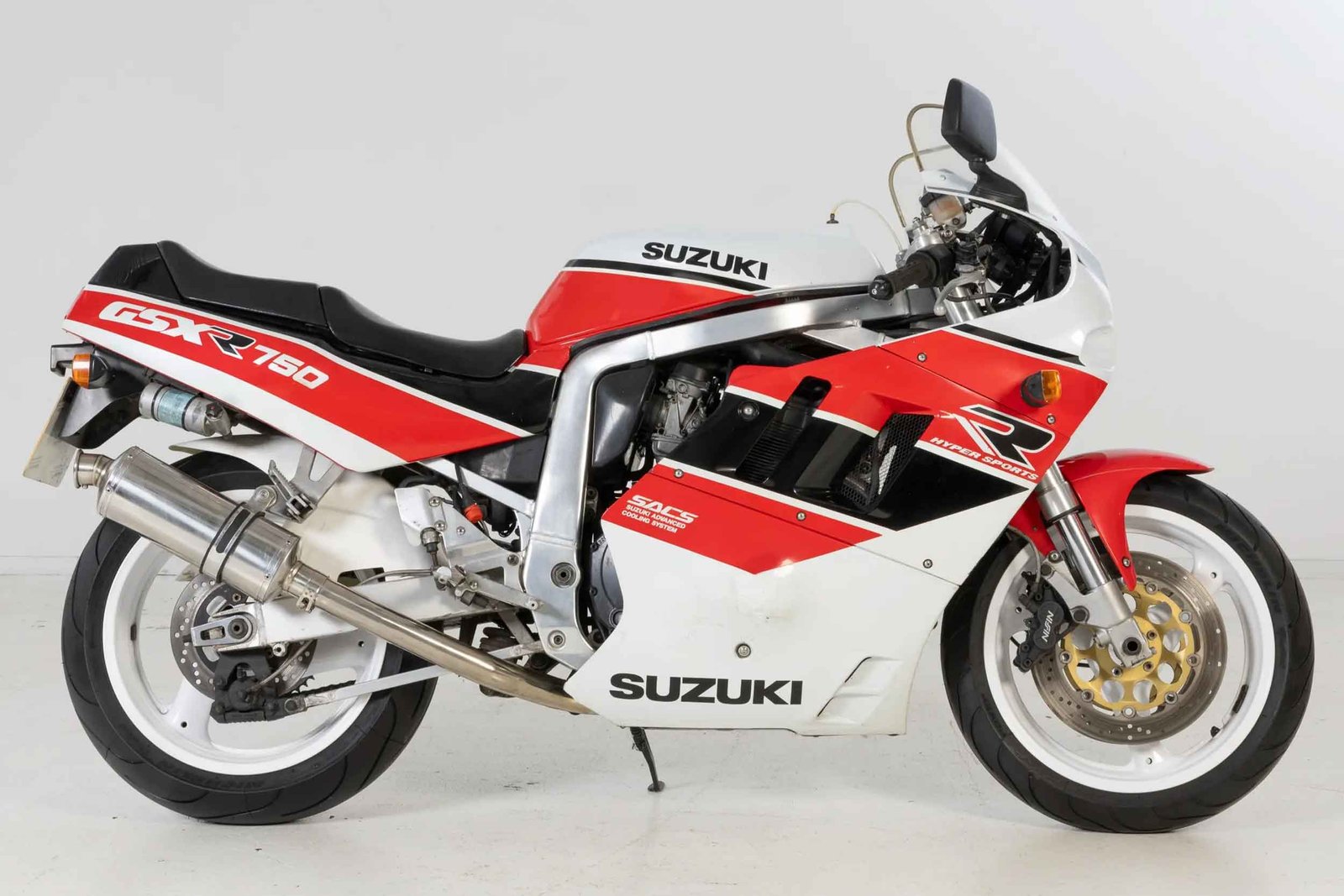
However, many GSX-R750s have been mistreated, crashed or badly customised so it’s rare to find one that as original as this one coming up for sale in Bonhams’ January 2024 online auction.
It is a 1990 second generation GSX-R ‘Slingshot’ with all the benefits of that racing experience. This Slingshot was last run in 2022. Since then, it has been dry stored.
Following a period of inactivity, re-commissioning at the very least, or possibly more extensive restoration is required before returning to the road and thus is sold strictly as viewed. It’s offered with a V5C document and key.