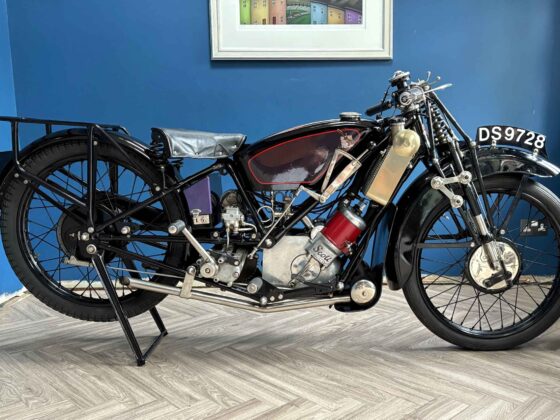
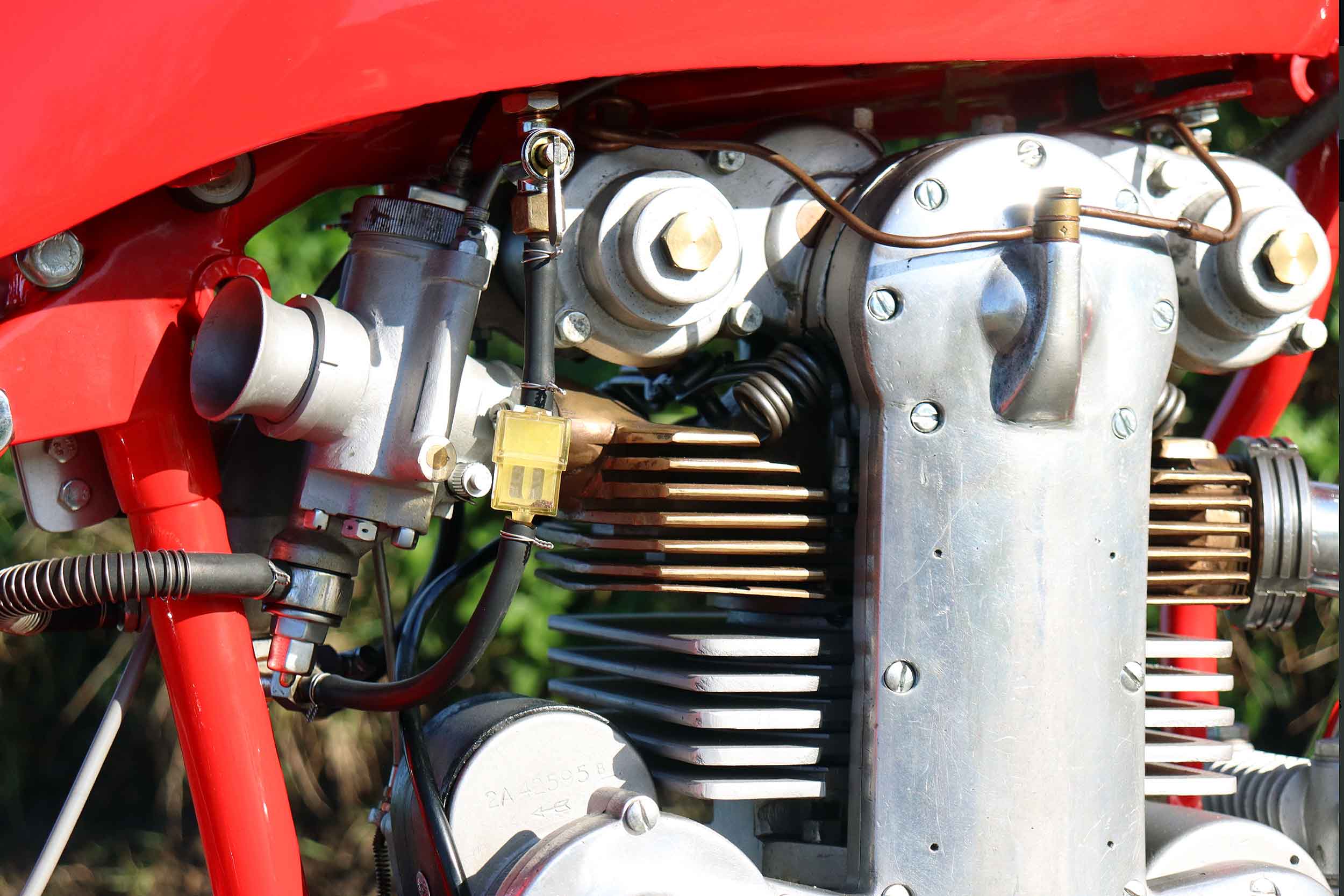
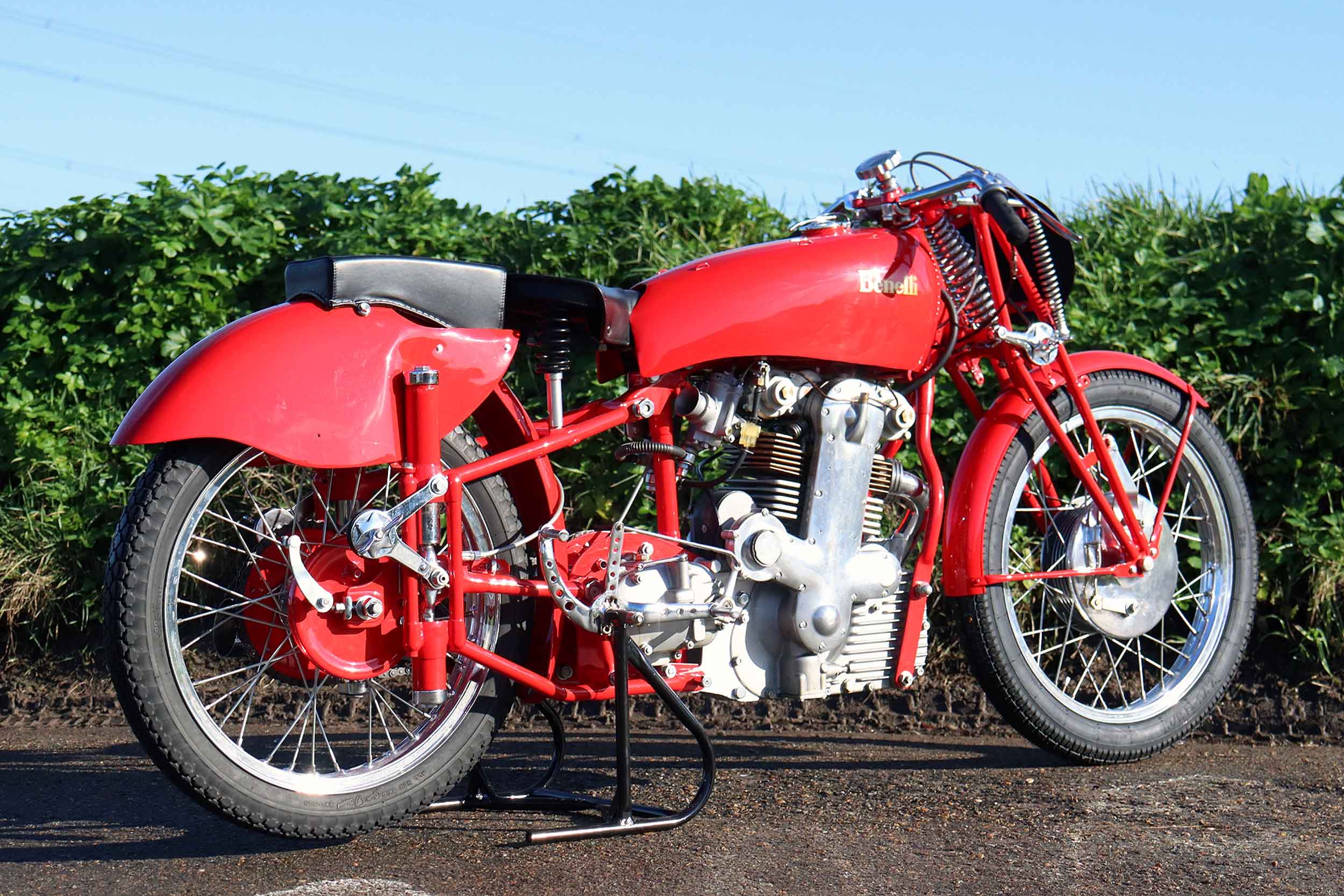
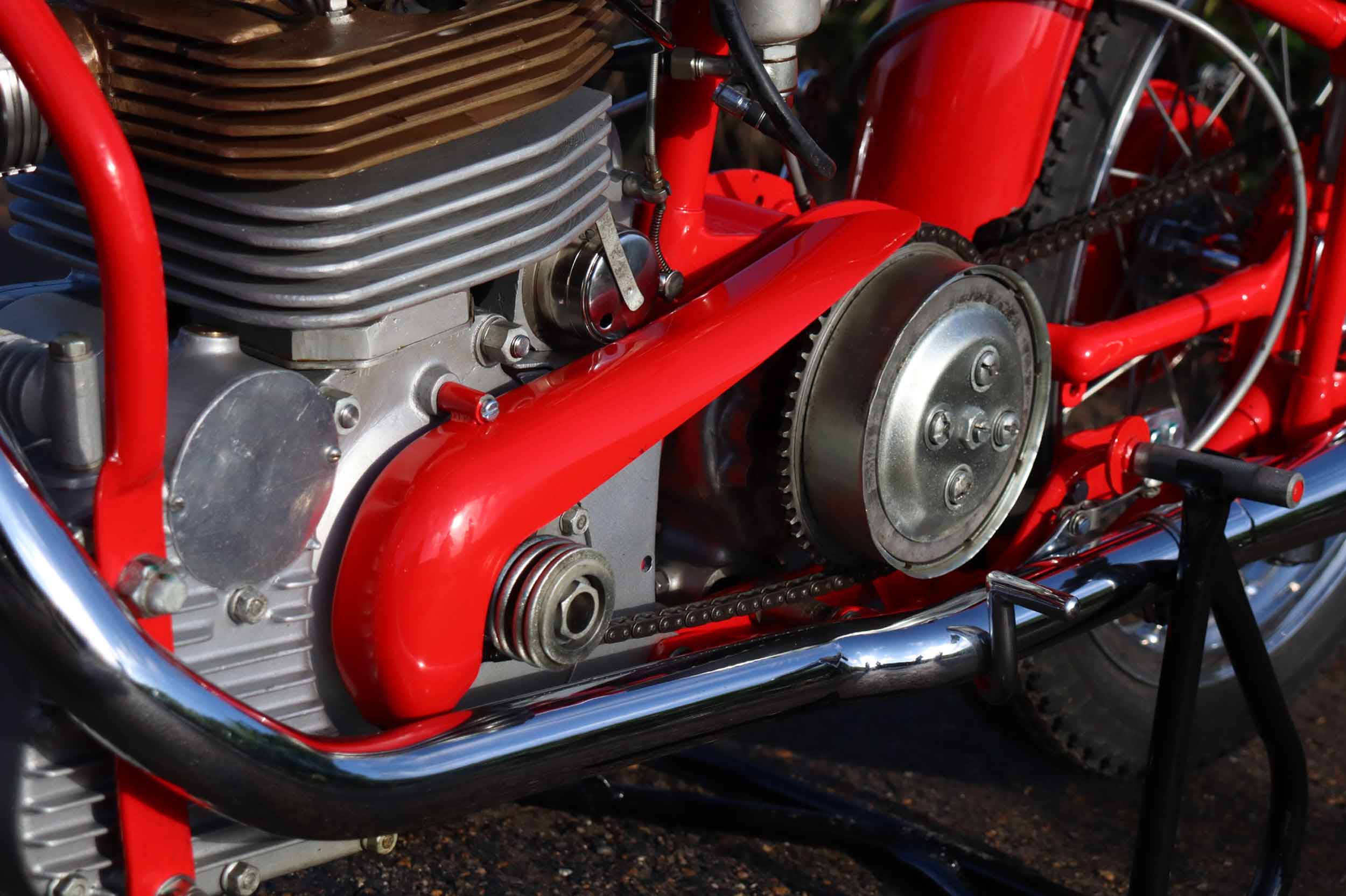
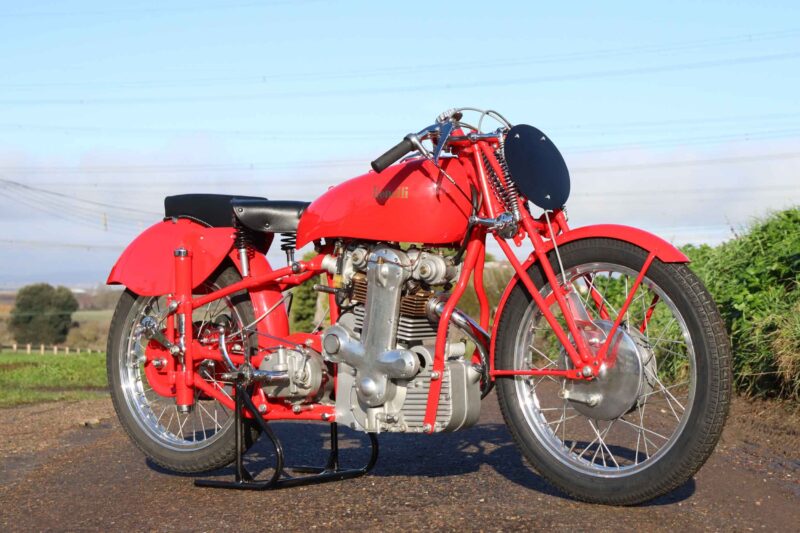
Few machines capture the intoxicating blend of engineering ambition and racing romance quite like the Benelli 250 DOHC.
Benelli’s competition pedigree stretched back to the 1920s, when the company earned admiration with a sophisticated SOHC 175. But it was the arrival of the double overhead camshaft configuration that truly signalled intent.
First seen in 1930 and enlarged to 250cc by 1934, the DOHC Benelli was no mere incremental upgrade. It was a statement: high revs, precise valve control, and performance that embarrassed larger machines. Period reports spoke of a flying kilometre at 113mph — territory normally reserved for the quickest 350s of the era.
Yet speed alone does not guarantee supremacy. On the track, Benelli faced ferocious opposition from rivals like Moto Guzzi and DKW, marques whose racing departments were equally determined to dominate the pre-war narrative.
The answer from Pesaro came in 1938, when Giovanni Benelli introduced a pivotal evolution: dry-sump lubrication. This seemingly technical footnote transformed reliability at sustained high speeds, allowing the engine’s long-stroke architecture and substantial flywheel to deliver a rare combination of torque and top-end urge.
The result was immediate and emphatic. At Monza, the 1938 Italian Grand Prix fell to Benelli, with Emilio Soprani leading a triumphant one-two finish. Ted Mellors, campaigning a 350cc Velocette KTT, was left trailing in third — a smaller-capacity Benelli humiliating a bigger-class contender on one of Europe’s most storied circuits. Mellors would later swing a leg over the Benelli at the 1939 Lightweight TT, where he carried the Pesaro marque to victory on the Isle of Man’s unforgiving mountain course.
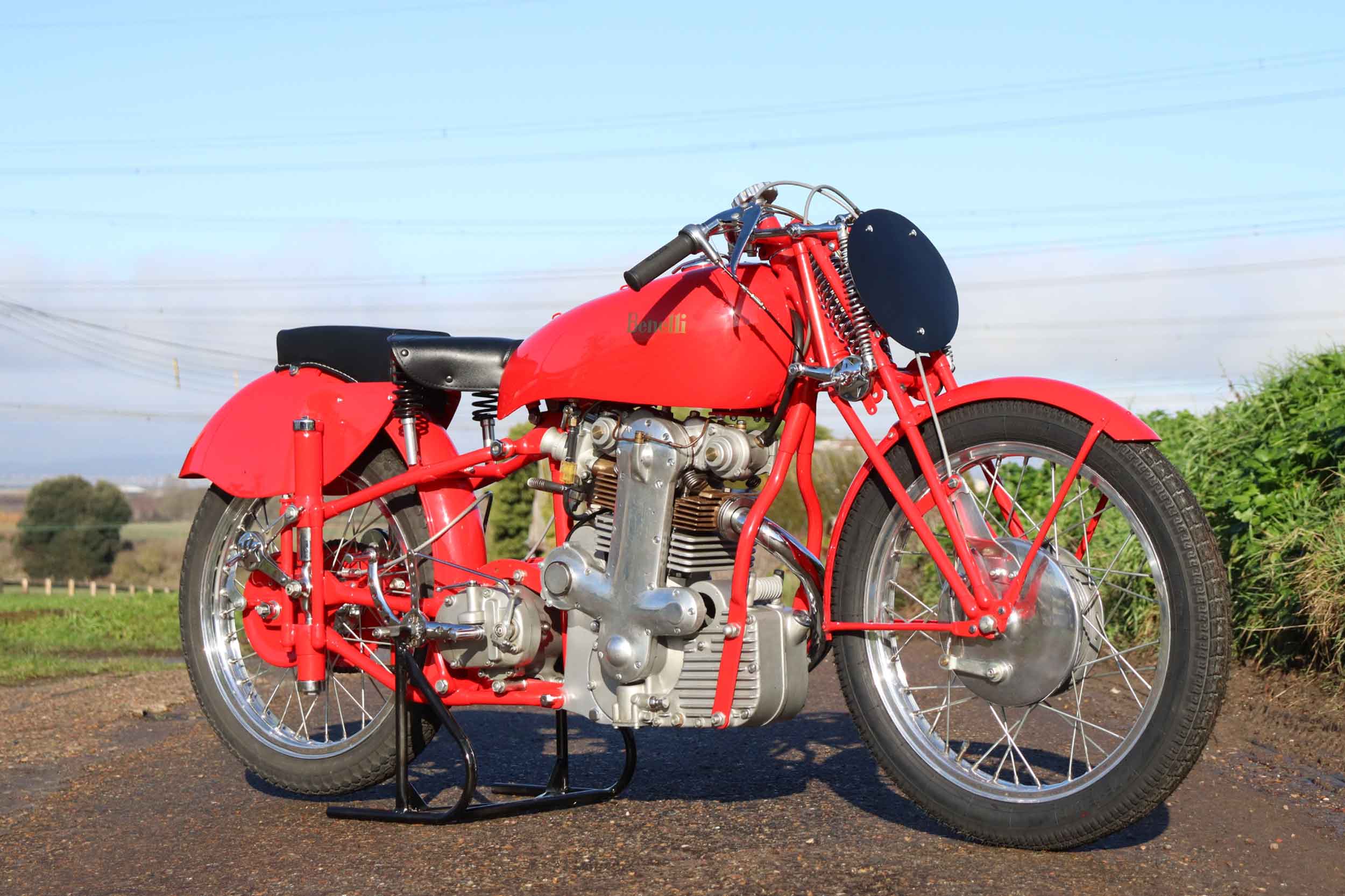
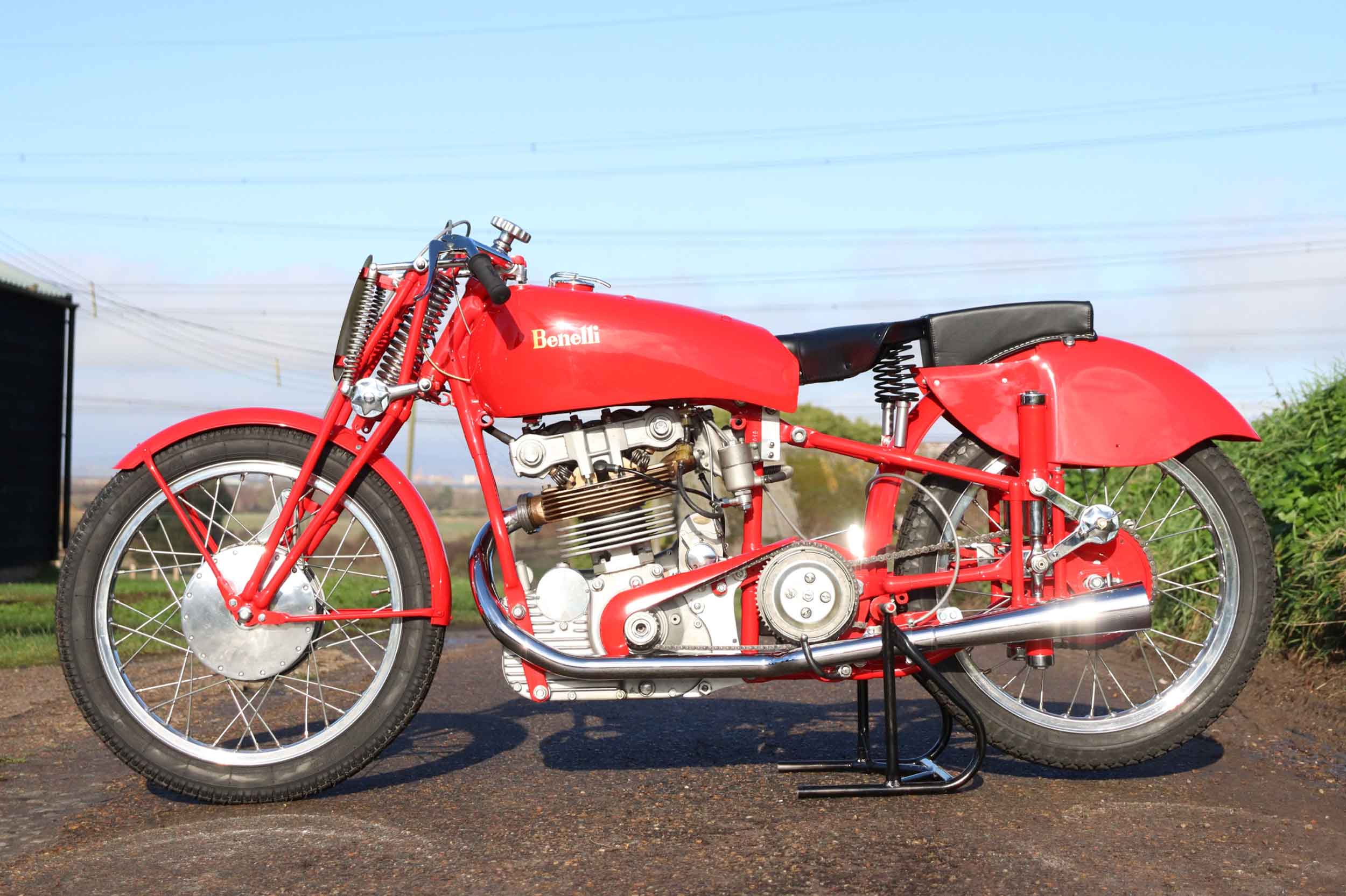
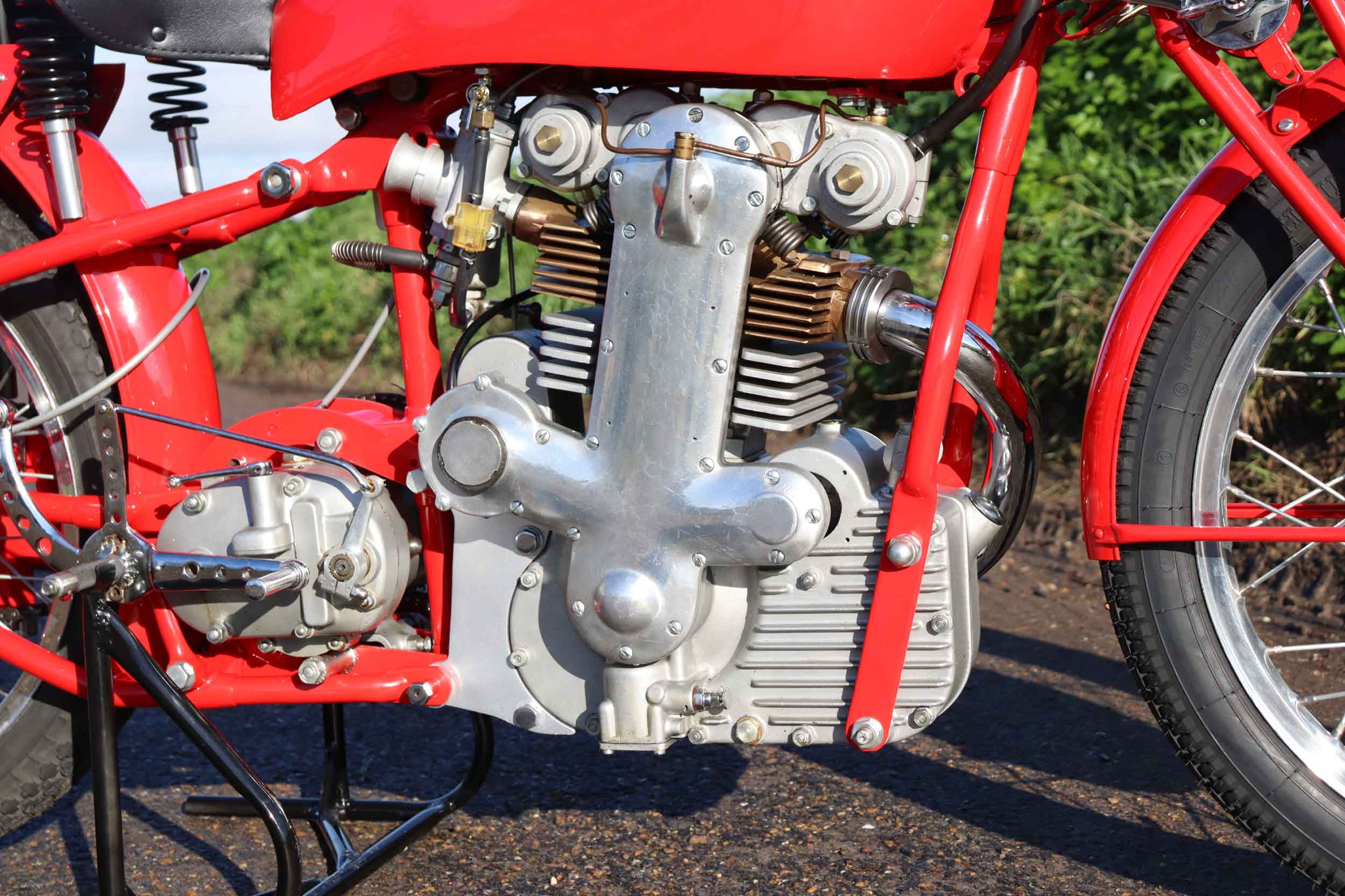
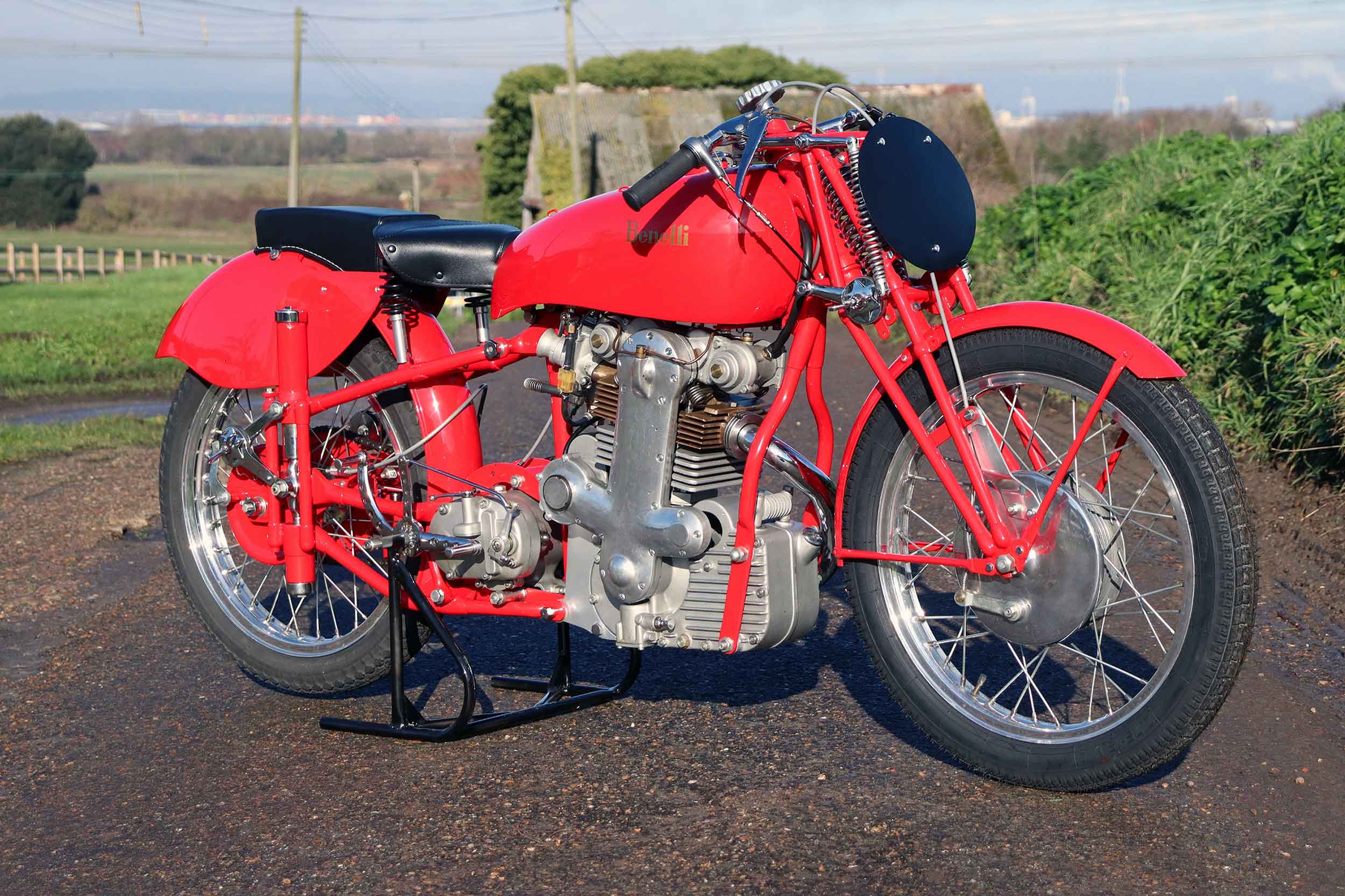
The particular 250 DOHC that prompted this reflection carries an especially evocative backstory. According to the auction notes, it began life as a civilian or ex-military SOHC Benelli 250 before undergoing a painstaking DOHC conversion in the late 1940s by Pierre Berlie, a highly regarded performance specialist based in Avignon . Berlie was no casual tinkerer. He designed, machined, and even cast components himself, first converting a 175cc Benelli to DOHC specification before repeating the feat on this 250.
Such conversions speak volumes about the reverence these machines inspired. In an age without CNC machining or rapid prototyping, reconfiguring a single-cam engine into a twin-cam thoroughbred required extraordinary skill and patience. Berlie’s work extended beyond the cylinder head; he also produced a large-diameter lightweight alloy front hub of his own design, intended for commercial sale. Both Benellis were reportedly featured in a period Moto Revue article, a testament to the significance of his craftsmanship.
After decades hidden away in private collections — including residence in a French private museum by the 2000s — the motorcycle has resurfaced on the market with an estimate of £44,000 to £48,000.
What bidders are really being offered is a soul-stirring tribute to one of the “five greatest motorcycles of all time,” a description once bestowed upon the Benelli racer by Cycle World.
Beyond its monetary value lies something less tangible but arguably more compelling: continuity. After WWII, Benelli returned to racing and the 250 DOHC — fundamentally a pre-war design — continued to challenge newer machinery. With Dario Ambrosini, it finally secured the 250 World Championship in 1950, winning three of four rounds, including the TT. A twelve-year-old concept, still capable of conquering the world.
The Benelli 250 DHC is for sale at H&H’s auction at the National Motorcycle Museum on 25 March 2026.