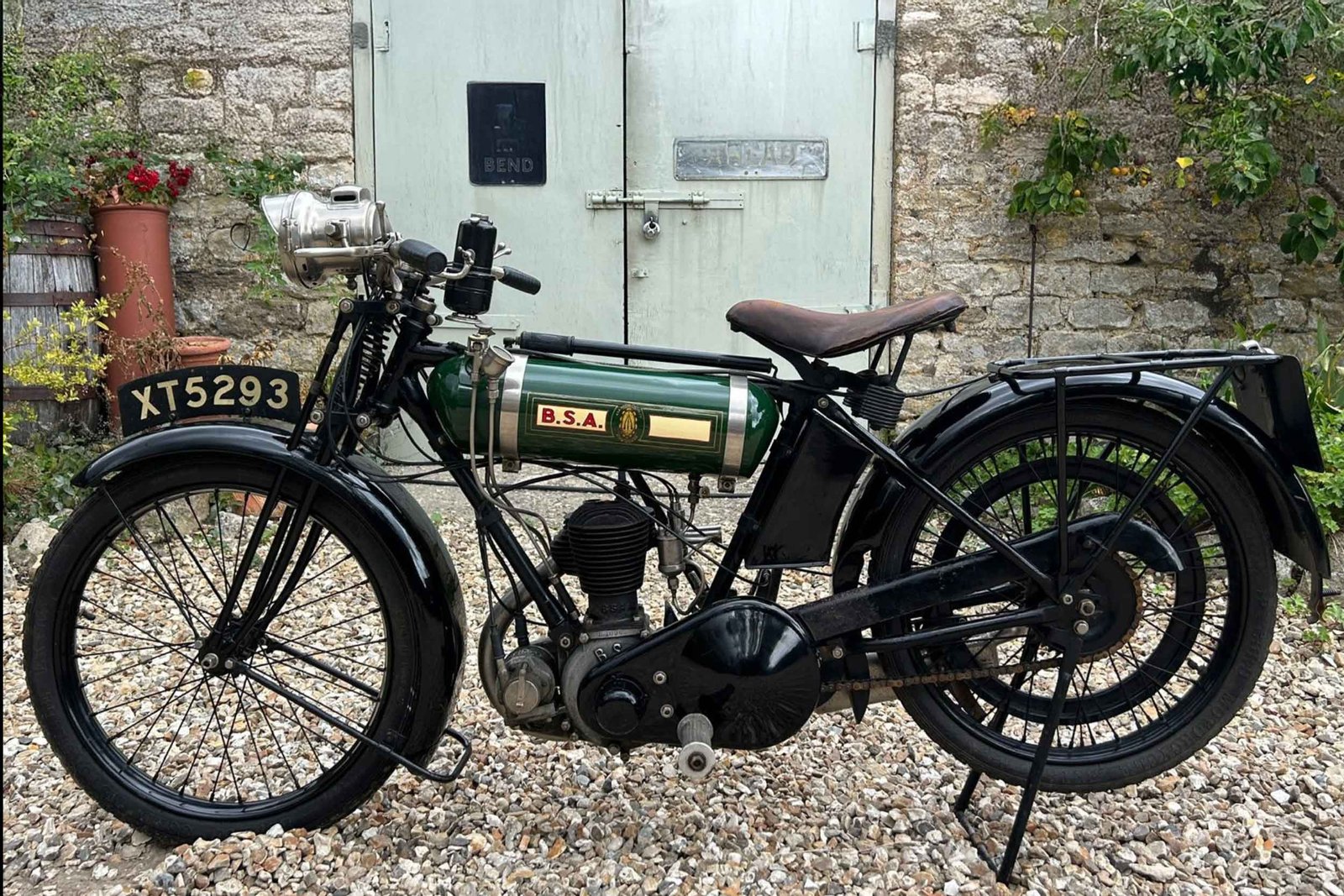
There’s something very appealing about motorcycles more than 100 years old. The century or ‘ton’ is a milestone in cricket, speed, and probably several other activities.
There’s another threshold too: World War One, or the Great War as it was known before WW2 came along. Motorcycles (and cars and aeroplanes) changed hugely from pre-war to post-war and that gulf can be seen in two motorcycles coming up for auction soon.
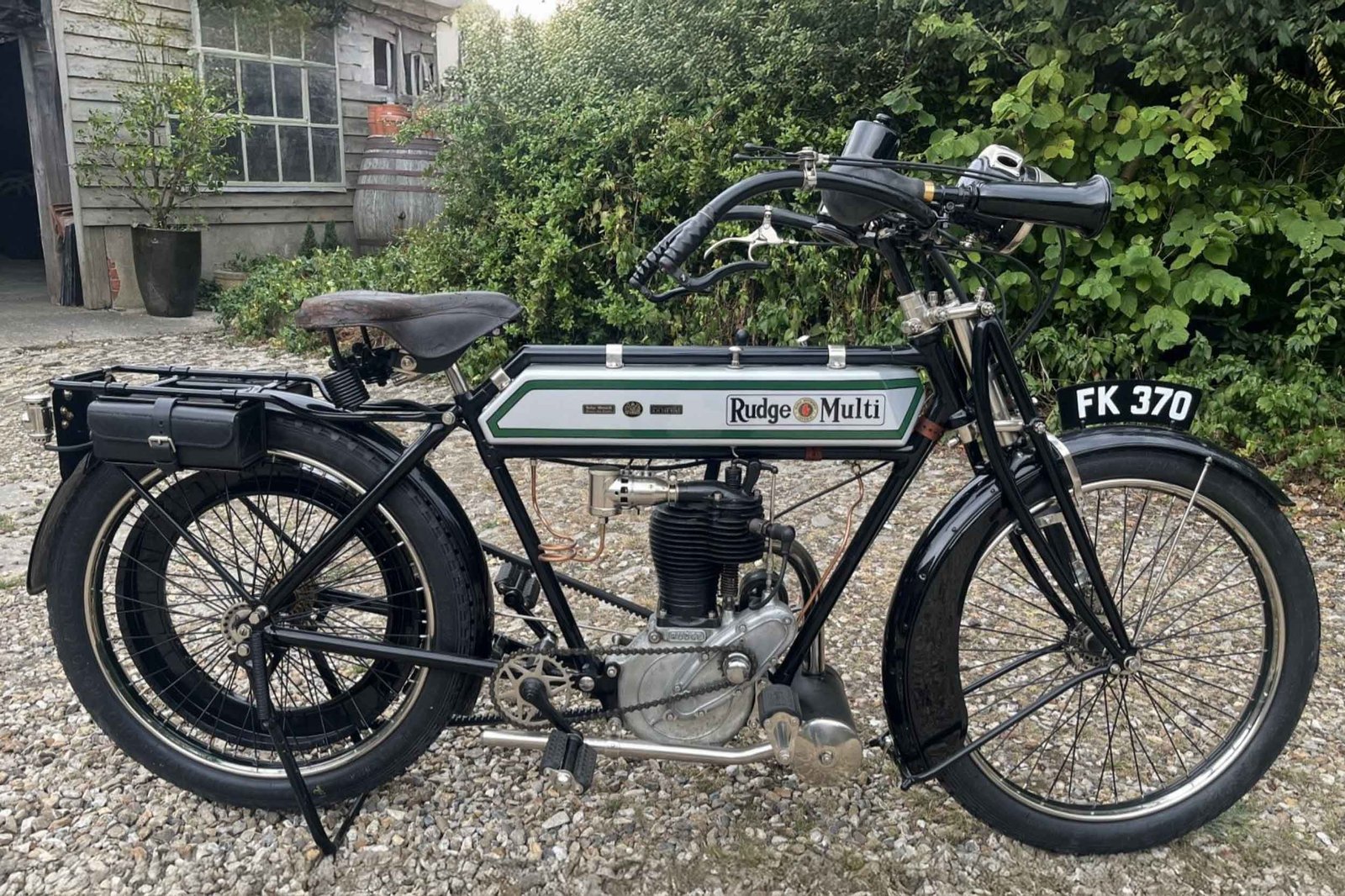
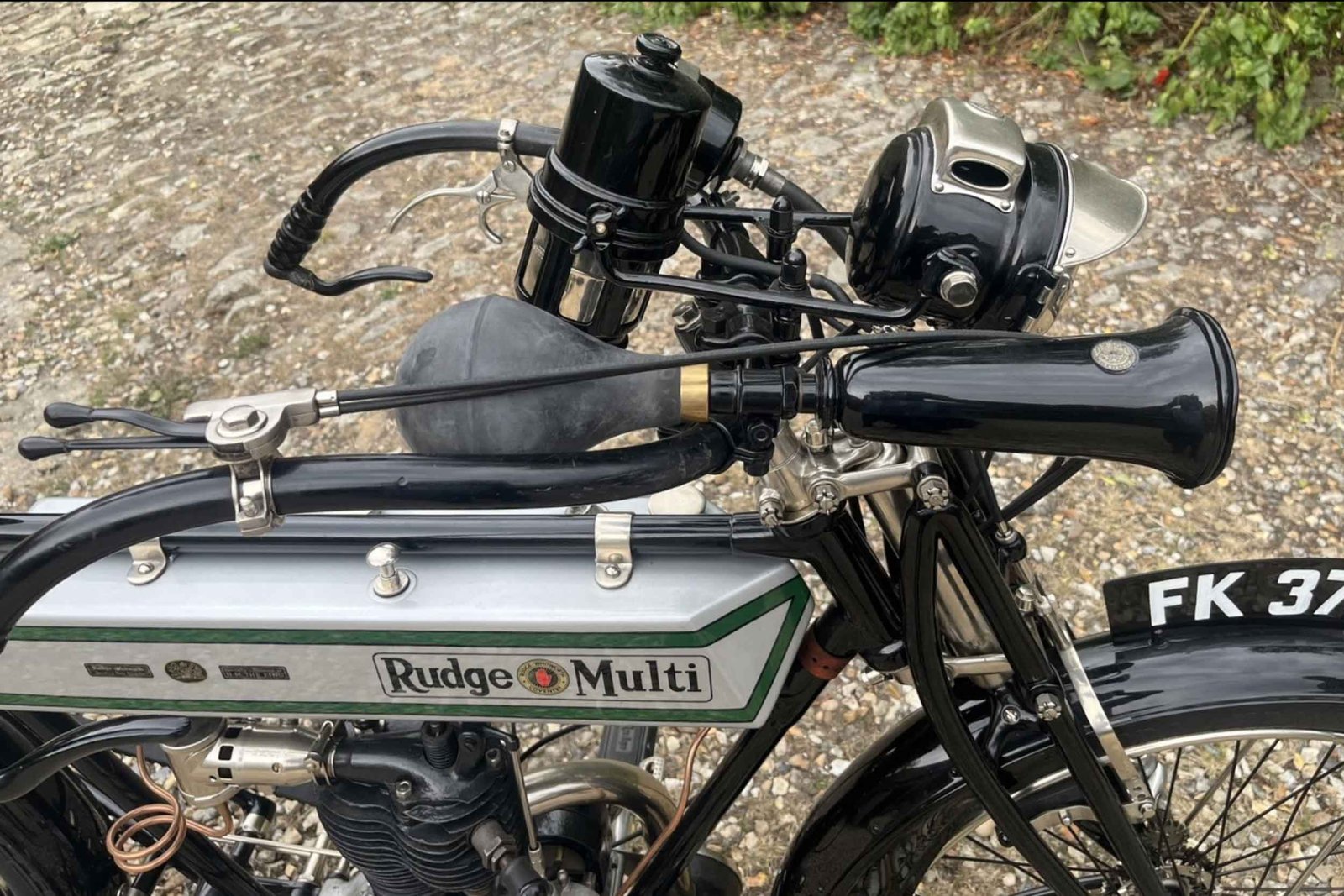
At the Charterhouse Classic & Vintage Motorcycle Auction on 12 March there’s a stunning 1912 Rudge Multi 500cc carrying an estimate of £15,000-£17,000 which seems inexpensive for such a historic machine.
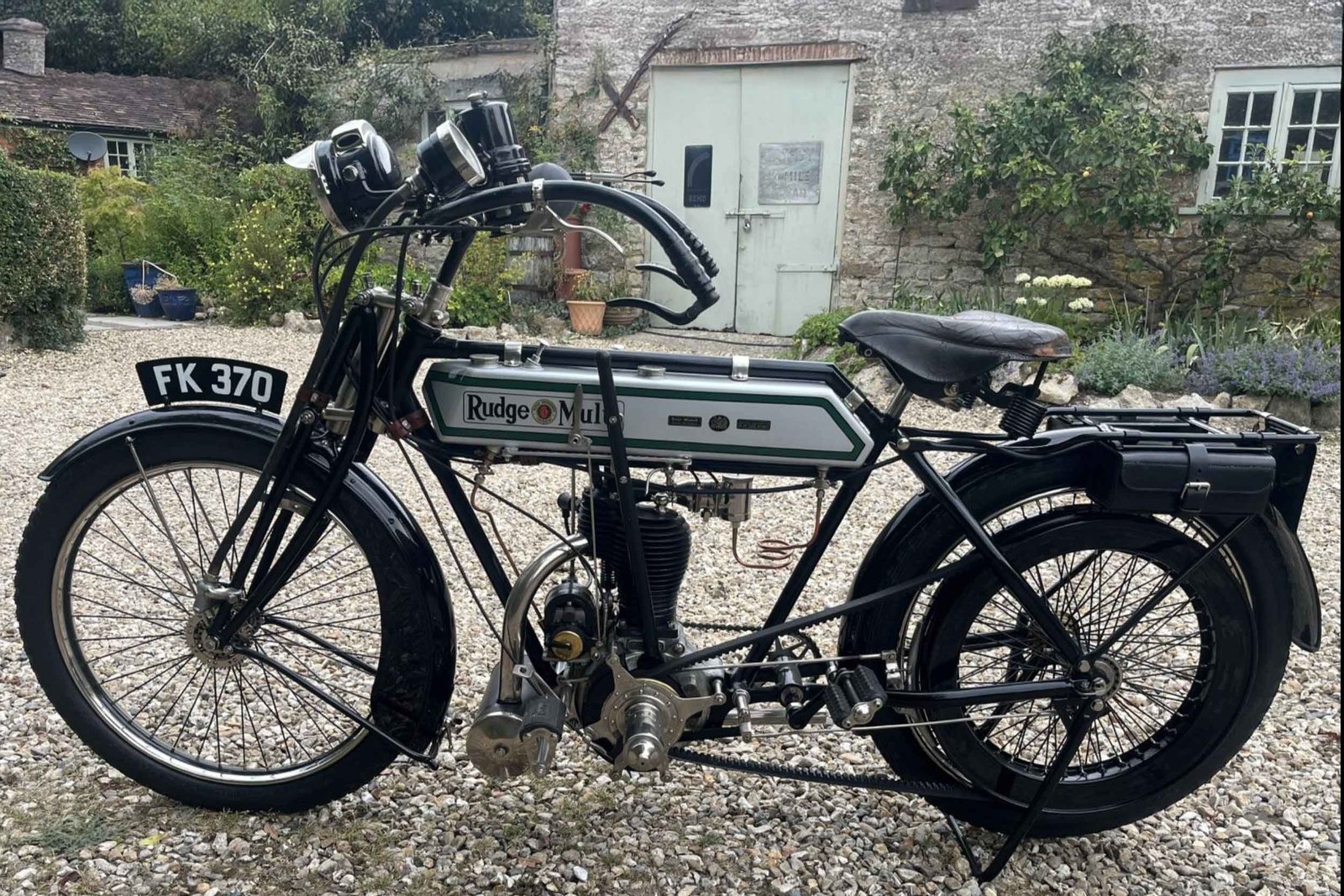
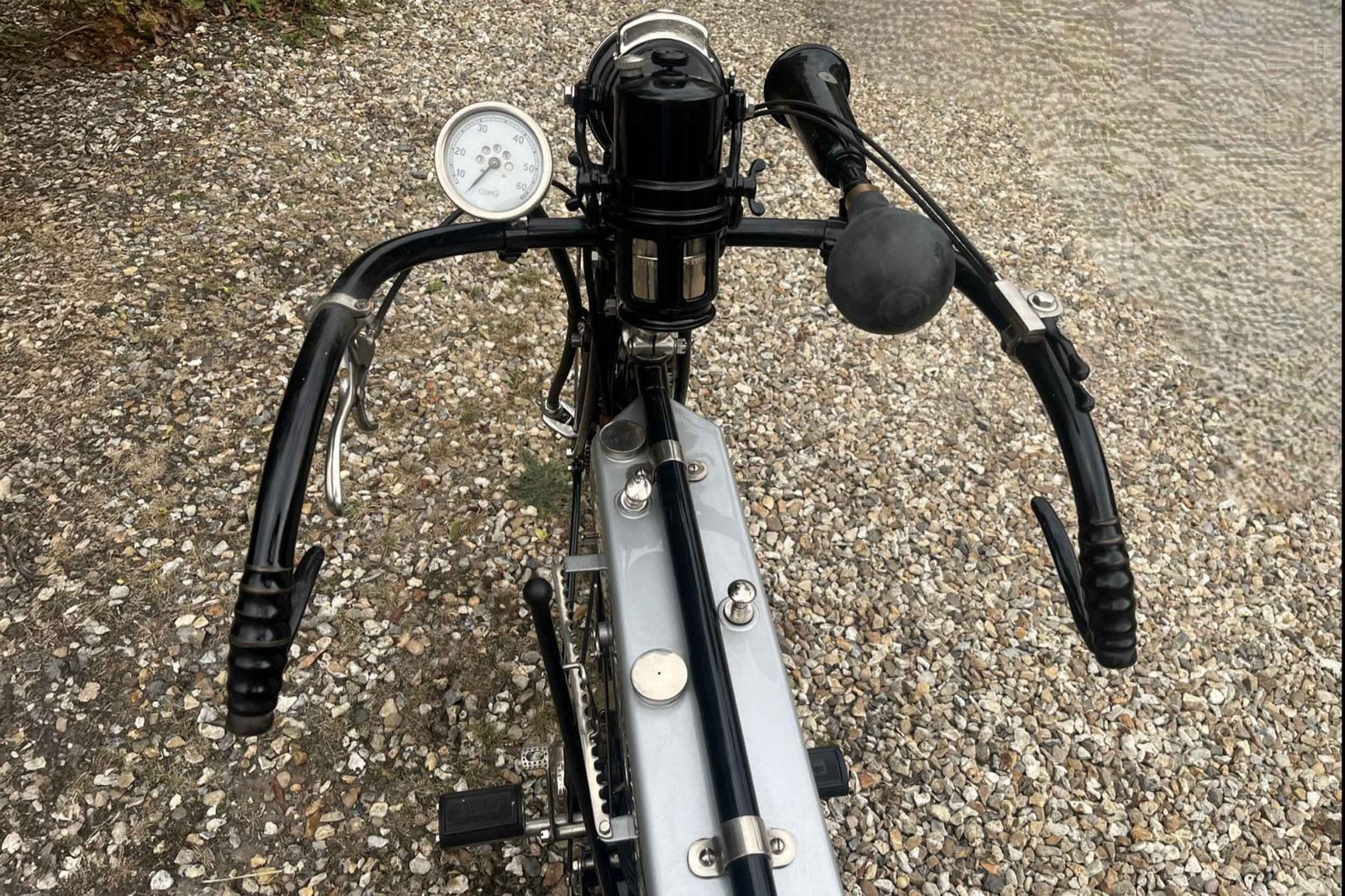
1912 Rudge Multi 500cc
First, a bit of history.
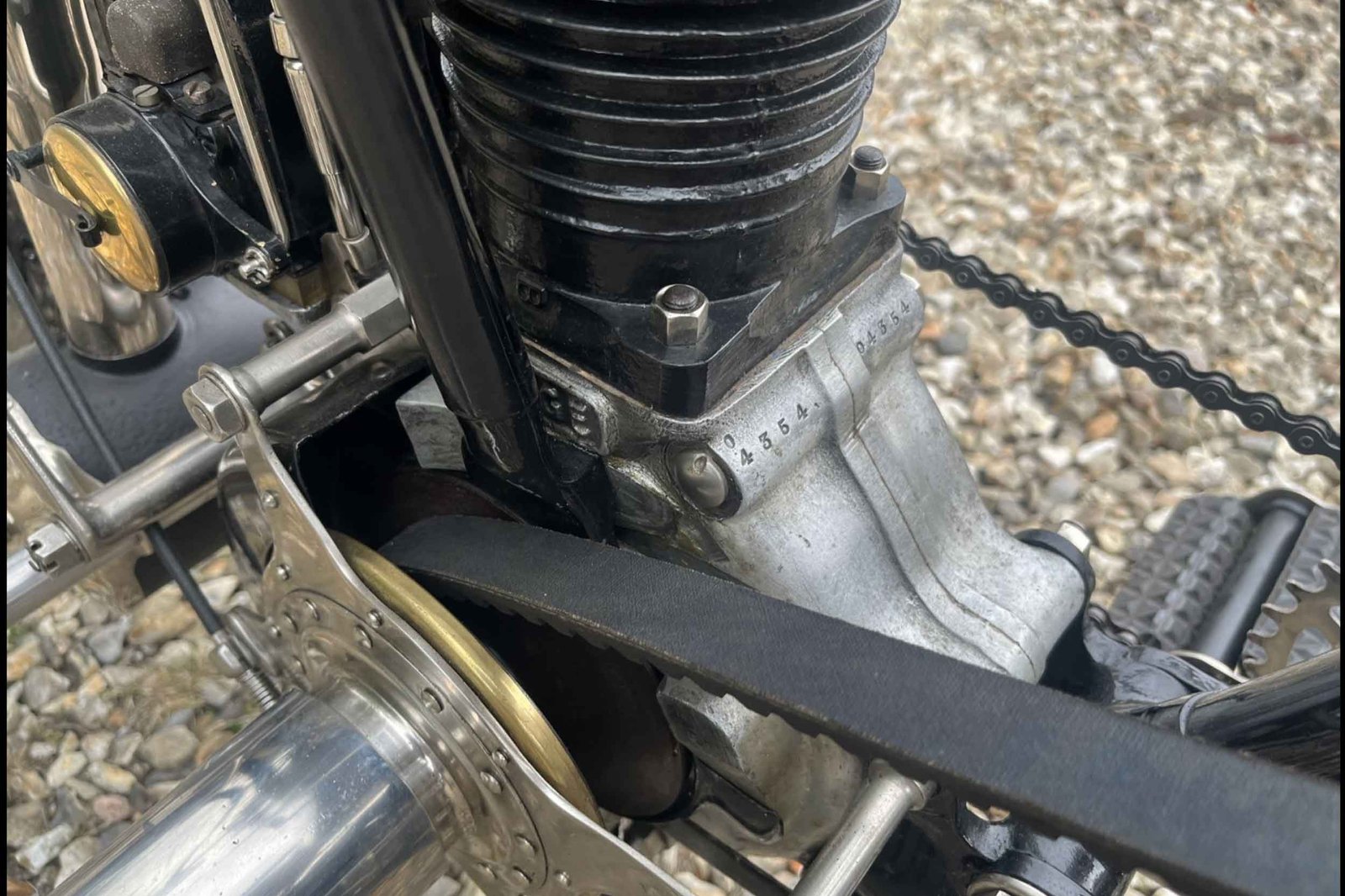
The 1912 Rudge Multi 500cc arrived at exactly the moment motorcycling needed a clever workaround. In an era when most machines still relied on single-speed belt drive (or a crude two-speed), Rudge-Whitworth’s answer was the “Multi” variable-ratio transmission: a belt-driven, expanding-and-contracting pulley system that effectively gave the rider a wide spread of ratios without a conventional gearbox.
The company had patented key features of the system in 1910, and 1912 was the first production year in which the Multi concept was offered as a mainstream model.
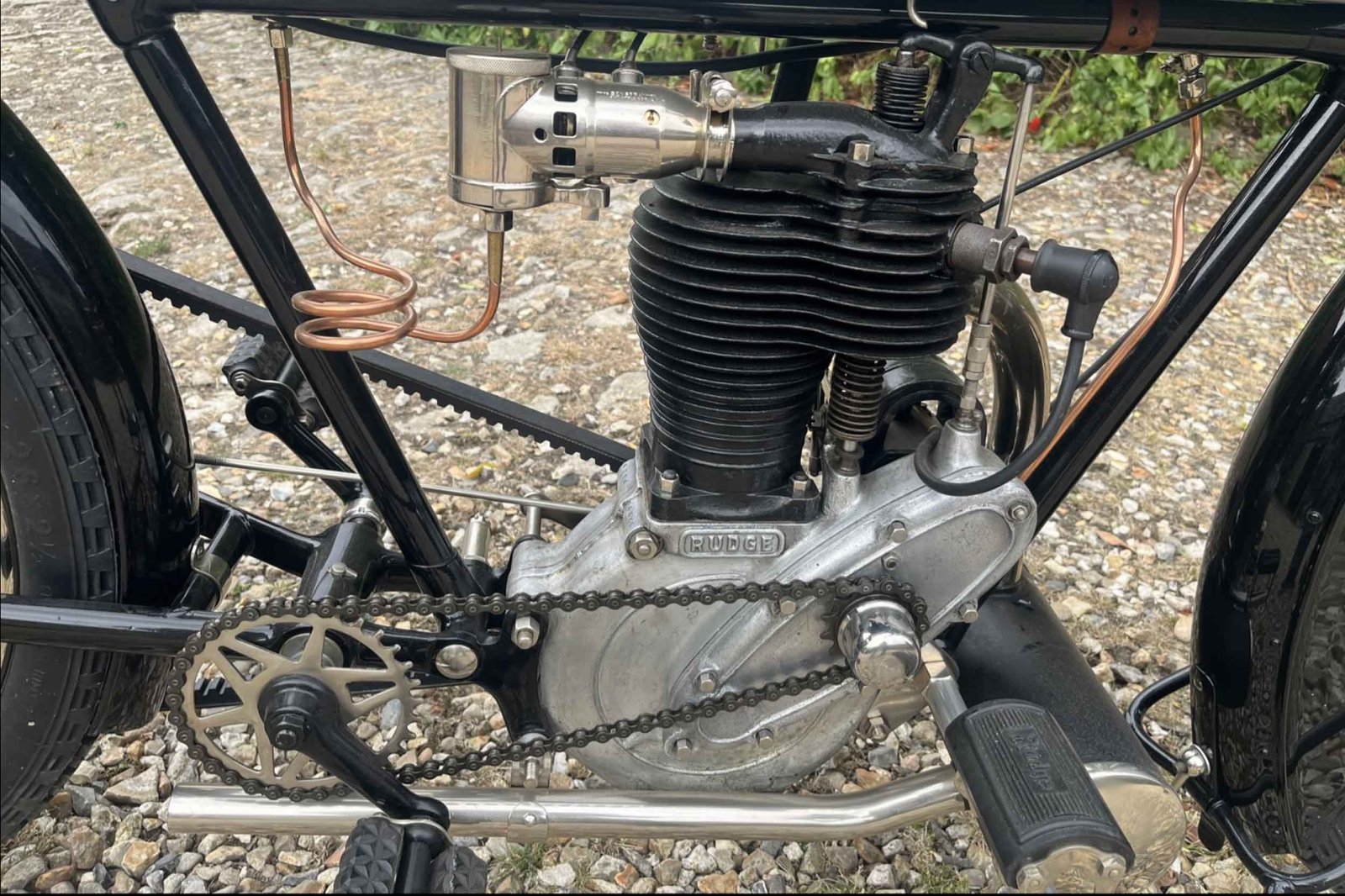
At its heart was a 499cc single-cylinder, four-stroke IOE (“inlet over exhaust”) engine — an F-head layout with an overhead inlet valve and a side exhaust valve. Period specification listings commonly quote bore and stroke as 85mm x 88mm, which calculates to 499cc, matching the model designation used in modern registries and sales descriptions.
The fuel system is frequently described as using a Senspray carburettor, and ignition as a Ruthardt magneto, gear-driven and fitted with vernier adjustment — a detail that matters because fine ignition timing control was a genuine performance tool on early singles.
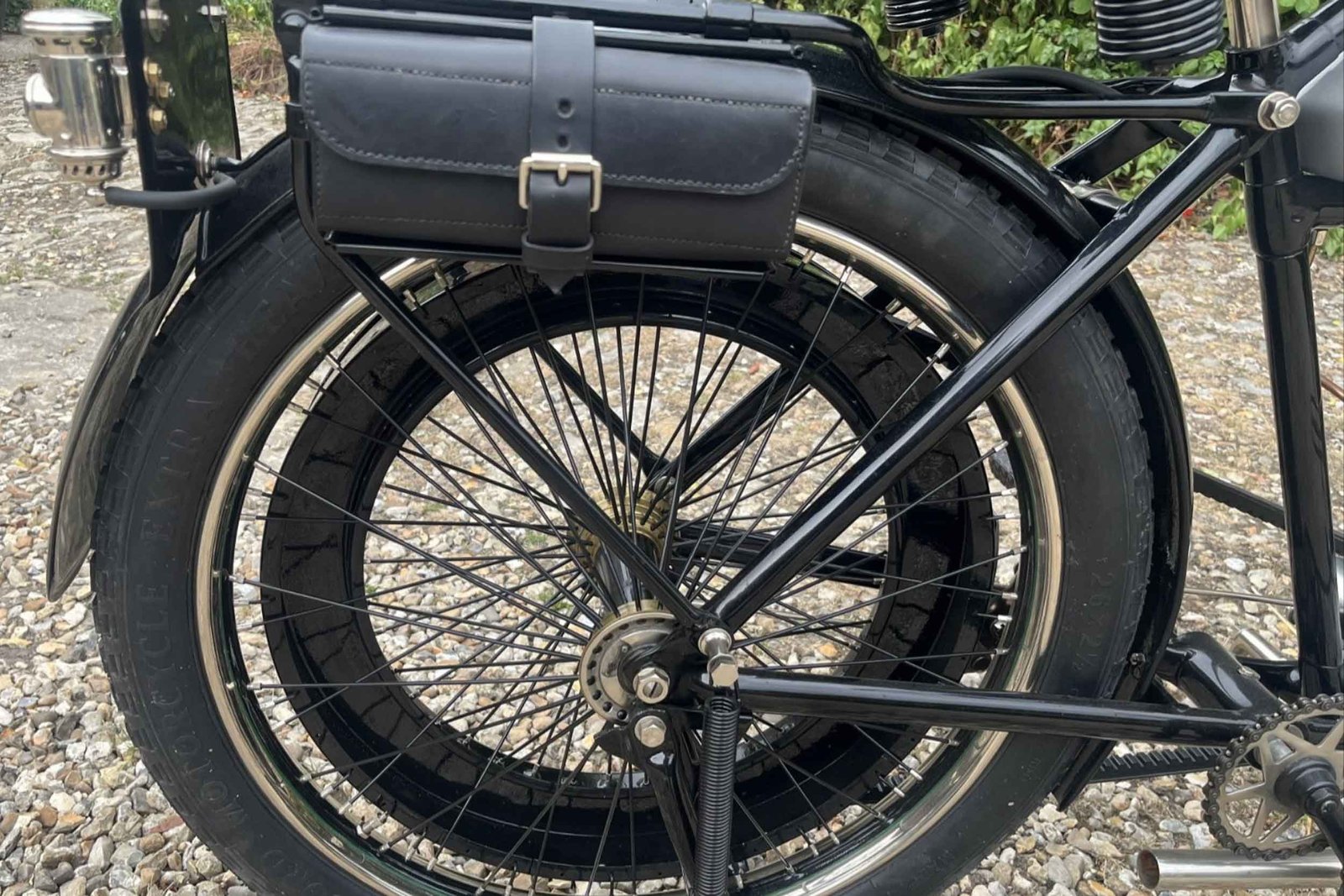
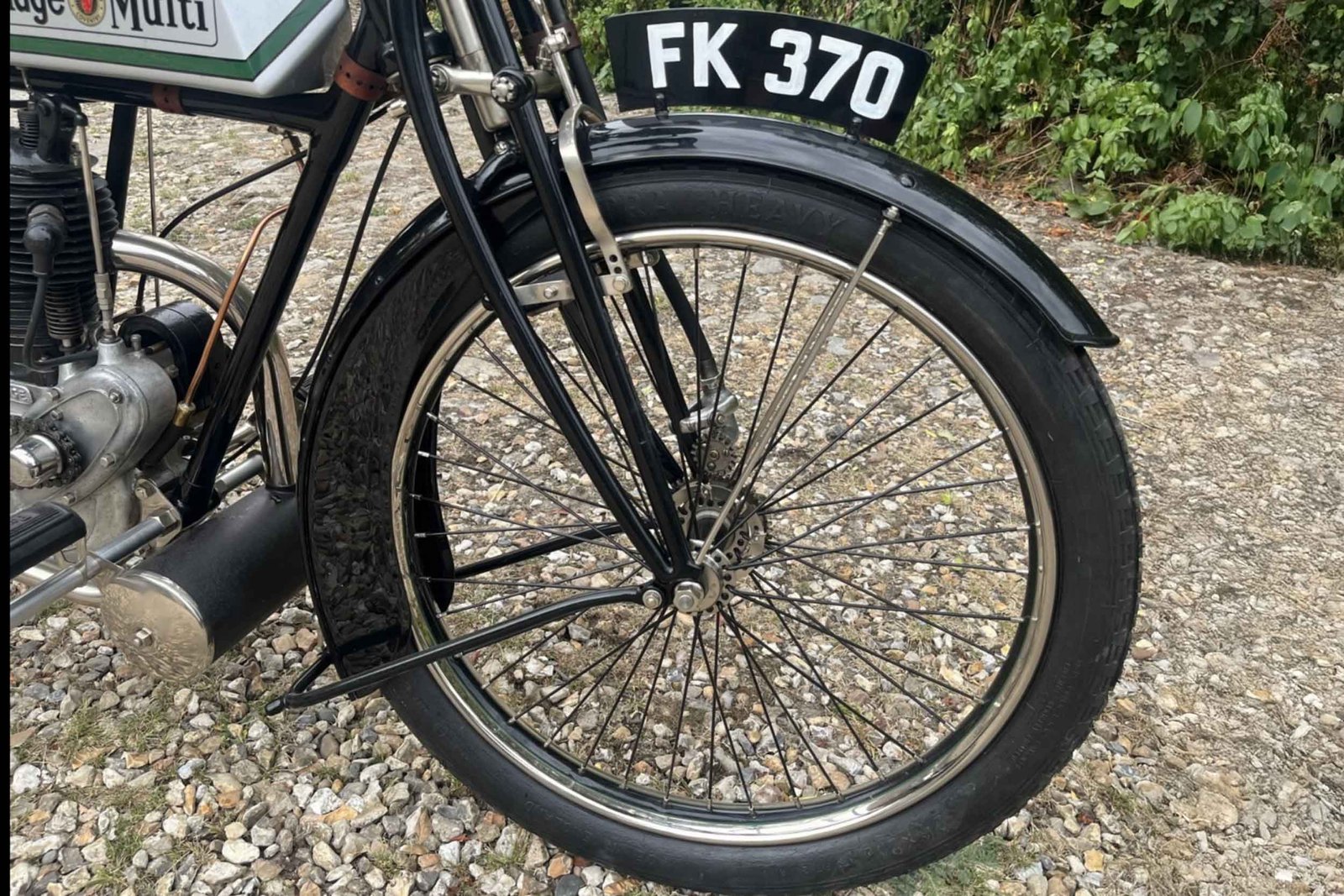
The chassis was built around a simple diamond frame, and many references note Rudge’s enclosed-spring front fork arrangement—an early attempt to add control and comfort on rough roads that were often closer to compacted gravel than tarmac. Wheels were typically shod with 650 x 65mm beaded-edge tyres, and braking was very much of its time: a single shoe acting on the rear belt rim, with a stirrup-type brake on the front rim.
Even lubrication reflects the transitional nature of 1912 engineering: an oil tank on the seat tube with a pump operated by the rider (often described as right-foot operated), reinforcing how “riding” could include actively managing the machine’s wellbeing.
So why did the Multi matter? Because its variable-speed “multi-gear” system could provide a huge number of effective ratios from a belt drive. Contemporary enthusiast write-ups often cite around 21 forward ratios achieved via changing pulley groove depth, letting the rider keep the engine in a useful band whether climbing, hauling a passenger, or stretching out on faster roads.
That flexibility helped make the Multi a sought-after sporting mount, and the model’s reputation was cemented when Cyril Pullin won the Isle of Man TT Senior TT on a Rudge Multigear in 1914, averaging 49.49 mph — notable as a landmark win for a single-cylinder machine in that event.
The Rudge coming for sale in March was purchased by the previous owner in 1969 when the machine was taken apart and put into boxes. The present owner bought it in this condition and rebuilt the machine in a meticulous three year restoration.
The engine contains the original cast iron piston and the Celluloid covering on the handlebars and speed lever is original. It’s so good that it won Best Veteran machine in the Shepton Mallet Show in 2020.
It’s for sale with V5C, early V5, green log book, tax discs and many interesting letters documents and photographs plus a USB stick showing the restoration process.
1924 BSA Model B 250 round tank
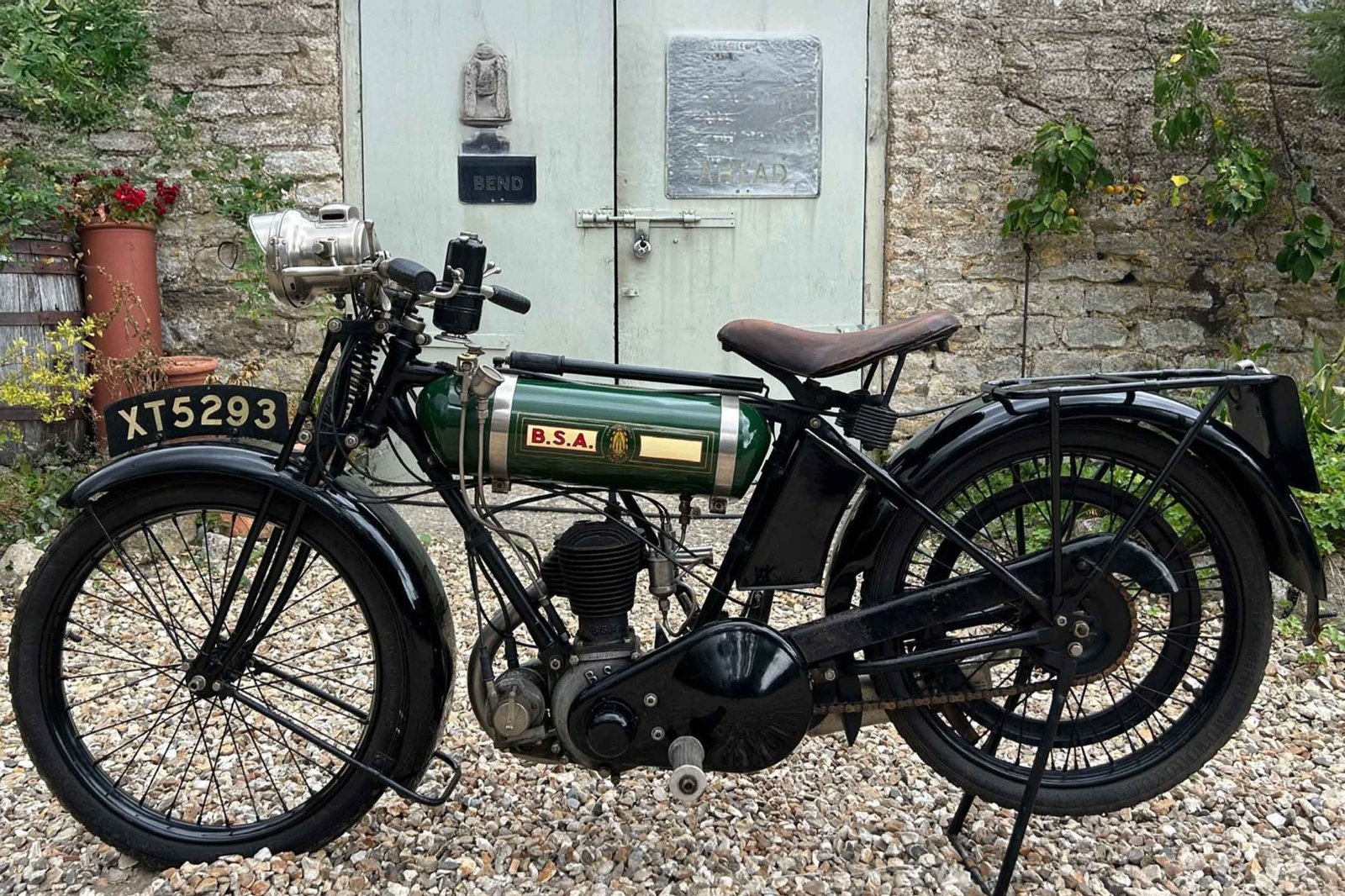
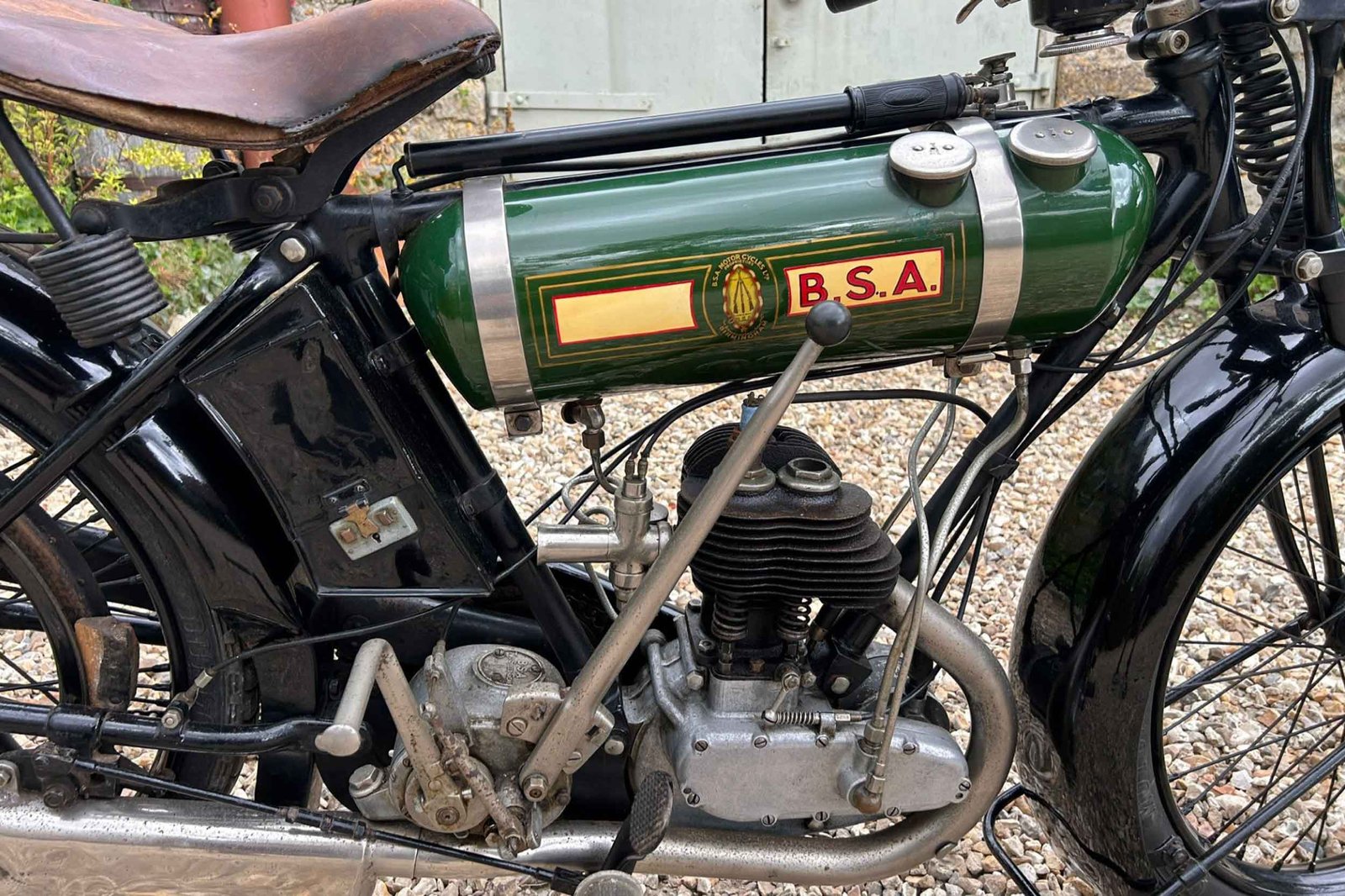
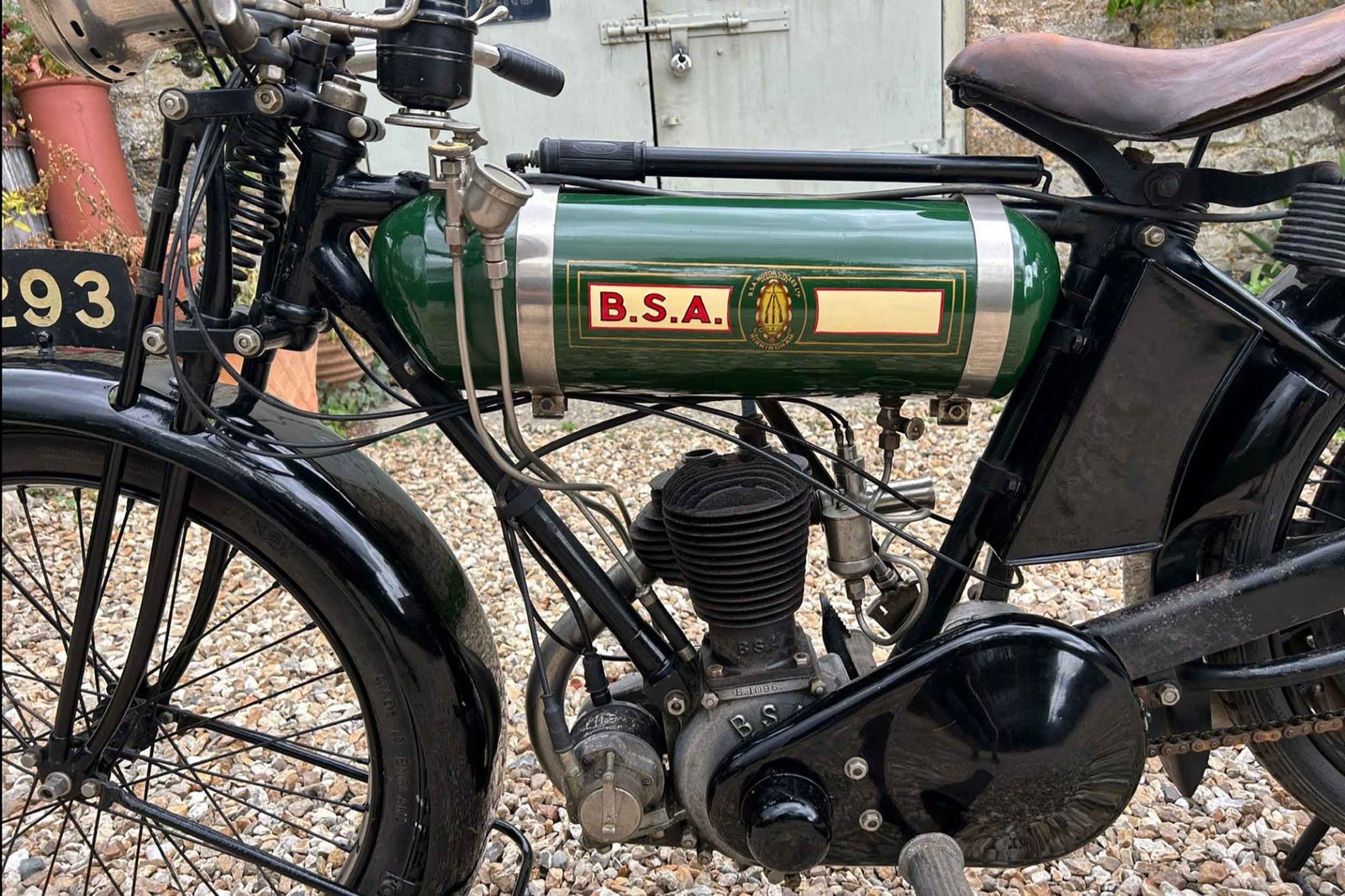
Also for sale with Charterhouse is this 1924 Birmingham Small Arms Company Model B 250 – better known as the “Round Tank”. The B 250 arrived in early 1924 as a deliberately budget-priced lightweight and quickly became one of the firm’s volume sellers of the decade.
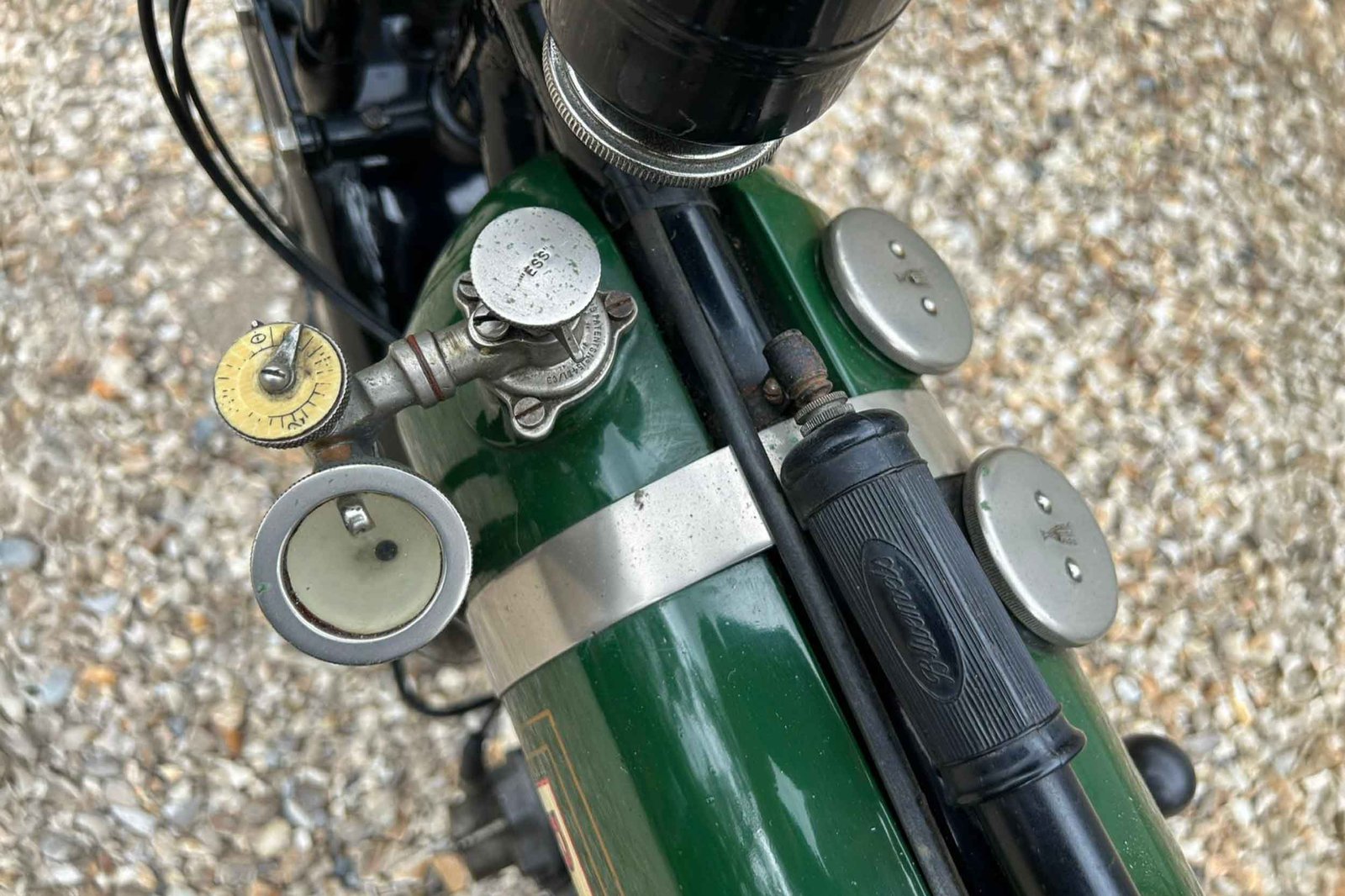
Its nickname is literal: the petrol tank is a near-cylinder sitting high in the frame, a distinctive bit of visual shorthand for a machine that was meant to be simple, cheap to run, and hard to kill.
Under that round tank sits a 249cc air-cooled, single-cylinder side-valve (flathead) four-stroke. Bore and stroke are commonly given as 63 x 80 mm, a notably “long-stroke” layout that favours low-speed pulling power and tractable manners over revs. Output is modest but adequate for its intended work: around 2.5 hp (about 1.83 kW) is typically quoted for the Model B in this era.
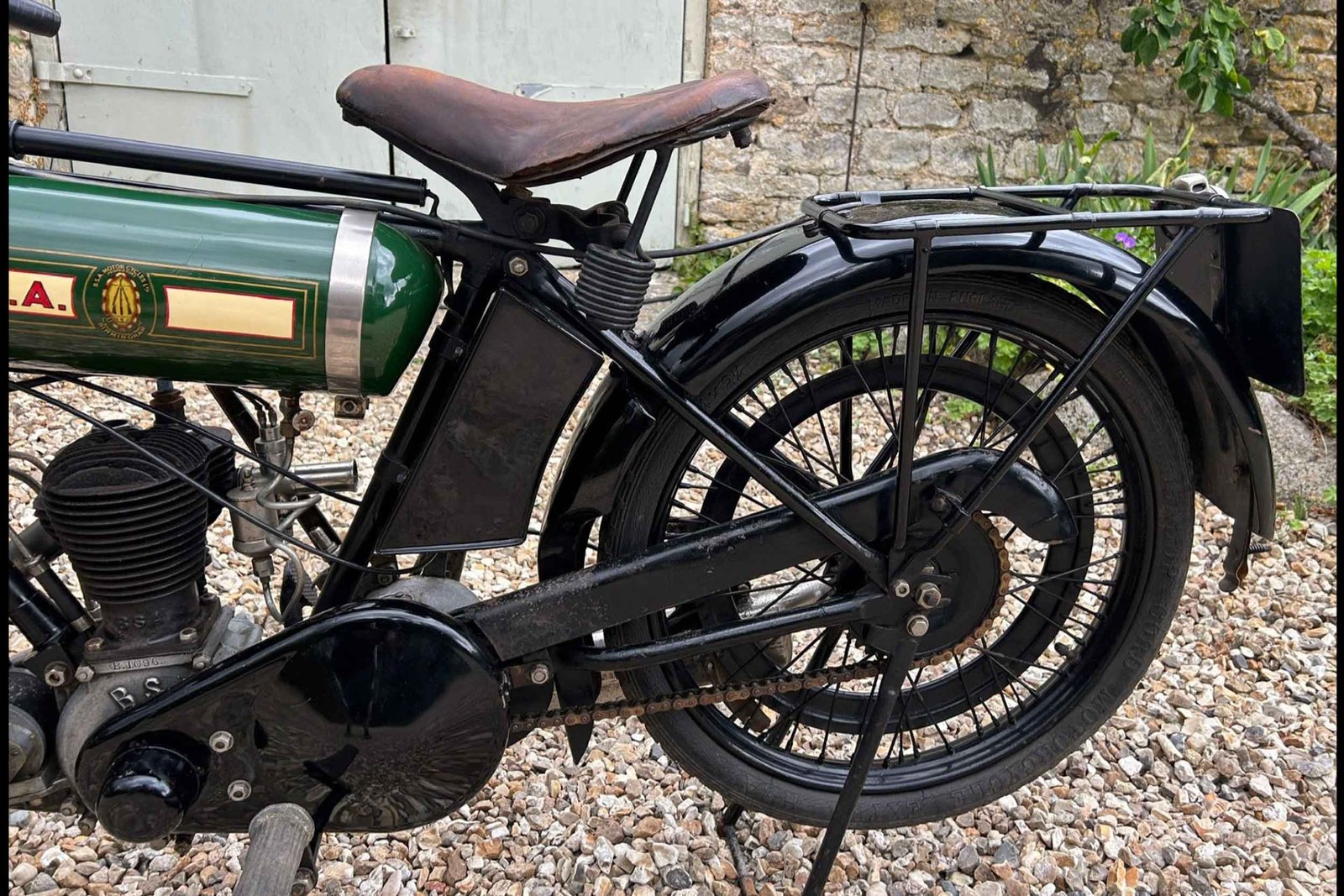
The cycle parts are as straightforward as the engine. Transmission is a 2-speed manual gearbox with chain final drive, keeping cost and complexity down and making the bike unintimidating for new riders (and easy for local mechanics to understand).
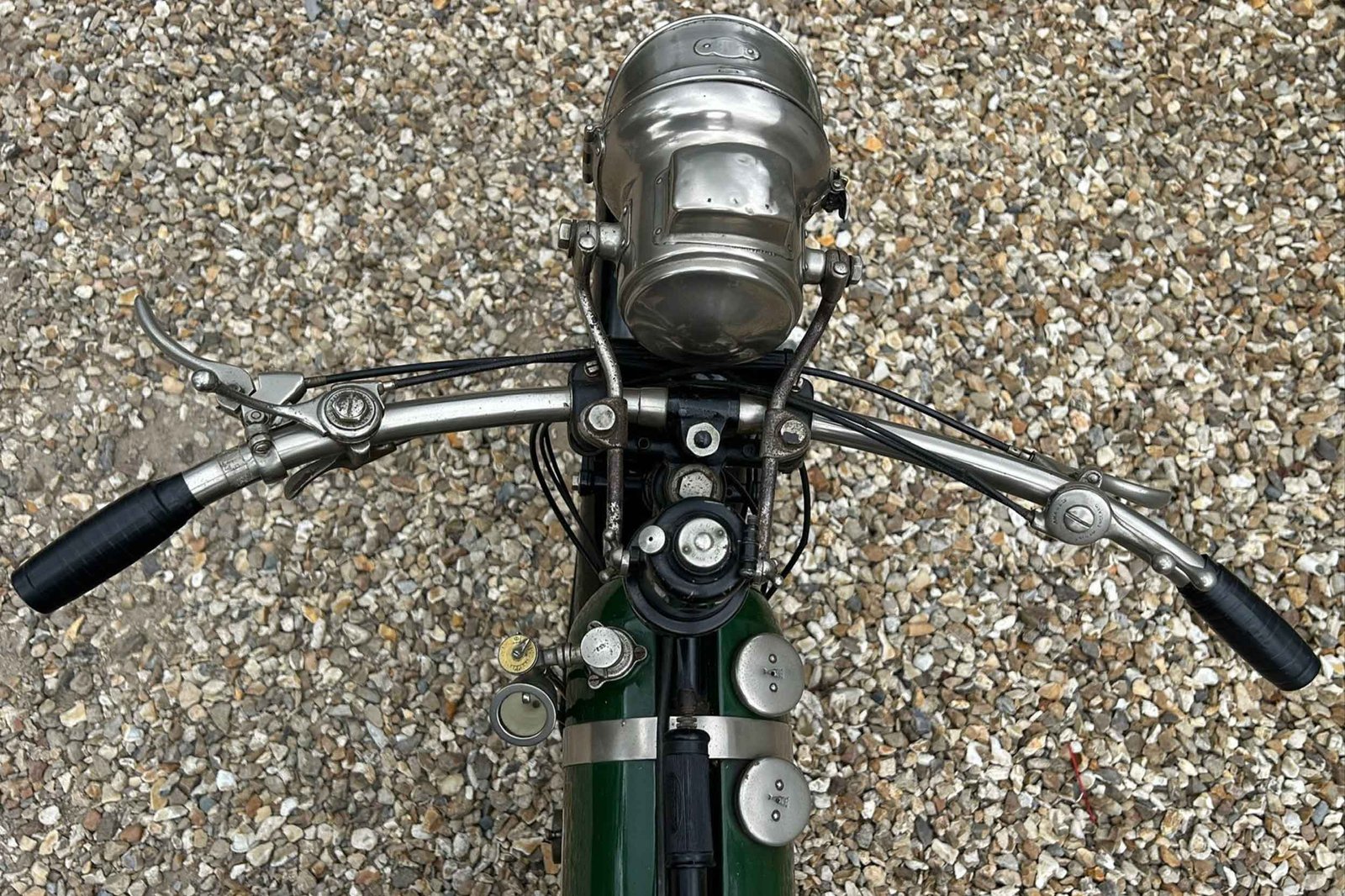
Suspension is essentially “pre-suspension”: a girder-type front fork and a rigid rear end, with comfort coming from a sprung saddle. Braking is similarly of its time.
What made the Round Tank genuinely persuasive was how far a little machine could go on not very much. Some restored bikes regularly quote a top speed around 45 mph (72 km/h), a weight about 170 lb (77 kg), and fuel economy in the region of 120 mpg.
Those figures explain why the Model B became the sort of motorcycle you bought to replace shoe leather and tram fares: quick enough for A-to-B, light enough to manhandle through a shed door, and miserly at the pump.
Culturally, the 1924 Model B sits right at the point where motorcycles stopped being exotic toys and became tools. Auction and historical notes often describe the Round Tank as the kind of bike used by tradesmen and everyday commuters who needed cheap personal transport with a bit of dignity attached.
The example up for sale carries a ‘Buy it now’ price of £4720. It’s been family owned for 60 years but not used for some time and will need re-commissioning.