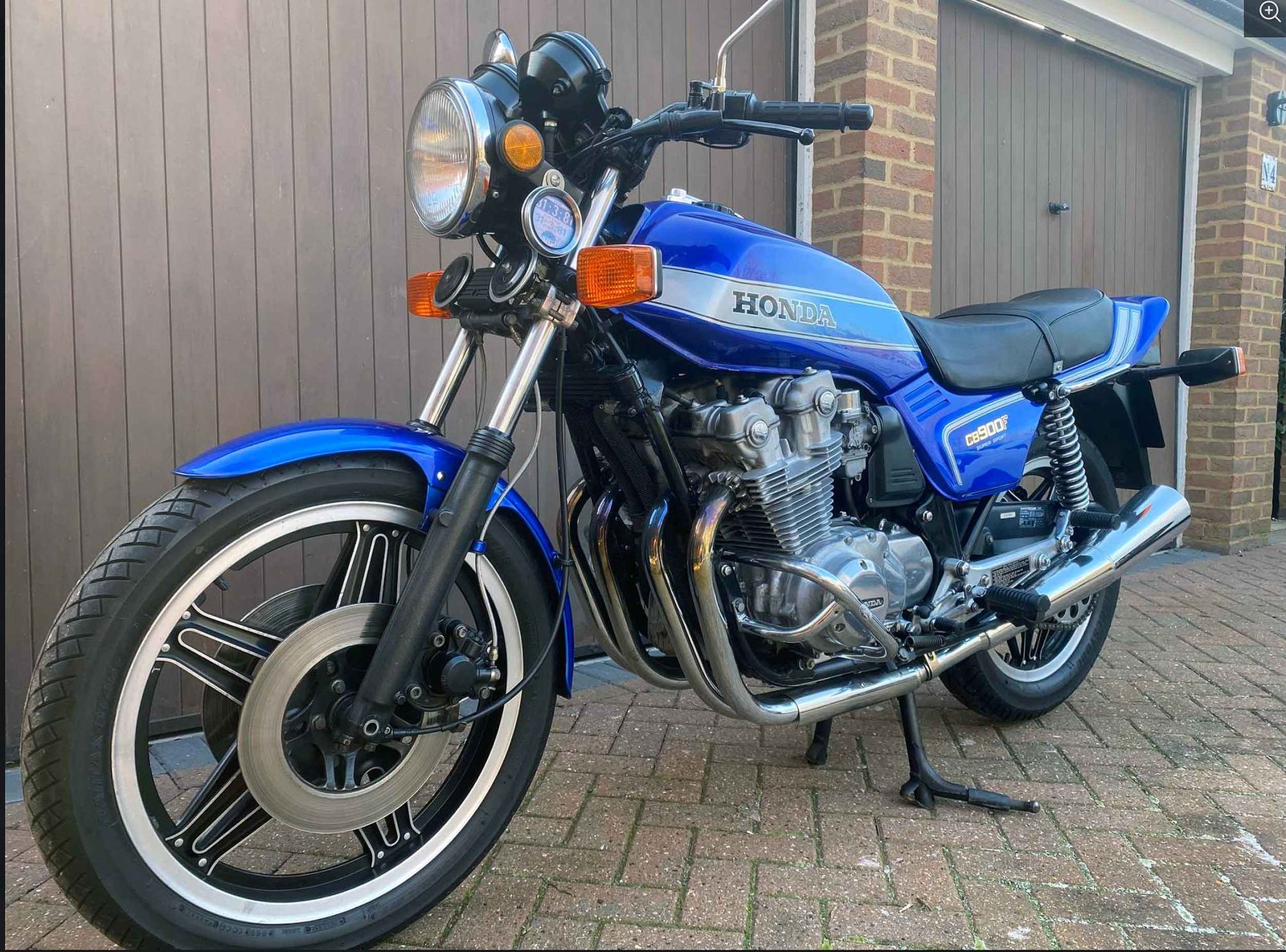
When the Honda CB900F Super Sports first arrived in 1979, it took a little time to realise just how good it was. After all, wasn’t it just another UJM? – ‘Universal Japanese Machine’, a term coined by US Cycle magazine editor Cook Neilson.
But slowly, everyone who rode the bike came back not just impressed but raving about it. It was just so easy to ride well and fast, or slow, or medium, in whatever traffic and terrain you were tackling.
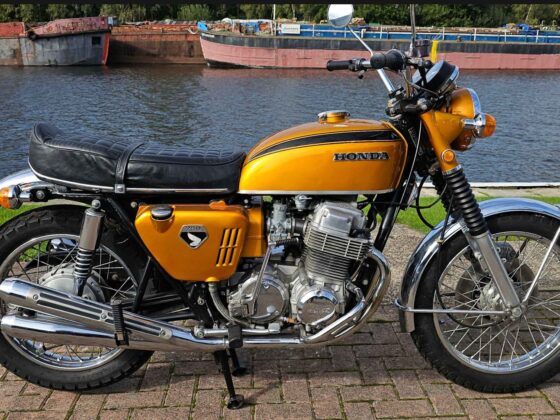
Just as the big bike world was revolutionised in the late ’60 and early ’70s by the arrival of Honda’s CB750, then the Kawasaki Z900 and Suzuki’s GS750/100, sp the Honda CB900F took the superbike category a further step forwards.
Even a later model, the CB900F2B with a massive half-fairing which earned it the nickname of ‘Far Too Big’, quickly turned into a Bike magazine office favourite. If any of us needed to nip out or need a bike for the weekend, the F2B was first choice.
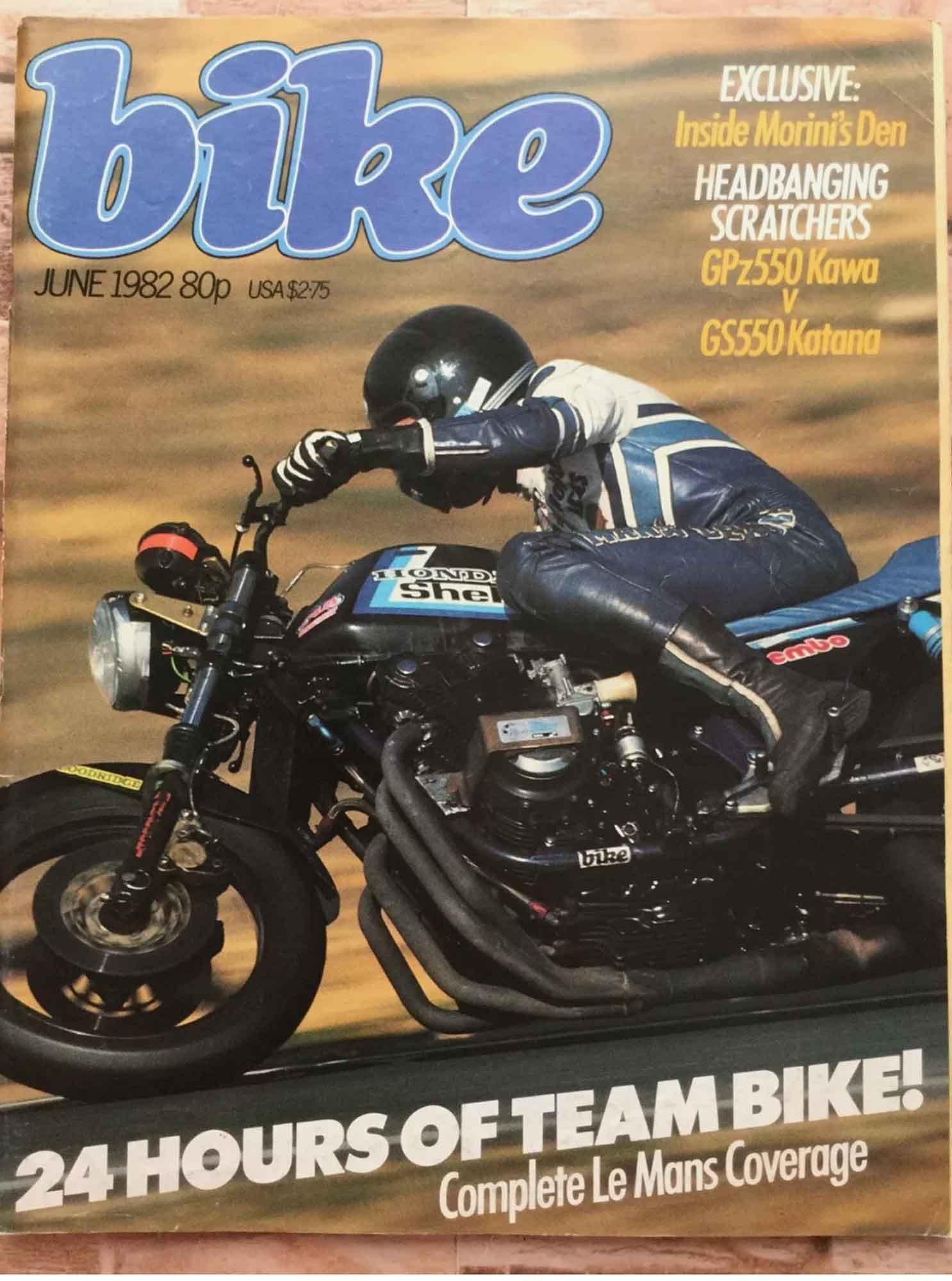
It didn’t take long for racers to pick up on the CB900F’s potential and those of us of a certain age will remember the original ‘Team Bike’. Created by Howard Lees and David Chisman, the pair decided to take their CB900F into international endurance racing, and with the help of Bike ad manager Zed Zawada they persuaded me, as editor of Bike at the time, to sanction the association and use of the name ‘Bike’.
It wasn’t a hard decision. Howard and Dave epitomised what we were all about at Bike: having lots of fun on motorcycles and making the most of life in general.
Later, it became much more serious when we started running trips to France to support the team at the 24-hour endurance races. Then in 1982, the team only went and scored 1st in class – 10th overall – at the Le Mans 24-hour race.
There followed the Nurburgring 8-hours and Barcelona 24-hours but the Big One loomed: the Bol d’Or at Paul Ricard Circuit in the south of France. We ran a ticket deal with the Channel ferries and more than 6,000 Brits travelled to France. Riding down, there were Brits everywhere! Yes, there was a great deal of lunacy, partying and carnage – but everyone also had a remarkable, memorable time.
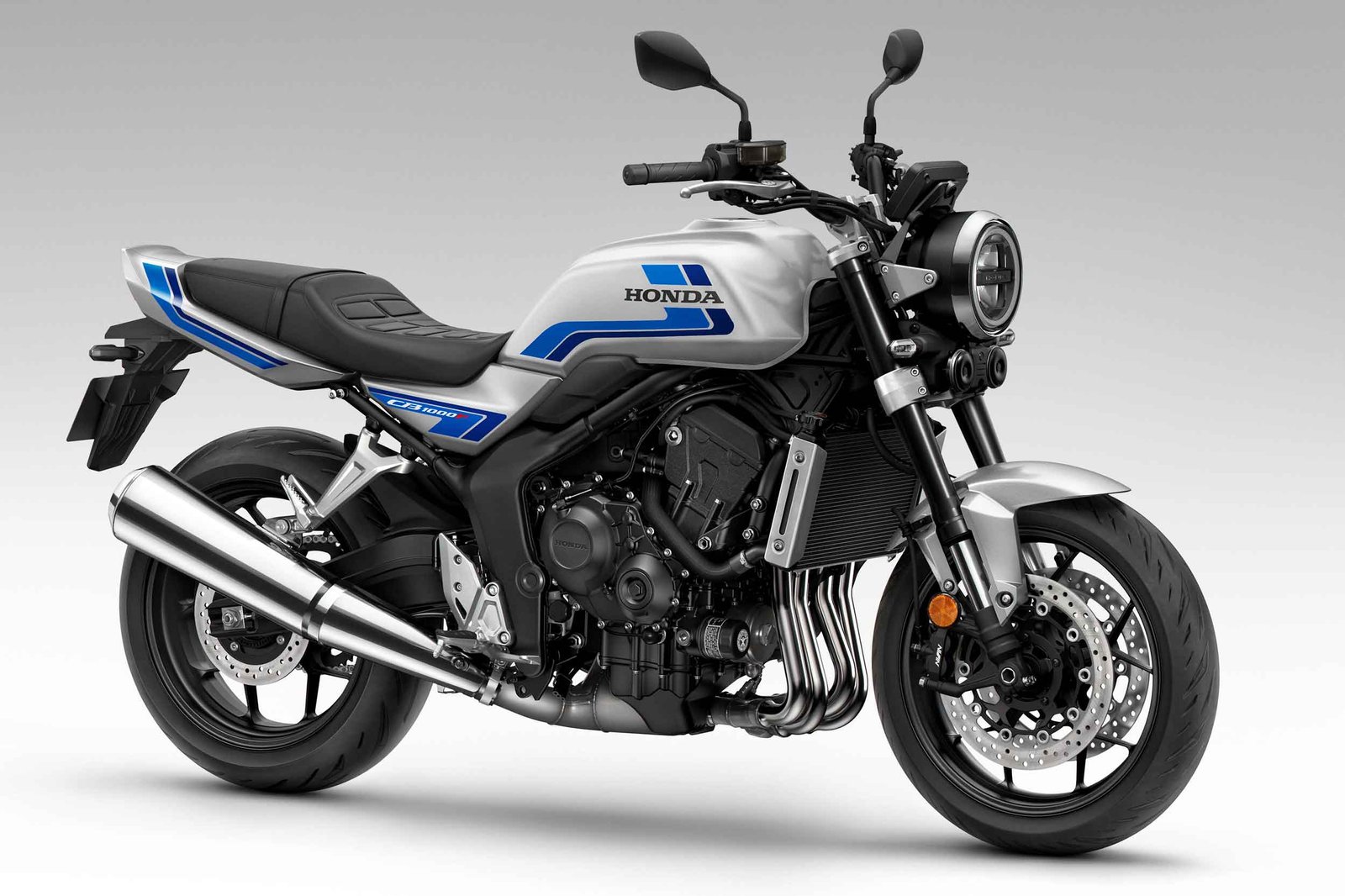
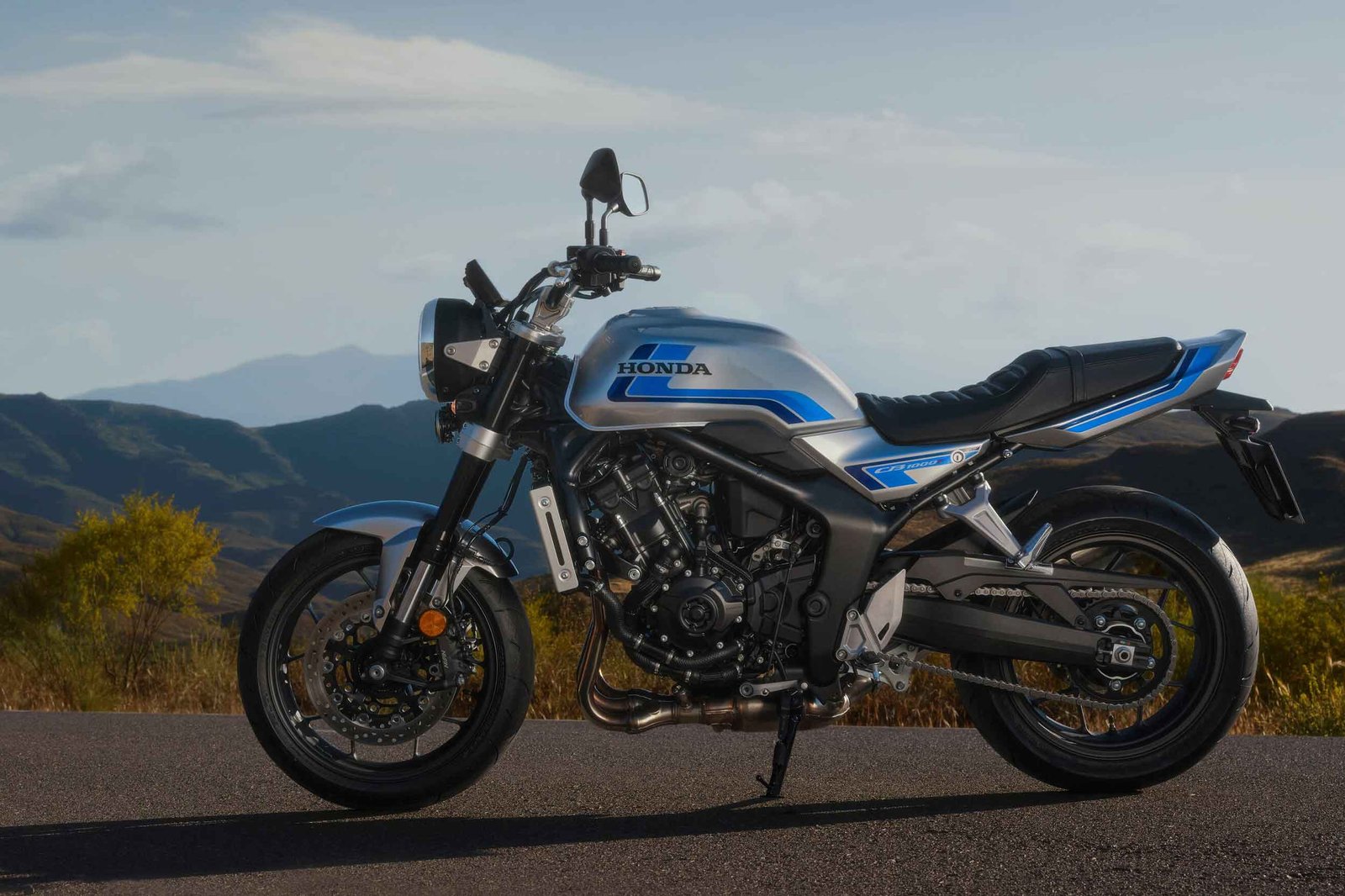
Why bring this up now? Honda has just launched a new retro bike, the CB1000F which picks up on the memories of the original CB900F, the bike that inspired Team Bike in the beginning.
As with all retro bikes, the CB1000F’s memories are mostly in the styling: a single round headlamp, twin horns, bold tank stripes and a tail that could have been lifted from a Freddie Spencer pit shot.
The line from tank to seat to tail is clean and uninterrupted, although the front of the petrol tank doesn’t look quite right. However, the exhaust is a modern homage to the old megaphone can — though this time it’s tuned not for noise but for music. Honda’s engineers have spent long hours crafting a four-cylinder soundtrack.
Underneath that retro skin lies something altogether more sophisticated. The 999cc engine is derived from the CBR1000RR Fireblade but softened, retimed, and retuned for road manners rather than lap records. Revised camshafts, new intake specs and a tweaked ECU deliver 91kW (around 122bhp) and 103Nm of torque, but the real story is in the delivery: smooth, muscular, and perfectly judged for everyday riding.
Suspension comes courtesy of Showa: 41mm SFF-BP forks up front and an adjustable rear shock working through Honda’s familiar Pro-Link. The brakes are proper kit too: four-piston radial-mount calipers gripping 310mm floating discs.
That means the CB1000F isn’t just a nostalgia trip; it’s a genuinely capable street bike. Cornering ABS, throttle-by-wire with selectable riding modes, and Honda’s traction and wheelie control systems all make sure the bike’s civility matches its swagger.
Inside that classically styled cockpit sits a five-inch colour TFT, complete with smartphone connectivity via Honda RoadSync, and a keyless ignition system for good measure. And for those who can’t leave well enough alone, the accessory packs (Sport, Comfort, and Travel) promise everything from flyscreens to luggage. The CB1000F will arrive in three 1980s hues: Wolf Silver Metallic with blue or grey stripes, or a Graphite Black with a red flash.

Honda calls this bike ‘retro-inspired’. The CB900F of old was a machine that bridged the gap between the everyday and the exotic — a racer for the real world. The new CB1000F does the same, only with ABS, traction control and a USB port. It’s a motorcycle that remembers its past but refuses to live in it.
Fancy an original Honda CB900F? This one sold for £5400 at Iconic Auction in 2023.